7 works selected in Spain for the EUmies Awards
Of the 40 works selected by the jury for the European Union Prize for Contemporary Architecture, seven are located in Spain.
The Mies van der Rohe Foundation and the European Commission have announced the 40 projects that will compete for the European Union Prize for Contemporary Architecture / Mies van der Rohe Awards 2026. In this edition, the international jury, composed of seven members: President Smiljan Radić, Carl Bäckstrand, Chris Briffa, Zaiga Gaile, Tina Gregorič, Nikolaus Hirsch, and Rosa Rull, received a total of 410 nominations. The EUmies Awards analyze the current state of architecture in Europe and reflect on how to “offer quality architecture for all while contributing to the climate goals of the European Green Deal. The 40 selected works exemplify how architects are taking responsibility for designing in an ethical, sustainable way with long-term social impact.”
The works span 36 cities in 30 regions and 18 countries and include both emerging and renowned architects, with more than seven decades of experience, ranging in age from 26 to 76. As one of the jury members, Tina Gregorič, points out: “Today’s architecture must also surprise, inspire, and explore what is possible. The most relevant works combine innovation with respect for existing structures, materials, and communities. By rethinking regeneration, reuse, and collective housing, we can create architecture that not only serves people but also expands the creative potential of the profession.”
The diversity also extends to the size of the selected studios, ranging from small teams of two to five architects to larger multidisciplinary teams made up of architects, landscape architects, urban planners, and other specialists. “This diversity highlights the dynamic and inclusive nature of contemporary European architecture,” they say.
Spain has seven projects, behind France with nine nominees, two in Barcelona, Logroño, Olot, Palencia, Terrassa, and Villanueva de Sigena (Zaragoza). The winning projects will be announced in April 2026, and the EUmies Awards Days will be held in May. This event includes conferences, debates, exhibitions, and the awards ceremony at the Mies van der Rohe Pavilion in Barcelona. The awards calendar culminates with the Out & About Program and traveling exhibitions that will take place between May and June.
The Spanish works are:
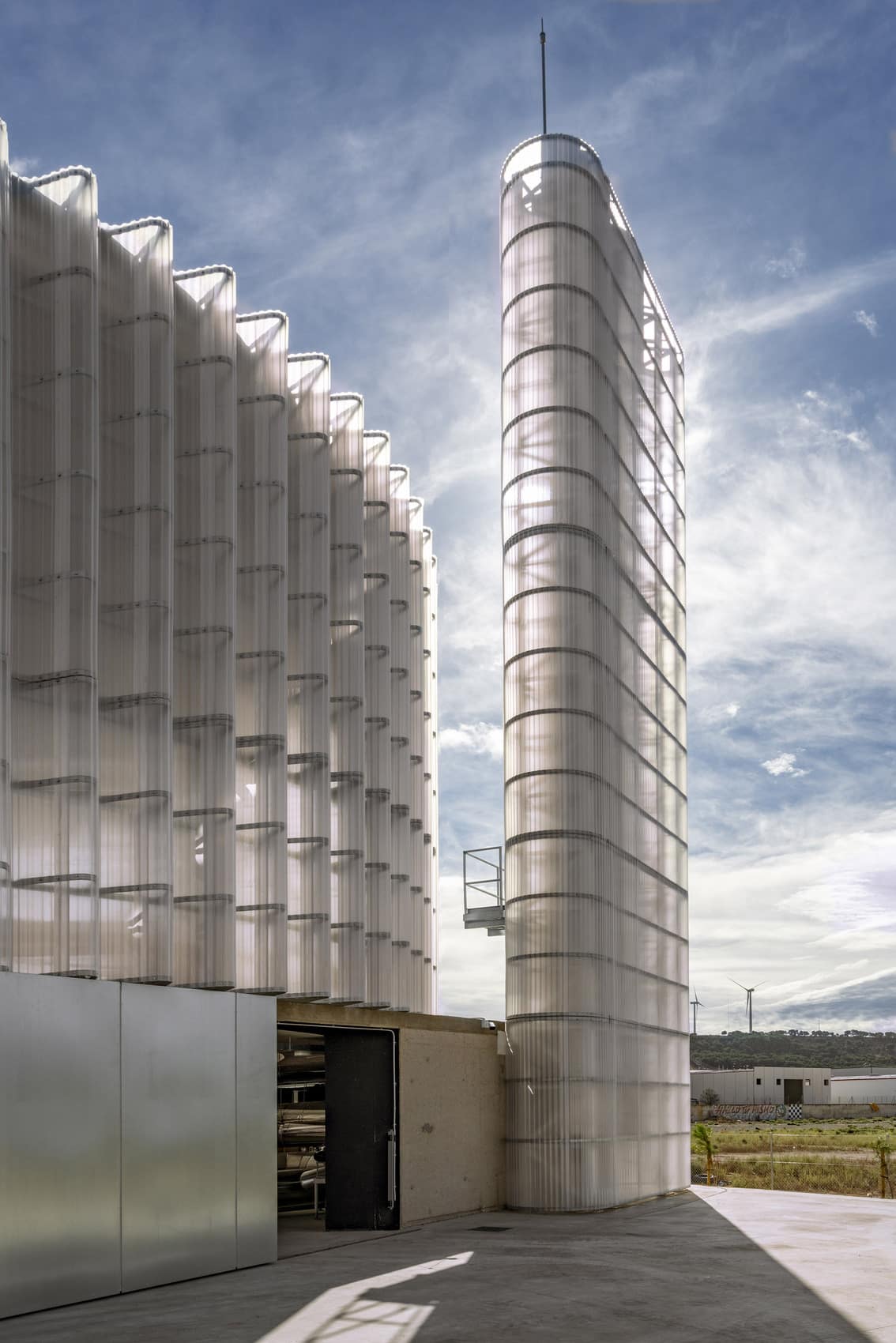
DH Ecoenergy Plant #1, by FRPO Rodríguez & Oriol, in Palencia
An energy infrastructure designed by architects Pablo Oriol Salgado and Fernando Rodríguez Ramírez, covering an area of 2,400 m². The District Heating network plant, which transports hot water produced by renewable energies through the subsoil of the streets of Palencia, aims to set the standard for what will be the thermal power plants of the future in Spain’s cold cities. The building consists of a heavy concrete basin and a light steel and recyclable plastic lantern. “The base supports all the machinery and establishes land connections with the outside and with the underground biomass silo. Inside, the concrete base has a roof that becomes a perimeter walkway surrounding all the machinery.” The lantern is symbolic and turns the building into a “cathedral of energy.”
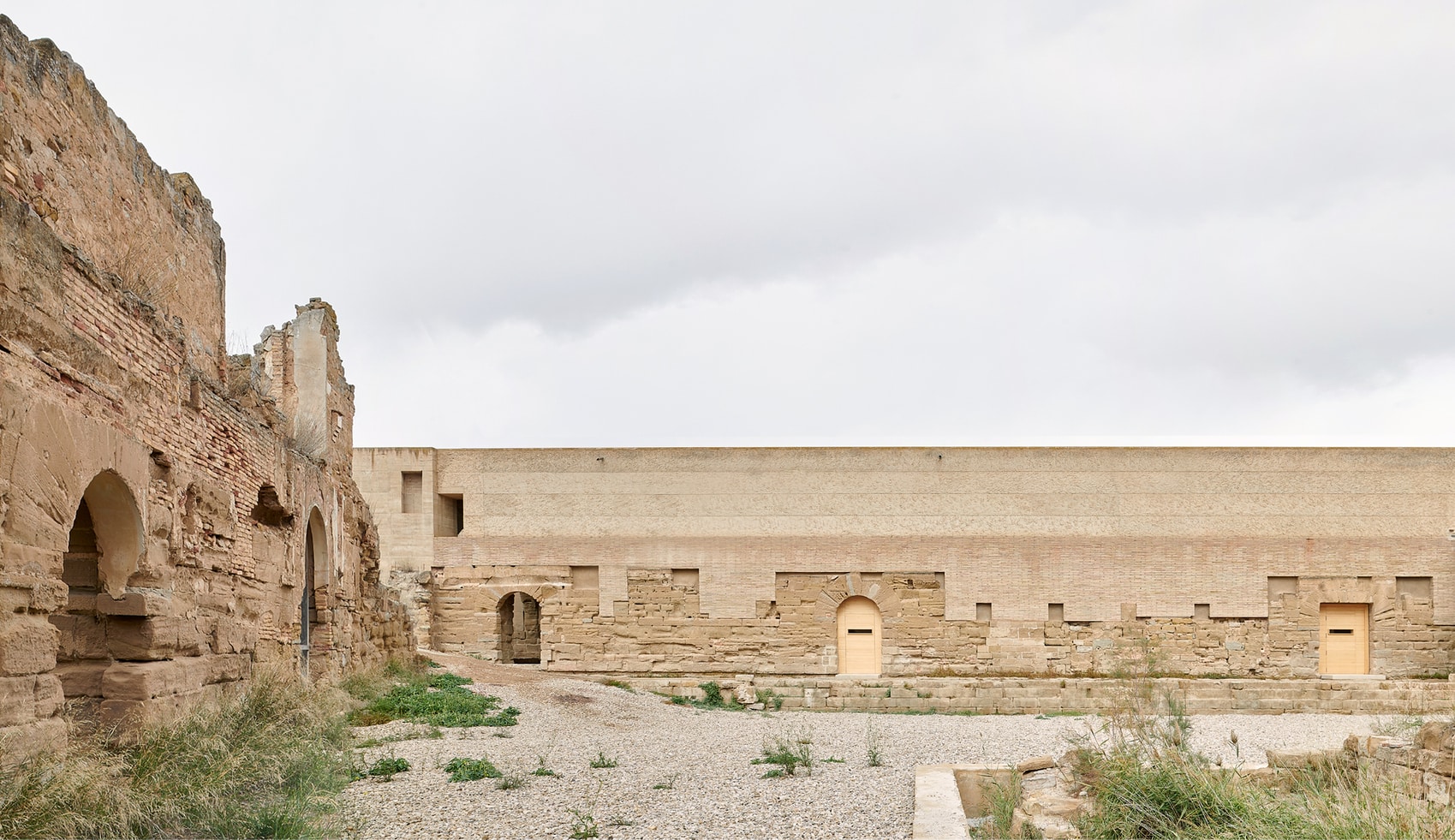
Interventions at the Monastery of Santa María de Sijena, by Pemán y Franco, Sebastián Arquitectos. Villanueva de Sijena (Zaragoza)
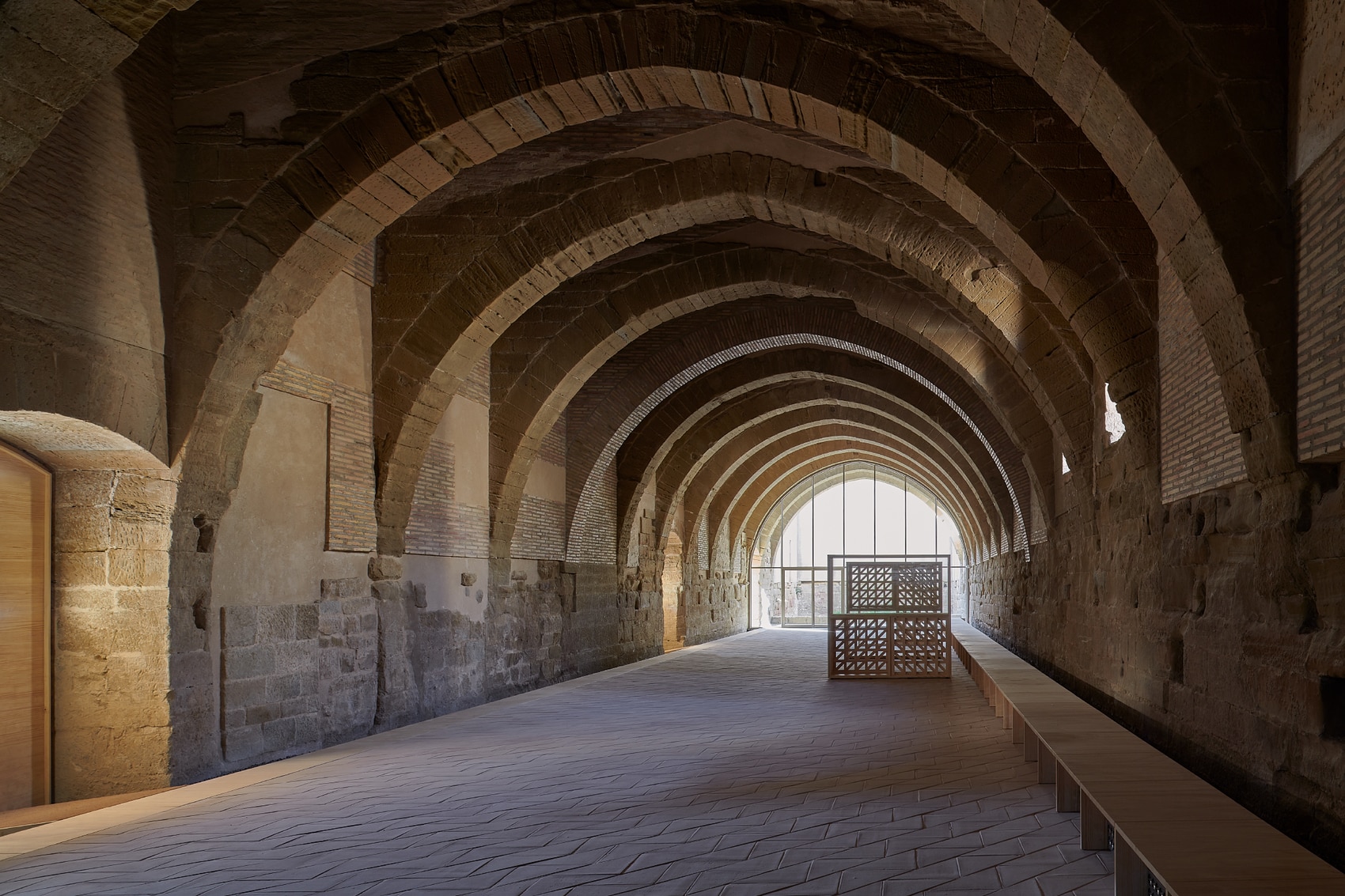
Its authors, Luis Franco Lahoz, Mariano Pemán, and Sergio Sebastián, have designed an intervention in the ruined areas of a monastery founded in 1188, closely linked to the Crown of Aragon, which suffered a major fire in 1936 that left the structure bare. It is in the process of recovering its architectural values. For the EUmies Awards, it was interesting that “the east and north naves have been restored as exhibition spaces without introducing technology that alters the medieval space. The east gallery of the cloister was completed as a transition between disconnected sectors, and a Baroque chapel was restored with its overhead lighting, the elements that make up its architecture, and the original finish of the dome.” The intervention recovers the medieval essence and highlights the craftsmanship in pine wood that shapes a bench and the exhibition display cases “in harmony with the walls so that, together with the ceramic carpet that extends over the installation space, they contribute to creating a space with a serene atmosphere and monastic resonance,” says the jury.
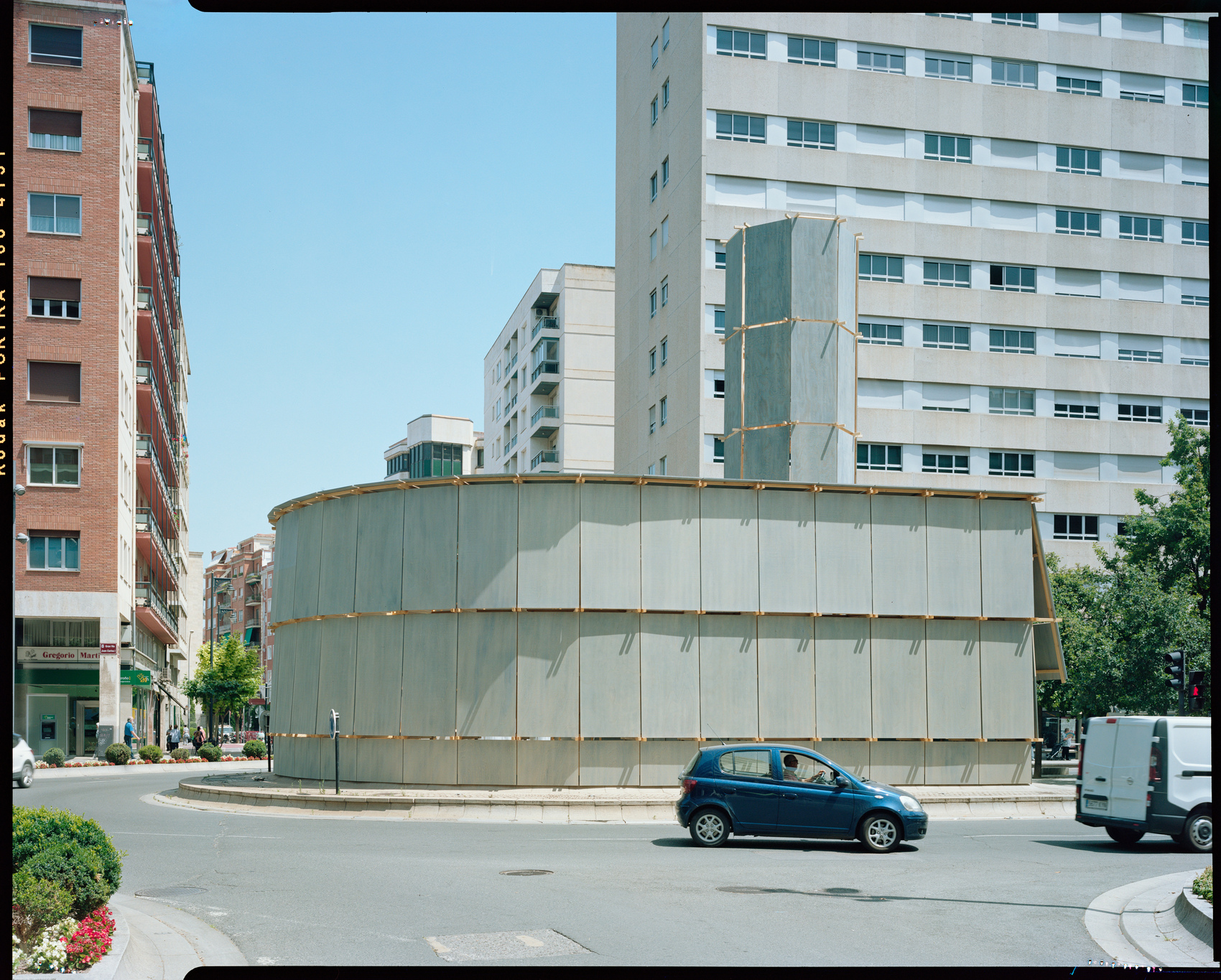
Round About Baths, by Leopold Banchini Architects. Logroño
This temporary installation, which was part of the Concéntrico 2025 festival program, consisted of temporary public baths built to transform the appearance of a traffic-surrounded roundabout in the city of Logroño. The aim was to challenge urban planning where vehicles dominate the urban scene and offer an oasis of personal care and encourage interaction between people. “The project includes steam rooms, changing areas, and outdoor cold water basins. Using local wood and reused urban materials, it offers privacy and a collective experience.” The structure was composed of a framework of pine wood from La Rioja clad with raw pine panels and painted with gray water-based paint. A 13.5-meter-high chimney housed the fire-heated steam room. Everything was made with low-impact, locally sourced, reused, and reusable materials. It was also built by local carpenters and designed for easy disassembly and reuse.
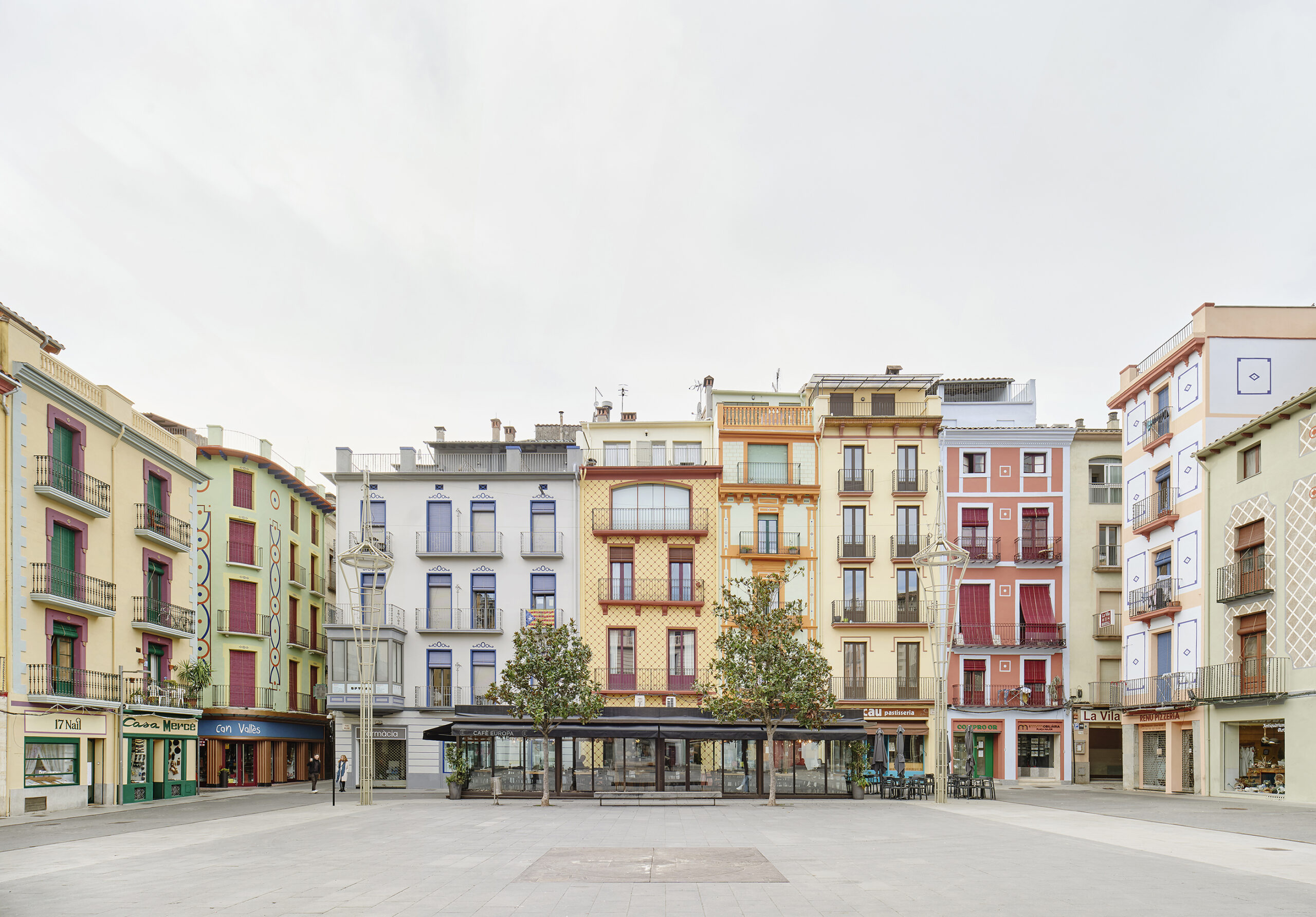
Plaça Major, by Un Parell d’Arquitectes, Pep de Solà-Morales Arquitectes, Quim Domene, in Olot
This public space focuses on the regeneration of Olot’s Plaza Mayor, a key hub of the city, thereby enhancing its heritage by renovating its façades and reactivating empty dwellings. “This process combines different tools, such as a renovation project linked to local tradition, an Urban Improvement Plan, and a conditional subsidy program.” The project has focused on the buildings to resolve their problems and achieve full occupancy of the homes.
The plaza regeneration project addresses the public space by rehabilitating the built heritage and reactivating urban life, ruling out conventional redevelopment in order to invest in the façades and homes. Through a collaborative process with the community, a comprehensive plan was promoted that combined historical research, architectural rehabilitation linked to local tradition, urban planning, and a subsidy program conditional on the occupancy of empty homes. This strategy made it possible to resolve construction problems, recover the square’s chromatic and formal identity, and encourage the occupation and maintenance of the buildings, thereby strengthening social cohesion and the vitality of the historic center.
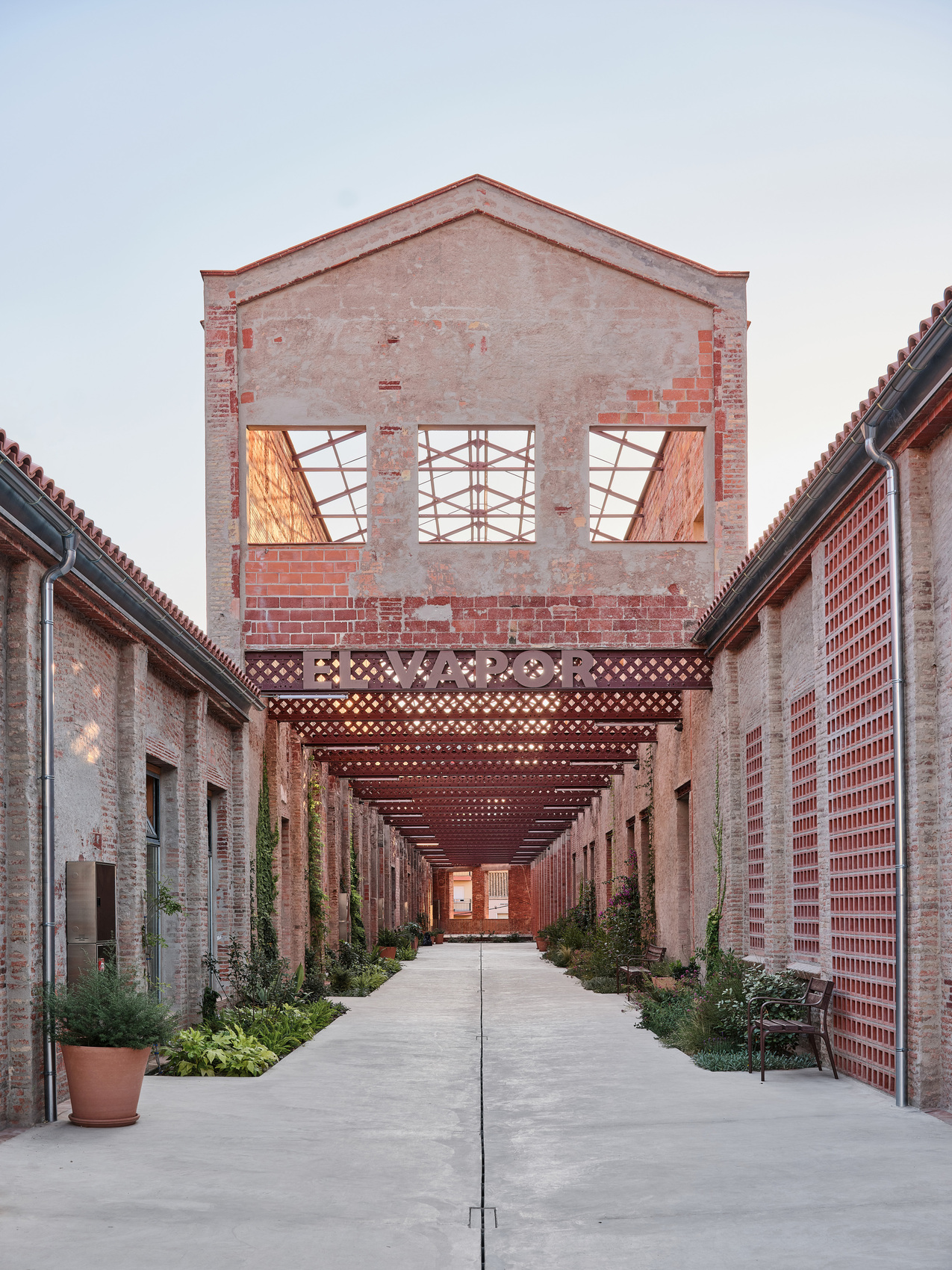
Renovation of the Vapor Cortès – Prodis 1923, by H Arquitectes, in Terrassa
This social welfare project designed by the studio, composed of architects David Lorente, Josep Ricart, Xavier Ros, and Roger Tudó, consists of the transformation of the old Vapor Marquès warehouses into the new headquarters of Prodis, an inclusive center structured around a restored passageway that has been converted into a new artery of the city. Wooden structures, skylights, and passive systems respect the original character of the building. Of particular note is the enhancement of the existing trusses and the use of new beams as skylights, which help to organize the spaces to differentiate between the more public and the more domestic areas. The project has preserved the original wooden construction system and the layers that tell the story of the place. It is also noteworthy that emphasis has been placed on thermal insulation, natural ventilation, and passive solutions to achieve a functional, sustainable building that is connected to its surroundings.
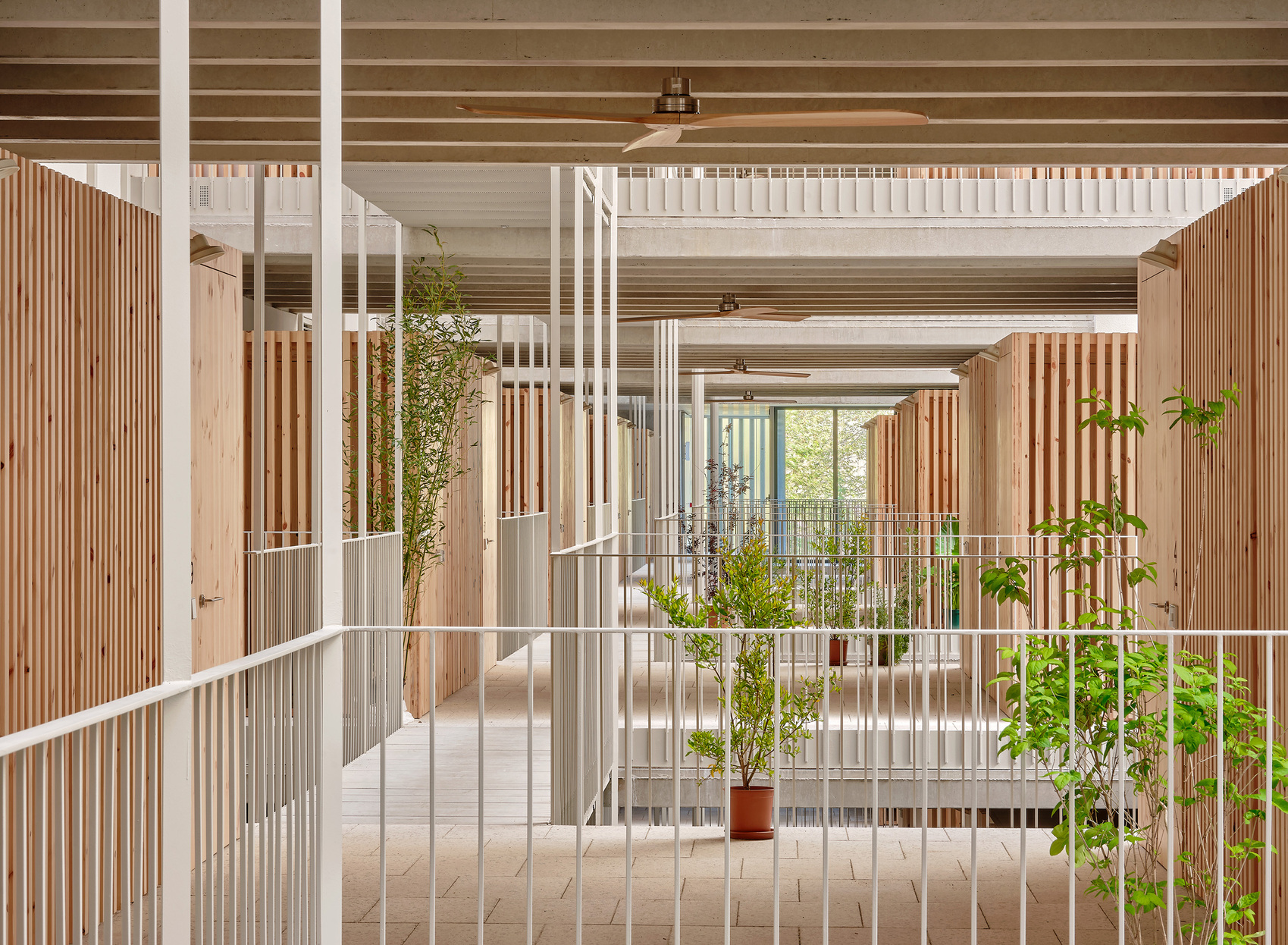
GREENH@USE 140 – Social housing in 22@ Barcelona, by peris+toral.arquitectes, L3J Tècnics Associats, in Barcelona
The Green@use 140 collective housing program was designed by the studio of Marta Peris, José Toral, and Jaime Pastor. It is a complex that houses mixed-use social housing, including units for the elderly, intergenerational housing, social rental housing, and temporary accommodation. It stands out because it is organized around courtyards and a bioclimatic atrium that regulates thermal comfort. In addition, it reduces energy demand thanks to its thermodynamics while promoting community life. It blends into the urban fabric and has a prefabricated exposed concrete structure that minimizes the use of this material, lowers CO2 emissions, and reduces construction time. The communal spaces designed on the roof and the chamfer, the diversity of housing types, and the vegetation on the façade encourage social interaction.
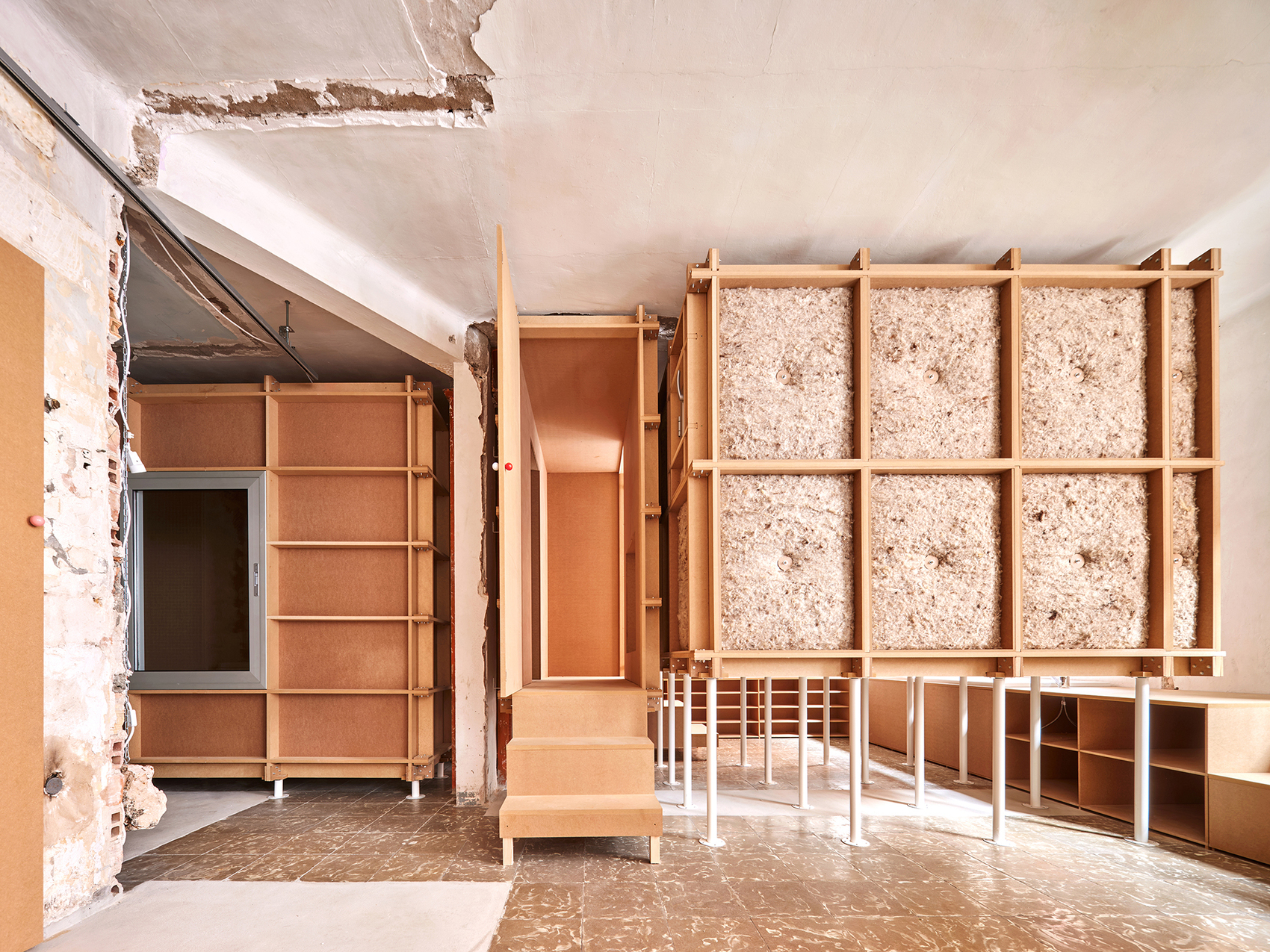
10 K House, by TAKK // Mireia Luzárraga + Alejandro Muiño, in Barcelona
10 K House embodies the renovation of a 50 m² apartment carried out on a budget of just €10,000, based on updating the space by changing usage patterns and applying sustainability criteria. It breaks with the traditional idea of rooms and hallways and opts for a spatial organization based on “thermal gradients.” The kitchen and bathroom become the center of the floor plan, where social activities converge. In addition, it uses few material resources, which are reduced to medium-density fiberboard (MDF) and sheep’s wool, ensuring that it is affordable and has a low environmental impact. “The project responds to the housing crisis, especially for young people, by proposing an adaptable, open, and energy-efficient domestic model that is independent of fossil fuels and optimized for natural heat and ventilation flows,” according to the Eumies Awards.
Written by: Beatriz Fabián
Beatriz is a journalist specializing in offline and online editorial content on design, architecture, interior design, art, gastronomy, and lifestyle.