The activist and co-founder of XTANT has directed this year's Generational Shift exhibition presented by Amazon within Fiesta Design, one of the main events of the Madrid Design Festival.
Must-see design events in MDF26
A selection of interesting proposals for a design-focused tour of the city.
The Madrid Design Festival offers a series of fascinating events. The interrelationship between design and craftsmanship is more evident than ever, and wool is a recurring material in the proposals of designers, artisans, and architects. This year’s festival brings together a diverse program exploring the relationship between materiality, craftsmanship, innovation, and sustainability. Exhibitions such as Peso y Presencia, Coalescencia, and Domus Nova reflect on creative processes, the value of craftsmanship, and contemporary ways of living, while textile proposals, public installations, and new materials broaden the dialogue between art and design. The festival thus offers a cross-disciplinary exploration of the practices and languages that define contemporary design.
Visit _2B space to be
The exhibition space _2B space to be, by the architecture studio Moneo Brock, is hosting the group exhibition Weight and Presence until March 9, as part of the Madrid Design Festival. The exhibition brings together works by sixteen architects, designers, and artists and proposes a reflection on objects based on their materiality, function, and perception.
Curated by architect Yaiza Camacho, the exhibition explores processes of formal research and material experimentation linked to context, available resources, and the needs that drive creation. The title alludes to “weight” not only as mass, but as that which provides coherence between what the pieces are and what they propose.
The works, presented in the studio founded by Belén Moneo and Jeffrey Brock, advocate for a more deliberate and conscious production in contrast to contemporary hyperproduction and offer a critical perspective on the ideas of utility. The proposal engages with the studio’s interest in materiality, construction processes, and the relationship between idea, form, and use.
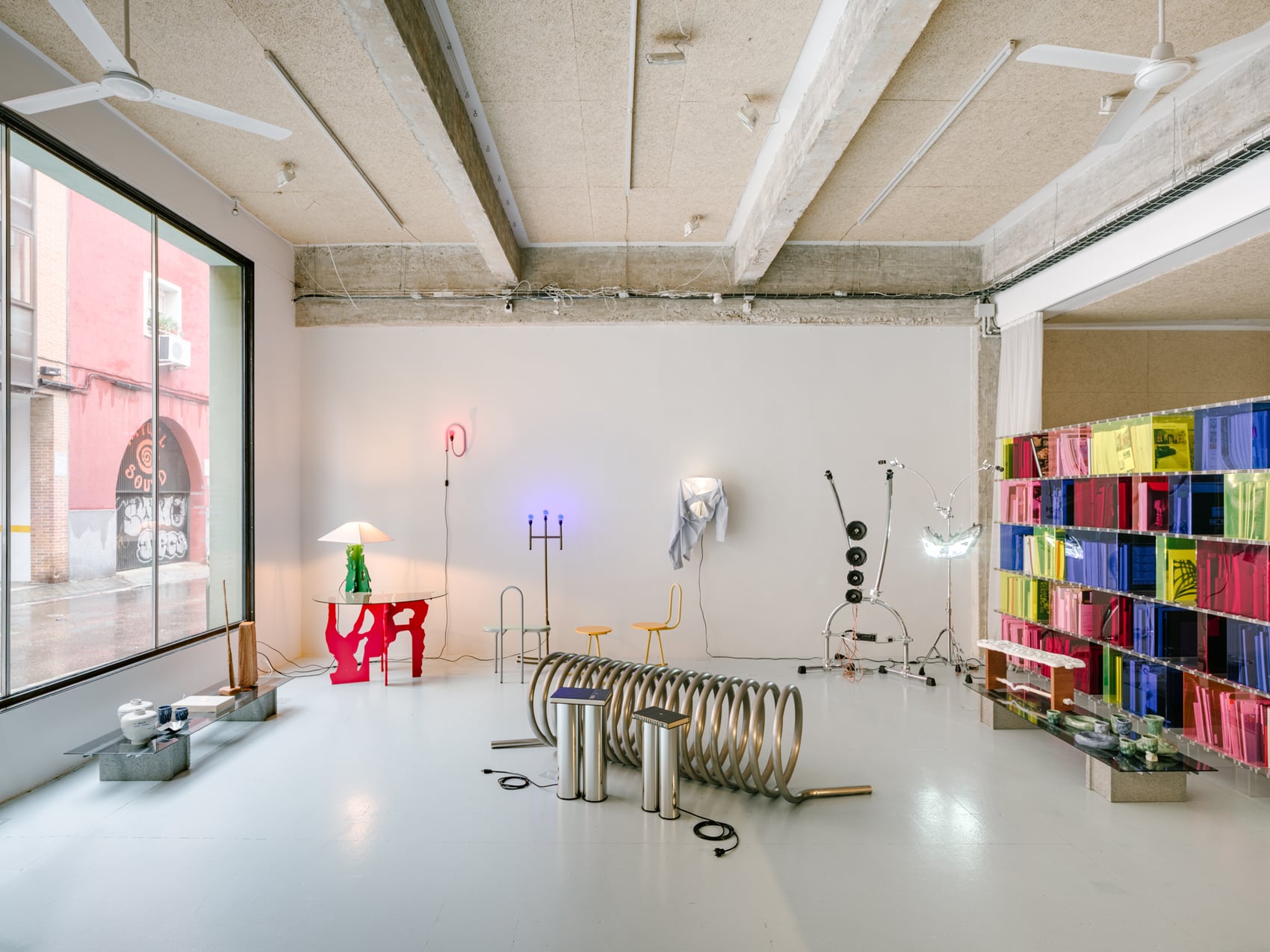
Peso y Presencia en la galería del estudio Moneo Brock
SACo, at ACdO Studio
The Spanish Society of Contemporary Crafts is participating in this edition of Madrid Design Festival 2026 with the exhibition Coalescence to showcase “high craftsmanship as a fully contemporary practice, based on knowledge of the material, time, and expert technique,” they state.
Coalescencia proposes “an unexpected encounter of diverse pieces and languages; the exhibition places craftsmanship at the heart of contemporary design discourse through a sensory and spatial experience.”
This exhibition, as the organizers state, is “a declaration of SACo’s principles and a reaffirmation of the value of craftsmanship as a creative engine within contemporary design and the human hand as the indispensable source of excellence.”
The Álvaro Catalán de Ocón Studio showcases unique pieces created by a superb group of participants: Ábbatte, Álvaro Catalán de Ocón – ACdO/, Atelier Aletheia, Cristina Vallejo (ELSUR), Francesca Piñol, Fernando Alcalde, Henar Iglesias, Idoia Cuesta, Iloema, Mamen Diego (Objet Particulier), Marta Moore, Mercedes Vicente, Mayice, Mosaista, Natalia Lumbreras, Noroeste Obradoiro, Plaart, Saskia Bostelmann, Siete Formas, Toni Porto, and Vajillas de Ultramar. Open at Fernando Díaz de Mendoza Street, 9, from February 23 to March 6.
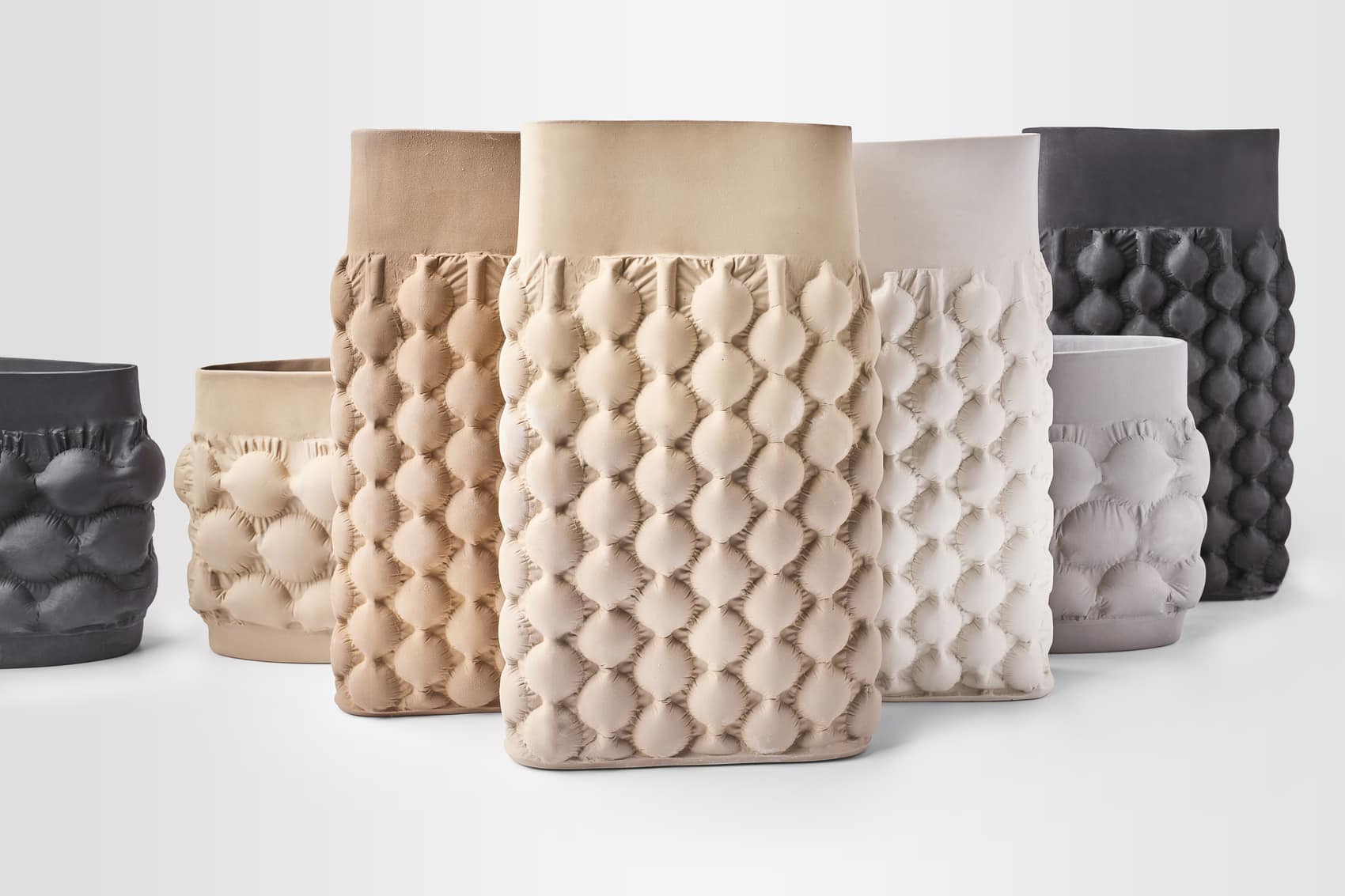
Jarrones Bubble II, de Plaart, en la exposición Coalescencia de SACo en Estudio ACdO.
All for Wool
The ephemeral Kutrix Gallery, created by Teresa Herrero and Ciuco Gutiérrez as part of the ninth edition of MDF26, presented its second exhibition at Bellas Vistas on February 21st and 22nd. Entitled Enlana2, a project carried out in collaboration with Wool4life, the Alliance for Wool, and the magazine Diseño Interior, it showcases a selection of pieces made with Spanish wool donated by Ramón Cobo. The unique aspect of the exhibition is that it takes place in a building materials warehouse, located at 41 Topete Street in Madrid’s Tetuán district, where the artists’ pieces engage in a dialogue with the warehouse’s original setting. This experience is always a discovery of overflowing creativity that generates new sensations and perspectives on design and art in the viewer. A selection of these objects will then be moved to the nearby Nébula Espacio to remain on display until the end of Madrid Design Festival. It’s worth exploring the offerings of the designers and artisans in this initiative, which has also featured collaborations with Simon Electric, Gan Rugs, Cervezas Alhambra, Ábatte, Basny Rugs, and Oveja Ansotana, among others. As a side note, the Tetuán Crea open studios event takes place on March 27, 28, and 1.
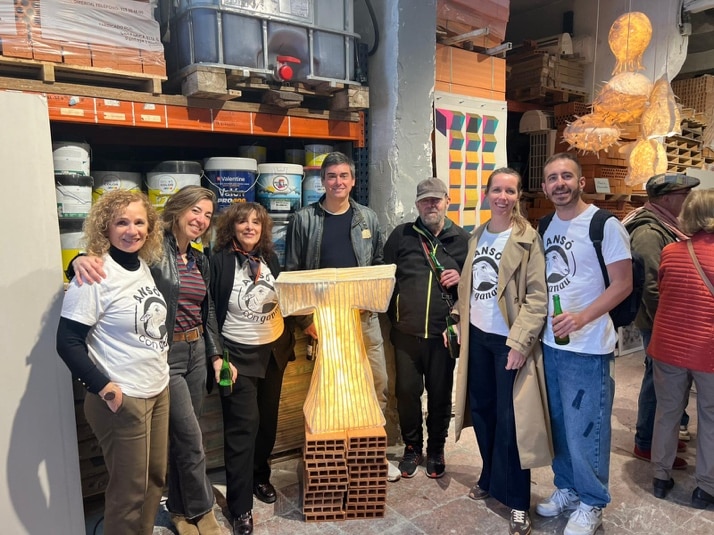
En torno a la pieza de Esto Estudio, de izquierda a derecha: Pilar Marcos, directora de la revista Diseño Interior; Pilar Lleó, coordinadora general de La Fábrica; Teresa Herrero, periodista en Teresa Herrero Living y comisaria; Álvaro Matías, Director de Madrid Design Festival ; Ciuco Gutiérrez, fotógrafo y comisario; Sonia P. Gontán, coordinadora de Forma; y Carlos Gutiérrez; en la galería efímera Kutrix Gallery.
Fabrics with meaning
Gancedo returns to Madrid Design Festival 2026 with a proposal that combines art, design, and innovation. In its showroom at Velázquez 38, the company presents two art installations focused on transformation and sensory experience: Spinners, by Atelier MEL, and In Constant Motion, by multidisciplinary artist Koral Antolín.
Spinners, by Atelier MEL, pays homage to the most ancient origins of weaving. It does so through threads that trace catenaries reminiscent of the spinning of spinning wheels. “The work makes visible the moment before the warp and weft: the instant in which the material is organized and tensioned,” they explain.
For her part, Koral Antolín presents a work based on embroidery and punch needle techniques to explore philosophical and transcendental themes such as identity, motherhood, and Paleolithic Venuses.
This event, which unites artisanal heritage with new trends in the world of design, is complemented by professional round tables on art and textile design in the Contract sector.
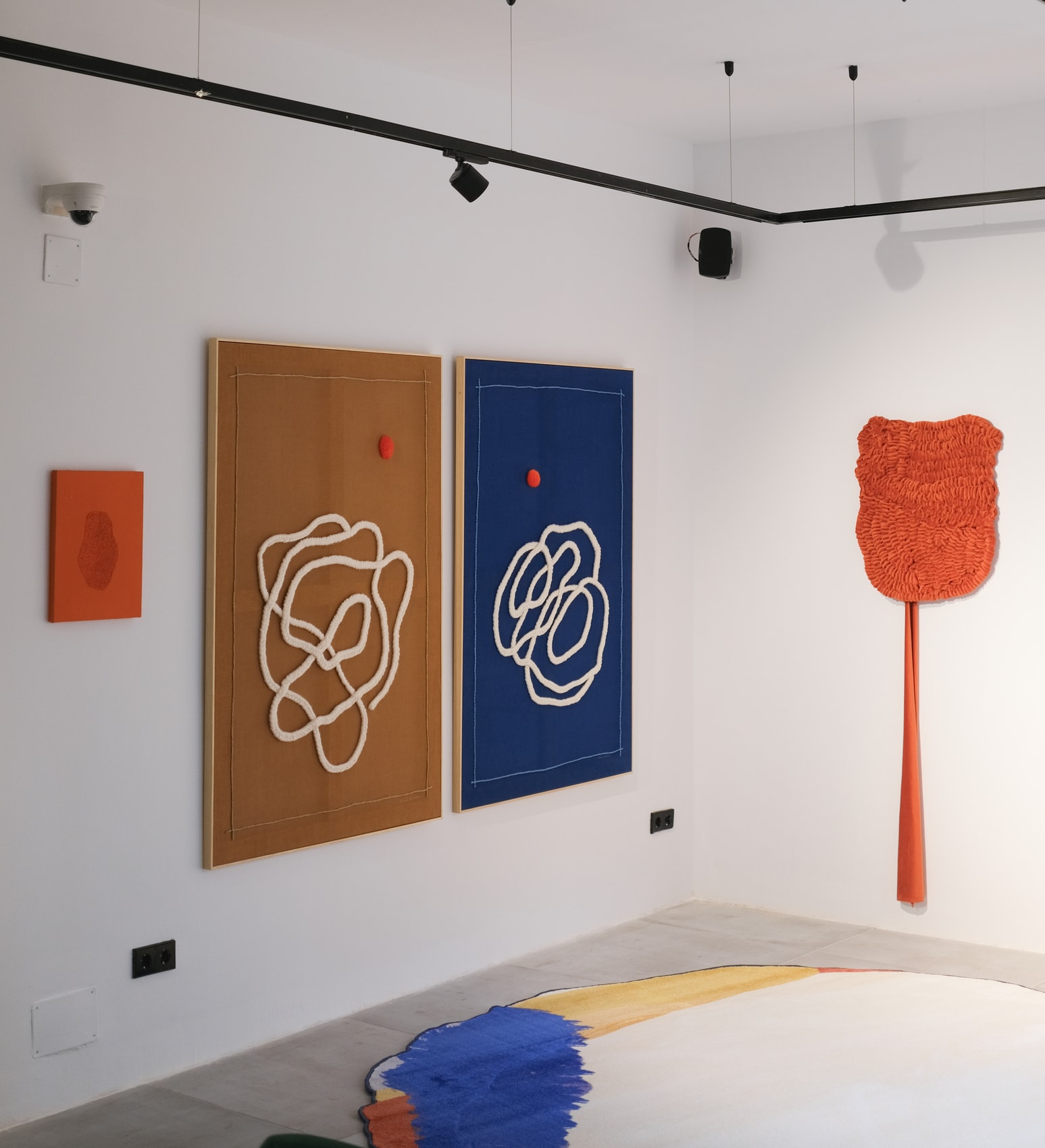
Instalación de Koral Antolín en Gancedo.
A look at phoenician craftsmanship
Marta Valea, creator of Caotics, presents the exhibition “Woven Vessels: A Woman’s Perspective on Phoenician Art” at the Gandía Blasco showroom. The exhibition features 17 prominent female artists, brought together specifically for this event, from diverse fields such as design, art, architecture, fashion, and contemporary crafts. Among them are: Candela Cort, Cova Ríos ELSUR, Idoia Cuesta, Iria Martínez, Isabel Moltó, Marre Moerel, Marta Lorca, Pepa Reverte, Saskia Bostelmann, Sybilla, and UA-K. The pieces form an exhibition landscape that coexists with the showroom furniture of Diabla, Gan, and Gandiablasco. According to the curator, “Each piece reflects the identity and language of its creator, resulting in a collective collection of forms, textures, and emotions.” The objects are designed specifically for this exhibition and are made by the artists using leftover pieces from the brand. This event also includes the Phoenix collection of contemporary jewelry, created from discarded pieces from the Momos collection, designed by José Gandía-Blasco. These new pieces will be part of Caotics’ editorial line, Caprichos de Caotics.
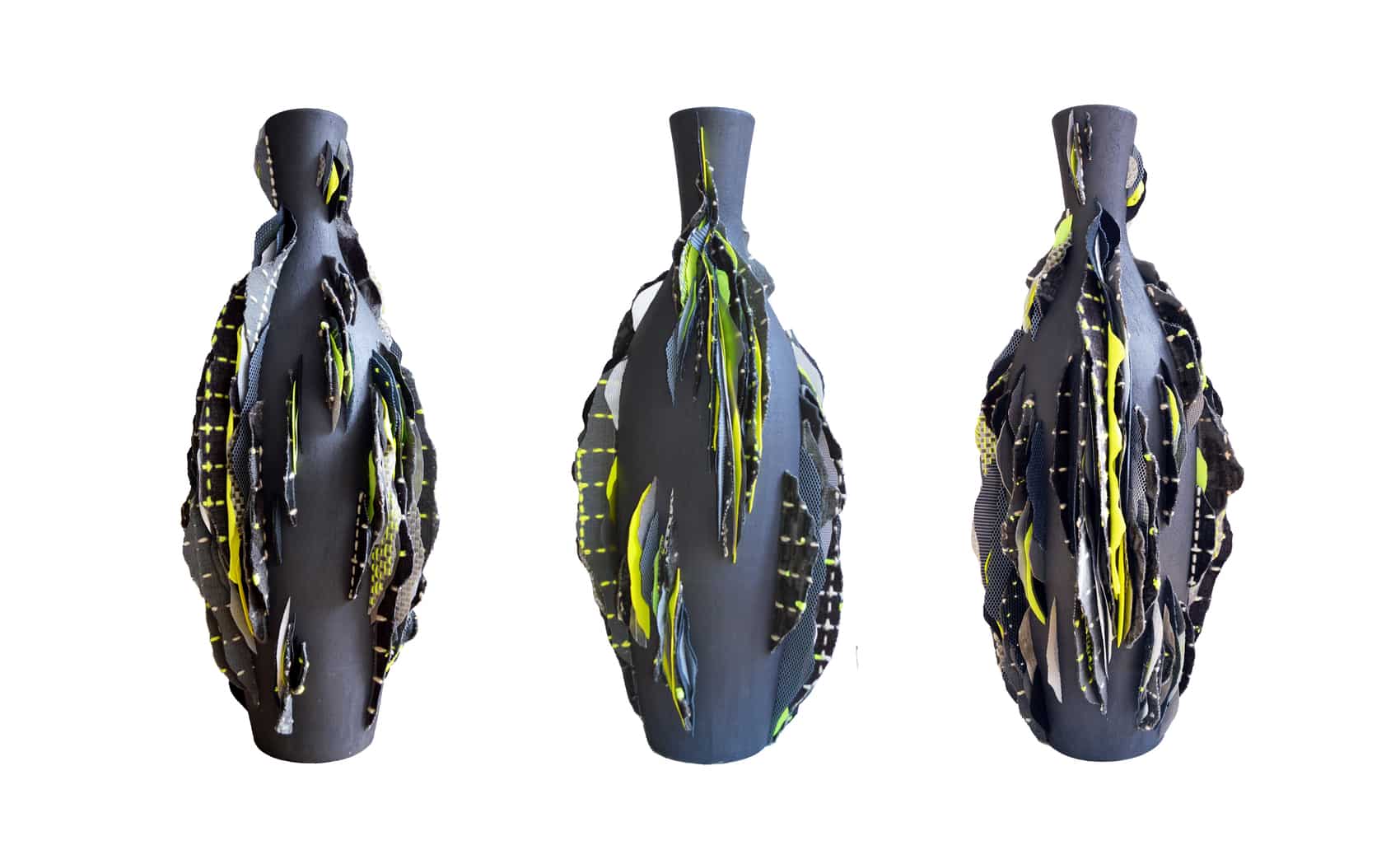
Piezas del proyecto BANDS-IJAS, de Cova Ríos
Archaeologies of the present
The Renaissance courtyard of the San Isidro Museum is the setting for the Domus Nova exhibition, which reflects on the home as a space in constant transformation. Curated by Manera Magazine and Santa Living, it presents a selection of 44 objects, designed by more than thirty studios. The common thread running through them all is “a sensitive approach to design, based on attention to material, touch, weight, and the imprint of the process,” according to the organizers. The exhibition features the participation of the furniture company The Masie, whose pieces engage in dialogue with the creations of artists such as Plutarco, Kilzi, Justino del Casar, Ultramar Studio, Júlia Esqué, Canoa Lab, Berto, Pau Bonet, Patricia Varea, Clara Masiá, and Raúl del Chano. This exhibition “proposes reading these works as small archaeological digs of the present: material testimonies of our contemporary way of living that, over time, could become the vestiges with which to study everyday life today.” Admission is free and the exhibition will be open until March 8.
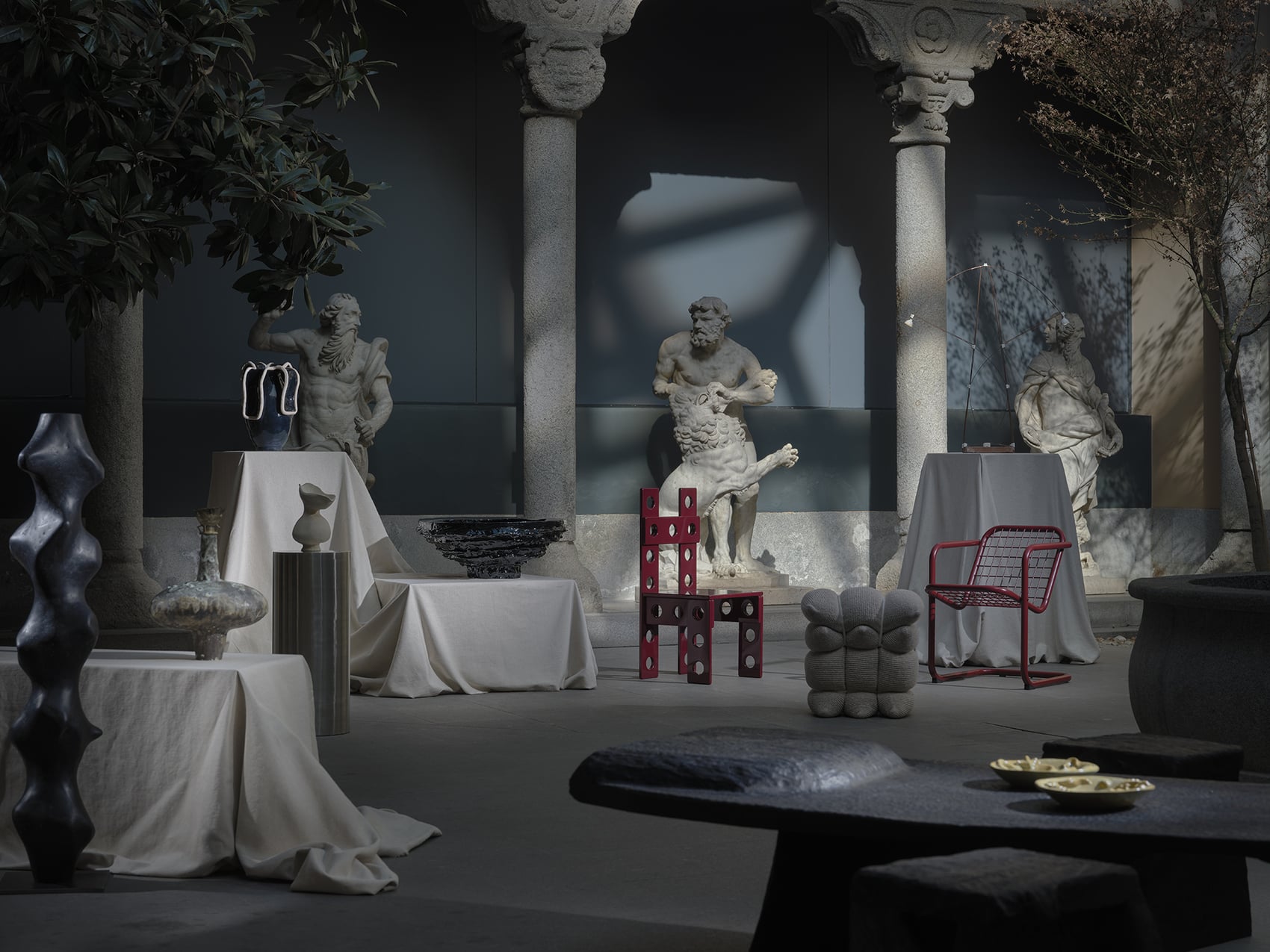
Exposición de Manera en el Museo de San Isidro. Foto: Germán Saiz
Innovative plastic
The Valencian firm Andreu World, founded in Valencia in 1955, is once again participating in the Madrid Design Festival and has opened its showroom at Calle Velázquez 26 (until March 8). Entitled “A Plastic That Isn’t Plastic,” the exhibition focuses on showcasing the development of its new thermopolymer BIO® and its application in new designs by Patricia Urquiola. This exhibition complements the talk given by the designer and architect, winner of the 2025 National Design Award, along with the brand’s CEO, Jesús Llinares, at the auditorium of the Institución Libre de Enseñanza (Free Institution of Teaching). There, they discussed the debate surrounding sustainability, focusing on the thermopolymer BIO®, a new material that emphasizes circularity.
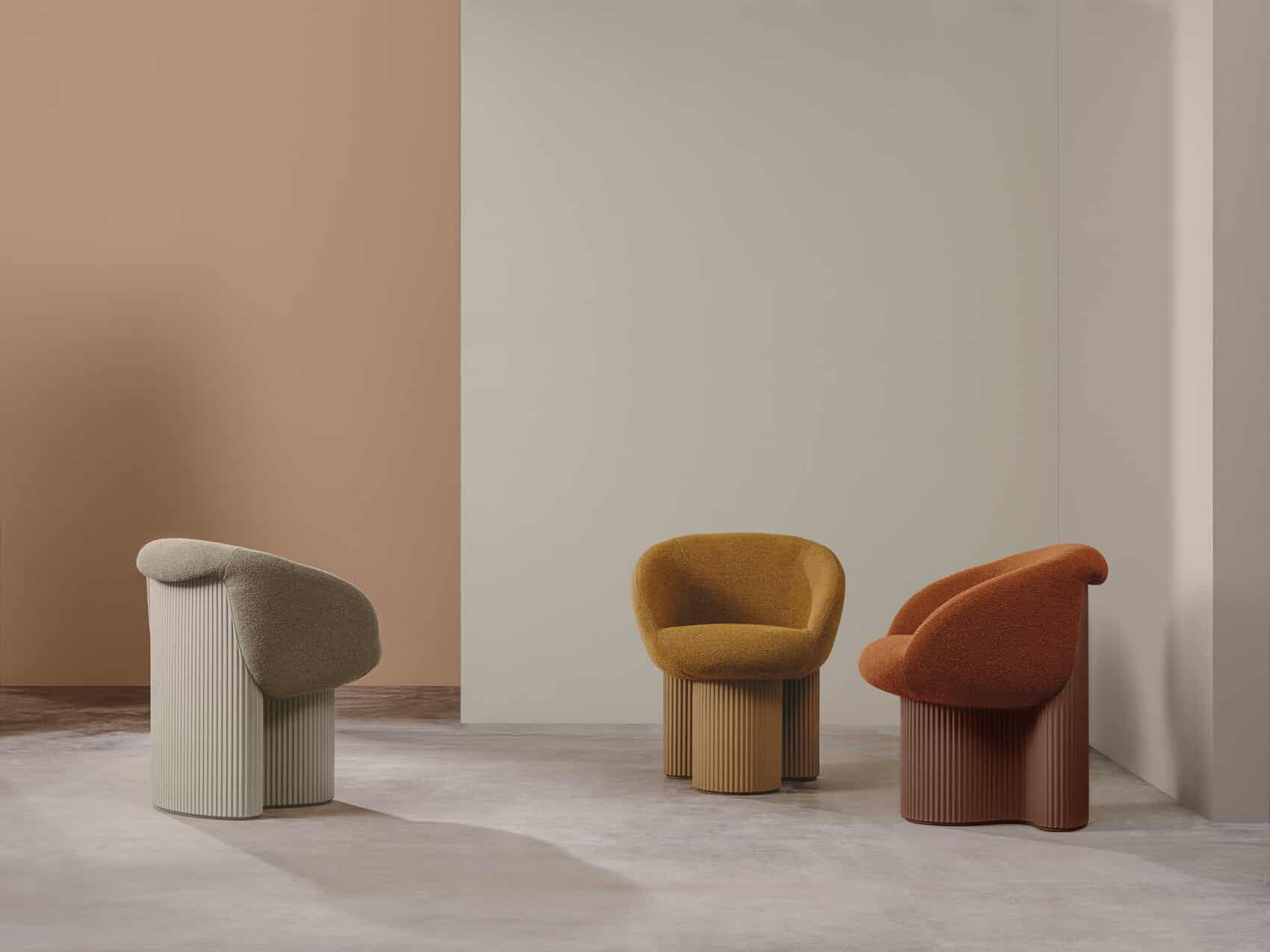
Asiento de la colección Bolete de Patricia Urquiola para Andreu World.
Love on the Castellana
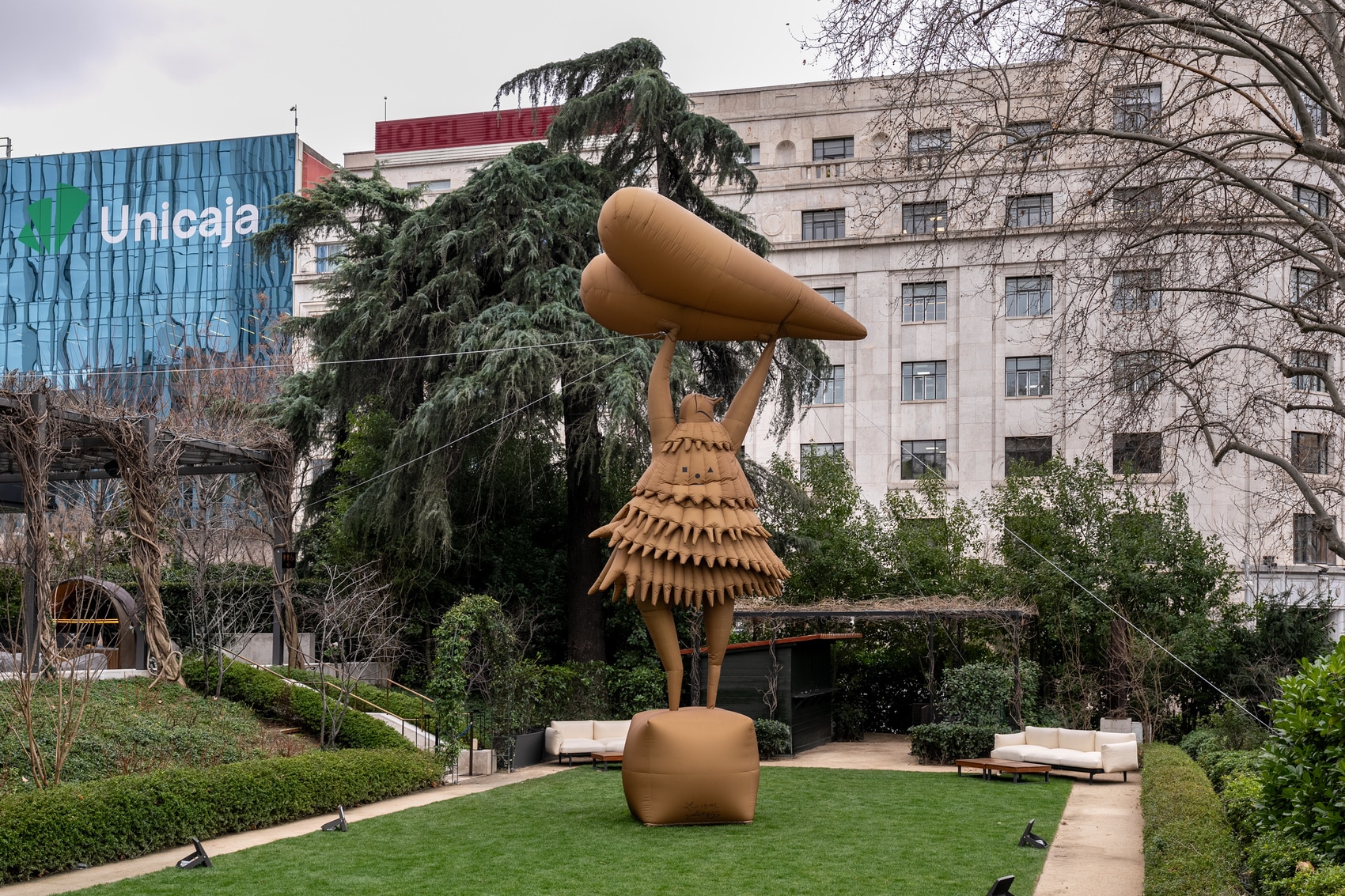
Designer Jaime Hayon, a leading figure in contemporary Spanish and international design and winner of the 2021 National Design Award, is behind the sculptural installation on the Paseo de la Castellana, opposite the Rosewood Villa Magna Hotel. It consists of a large-scale inflatable public sculpture—measuring 8 meters in height—belonging to the Soft Bronze series by the Madrid-born artist, who also has a home and studio in Valencia. As with most of his works, this piece, called Love Catcher, is symbolic. Hayon wants to invite passersby “to pause in the public space and remember the role of love, in all its forms, as a driving force in urban life and the human experience.” The work depicts a half-bird, half-human figure reaching for a heart with its hands raised. “It originated as an act of visual resistance against the current fragmentation of the world,” his studio explains.
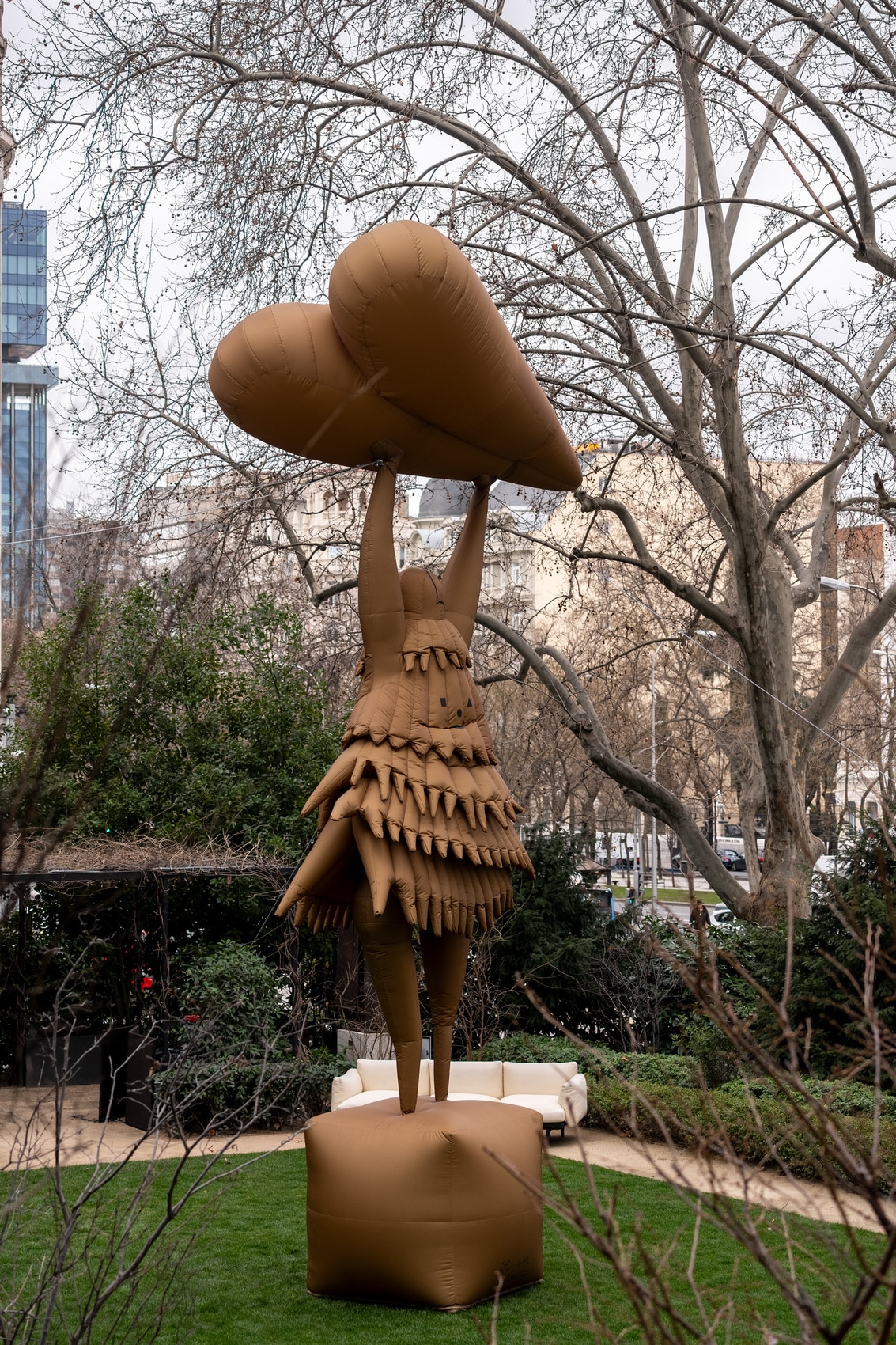
Love Catcher. Foto cortesía de Hayon Studio.
FORMA at Matadero
The first international fair of collectible design organized in Spain is called FORMA and is one of the new additions to this year’s Madrid Design Festival. From March 4 to 8, Nave Una and the Dimad Design Center at Matadero Madrid will open their doors, offering almost 1,000 square meters of space to explore nearly 50 projects by more than 160 national and international designers. The selection was curated by Antonio Luna and Emerio Arena, who have brought together everything from limited-edition furniture and artistic lighting to contemporary ceramics, designer textiles, and other objects that explore materials and new design languages. For five days, the event encompasses established brands like nanimarquina, as well as artisan workshops and specialized galleries. The aim is to offer “a cross-cutting journey through the practices, aesthetics, and processes that are defining contemporary collectible design, both nationally and internationally.” In addition to the exhibition area, FORMA will feature (Per)FORMA, which consists of a program of talks, demonstrations and training activities to “promote the exchange of knowledge, strengthen the creative network and generate real opportunities for collaboration between the different agents in the sector,” the organizers add.
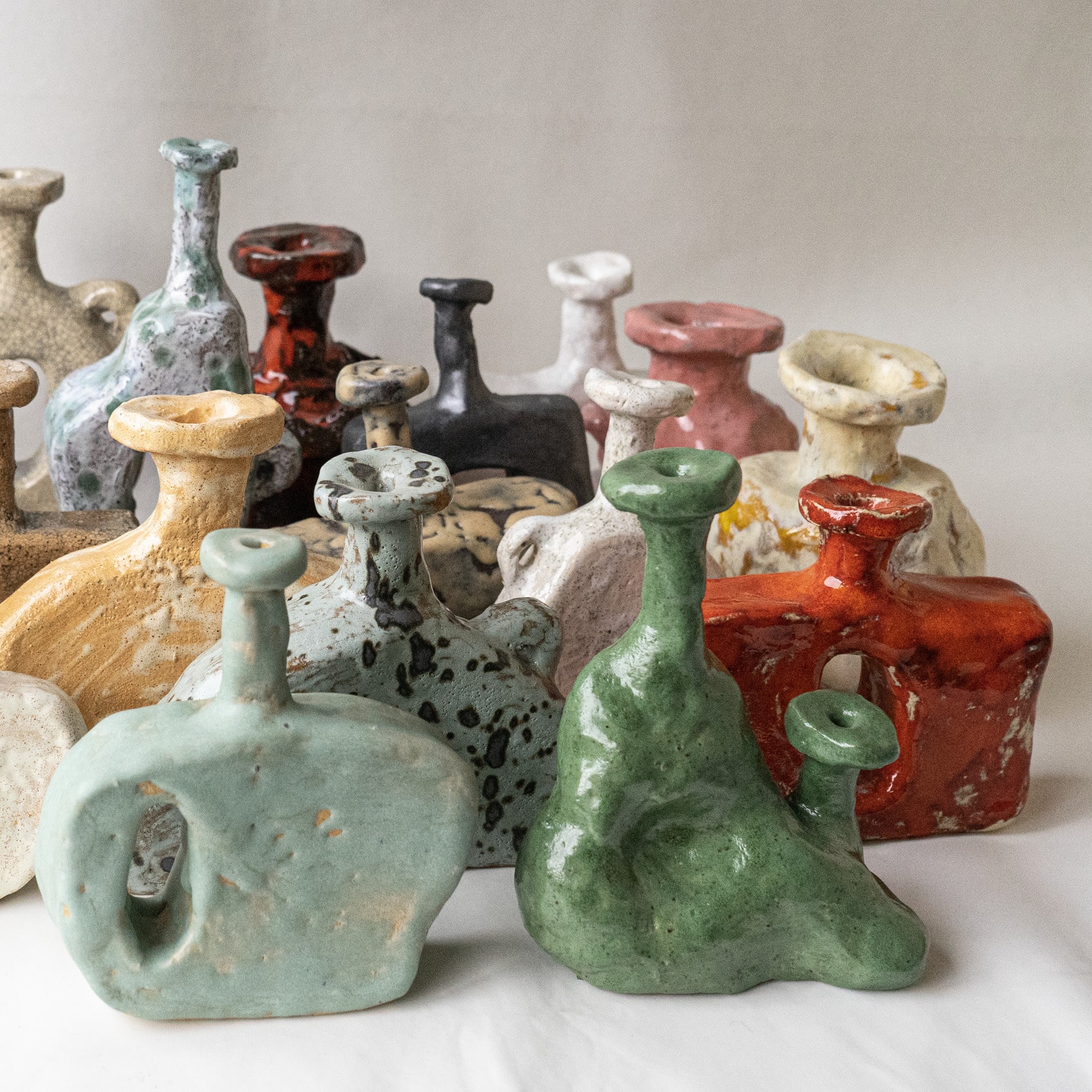
Obras de Wilem Van Hooff, que estarán en el stand de Pott Gallery.
Mayice at the Ateneo
The project presents an exhibition journey through the work produced by its members, Marta Alonso and Imanol Calderón, since 2014. It focuses on design processes, highlighting the prototype as the conceptual and material starting point for industrial production.
For some time now, galleries specializing in collectible design have focused on prototypes created by designers and architects, considering them essential pieces in the development of mass-produced objects. These works, often handcrafted with meticulous attention to materials and aesthetics, represent the initial gesture that gives rise to a subsequent design.
The selection features unique pieces and prototypes that, due to their technical complexity or scale, have not been industrially reproduced. Nevertheless, they have constituted the essence and foundation of designs that, after their evolution, have become part of mass production. The exhibition proposes understanding the prototype not as a preliminary stage, but as an independent entity that embodies research, time, and material reflection.
Free admission from the 5th to the 8th, from 13:00 to 20:00 in the Anselma Room of the Ateneo during the first edition of Forma.
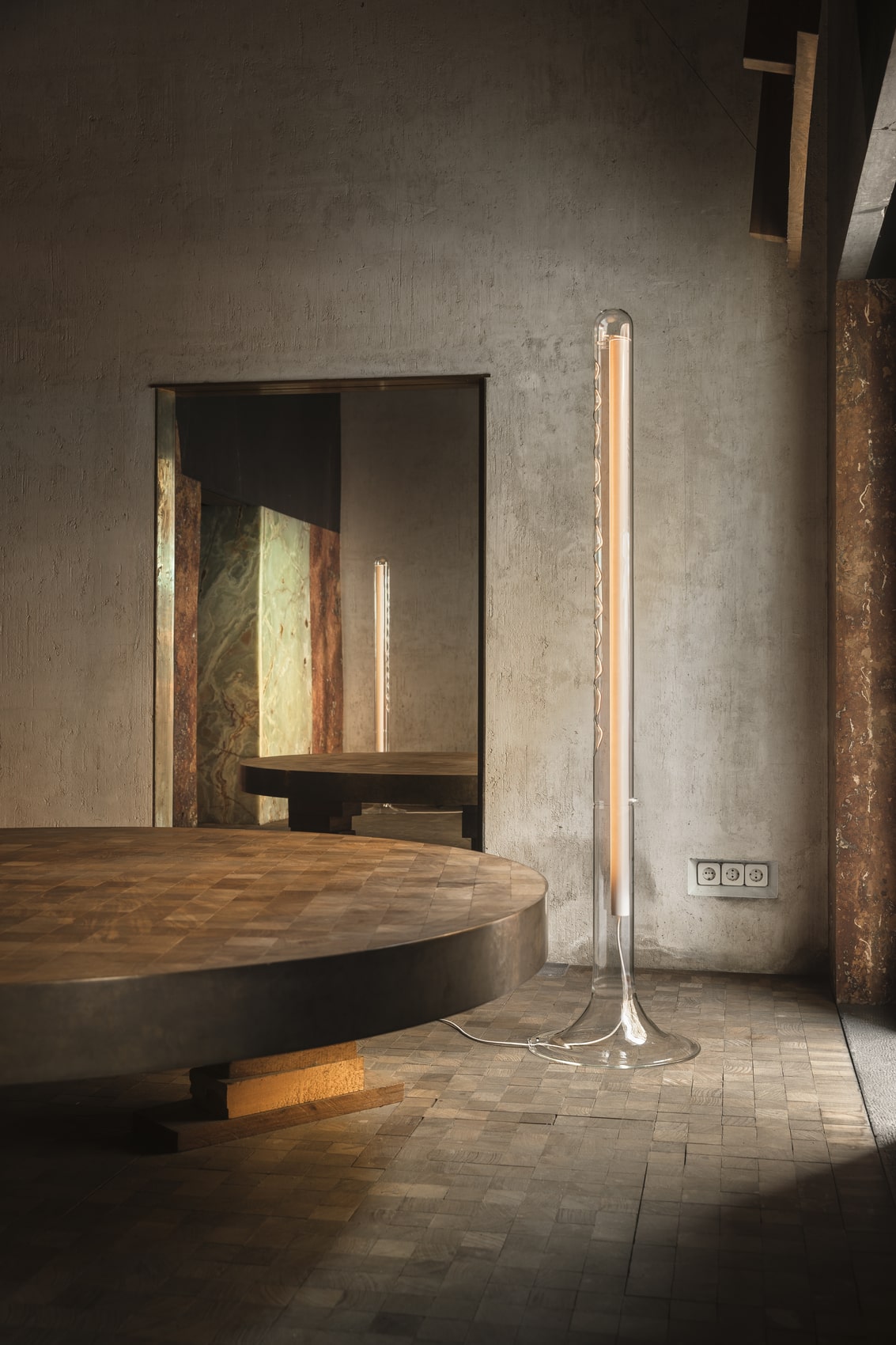
Foto de Pablo Gómez Ogando.
Peña Rugs, a journey through time
“A Walk Through Time” is the title of the exhibition presented by Peña Rugs for the Madrid Design Festival. The exhibition, which will run until February 28 (by appointment), traces the history of a family business dedicated to the handcrafted production of knotted rugs, with over 40 years of history. It all began when Pedro, from the world of finance, took over a textile workshop by chance and fell in love with the craft, changing the professional and family course for two generations.
A visit to their showroom is “a journey through their history and evolution over time, showing how the artisanal craft engages with contemporary design.”
For the company, “it is an exhibition that connects its artisanal heritage with current design. A proposal that highlights the rug’s ability to evolve without losing its essence and that reaffirms the craft as a fundamental part of contemporary design.”
The production process begins with a meticulous and artistic design that is translated into a grid guide for the artisans. They have produced in Spain, Morocco, Mexico, and India, maintaining high quality standards. They have worked for the Royal Household and undertake large projects requiring reinforced looms. They also employ modern techniques such as tafting, which is faster and more economical. This is an opportunity for design enthusiasts and students to learn the story behind each rug.
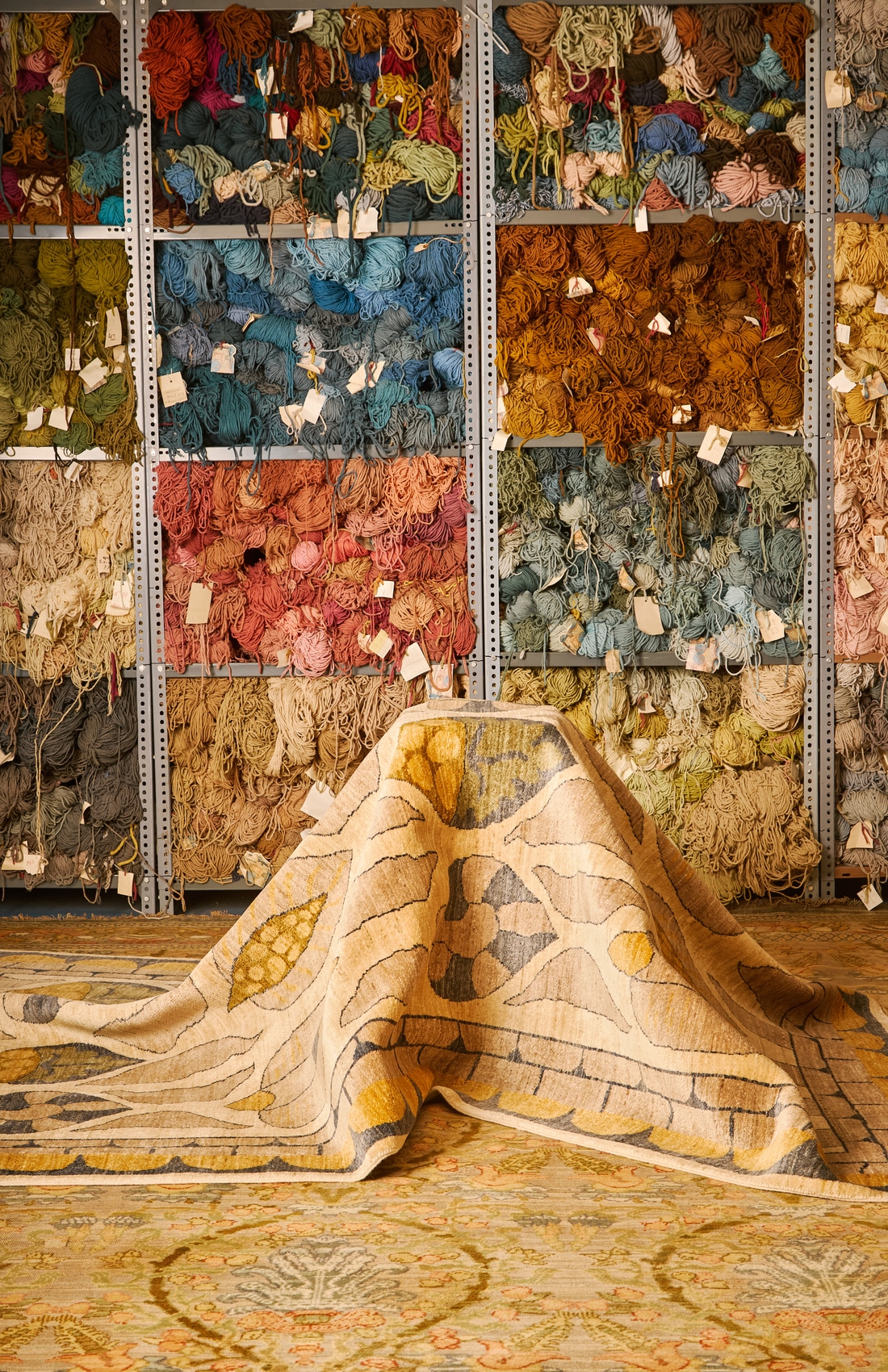
Alfombras Peña, un viaje en el tiempo
Un paseo por el Tiempo es el título de la exposición que ofrece Alfombras Peña con motivo de Madrid Design Festival. La cita que permanecerá abierta hasta el 28 de febrero (previa cita) recorre la trayectoria de una empresa familiar dedicada a la fabricación artesanal de alfombras de nudo, con más de 40 años de historia. Todo comenzó cuando Pedro, procedente del mundo financiero, asumió por casualidad un taller textil y se enamoró del oficio, cambiando el rumbo profesional y familiar durante dos generaciones.
La visita a su showroom consiste en “un recorrido por su historia y evolución a
través del tiempo, mostrando cómo el oficio artesanal dialoga con el diseño contemporáneo”.
Para la firma, “es una exposición que conecta su legado artesanal con el diseño actual. Una propuesta que pone en valor la capacidad de la alfombra para evolucionar sin perder su esencia y que reivindica el oficio como parte fundamental del diseño contemporáneo”.
La elaboración parte de un diseño minucioso y artístico que se traslada a una cuadrícula guía para los artesanos. Han producido en España, Marruecos, México e India, manteniendo altos estándares de calidad. Han trabajado para la Casa Real y realizan grandes proyectos que requieren telares reforzados. También emplean técnicas modernas como el tafting, más rápido y económico. Una oportunidad para que aficionados y estudiantes de diseño conozcan la historia de cada alfombra.
Written by: Beatriz Fabián
Beatriz is a journalist specializing in offline and online editorial content about design, architecture, interior design, art, gastronomy, and lifestyle.