Since 2015, the Logroño Architecture and Design Festival has been an essential, ephemeral event, a laboratory of urban innovation for building the city.
Logroño, epicenter of responsible architecture and urban planning
For six days, the city has celebrated the twelfth edition of the Concentric Architecture and Design Festival, an urban innovation laboratory that has brought together more than 200 architecture studios from 20 countries.
Durante seis días, la ciudad ha celebrado la décimo segunda edición del Festival de Arquitectura y Diseño Concéntrico, un laboratorio de innovación urbana que ha reunido a más de 200 estudios de arquitectura procedentes de 20 países.
Concéntrico has once again transformed the city through 22 installations scattered across the city map. In this twelfth edition, the reflective exercise proposed by this so-called Urban Innovation Lab has revolved around three themes: identity and fiction, urban ecologies, and ephemeral agents. For the organizers, the novelty of Concéntrico has been the celebration of collective, festive, and performative activities in public spaces. It represents a commitment “to new sound experiences and projects linked to accessibility, inclusion, and the transformation of the city’s streets, vacant lots, and spaces.”
As Concéntrico’s director, Javier Peña, stated in the presentation: “We create identity and fiction,” alluding to a photograph from the festival’s second edition in which two children were walking through the city with maps, an image that “encapsulates what we have done so far: to generate autonomous individuals with critical thinking skills.” She spoke these words at the chosen spot for the launch of Concéntrico, at the San Bernabé arch, a place that has stood the test of time since the celebration of this saint in Logroño. It was redesigned by the Italian architect Matilde Cassani, who replicated the skirt and typical colors of the regional costume to create ‘La serrana de San Bernabé’ (The Mountain Woman of San Bernabé).
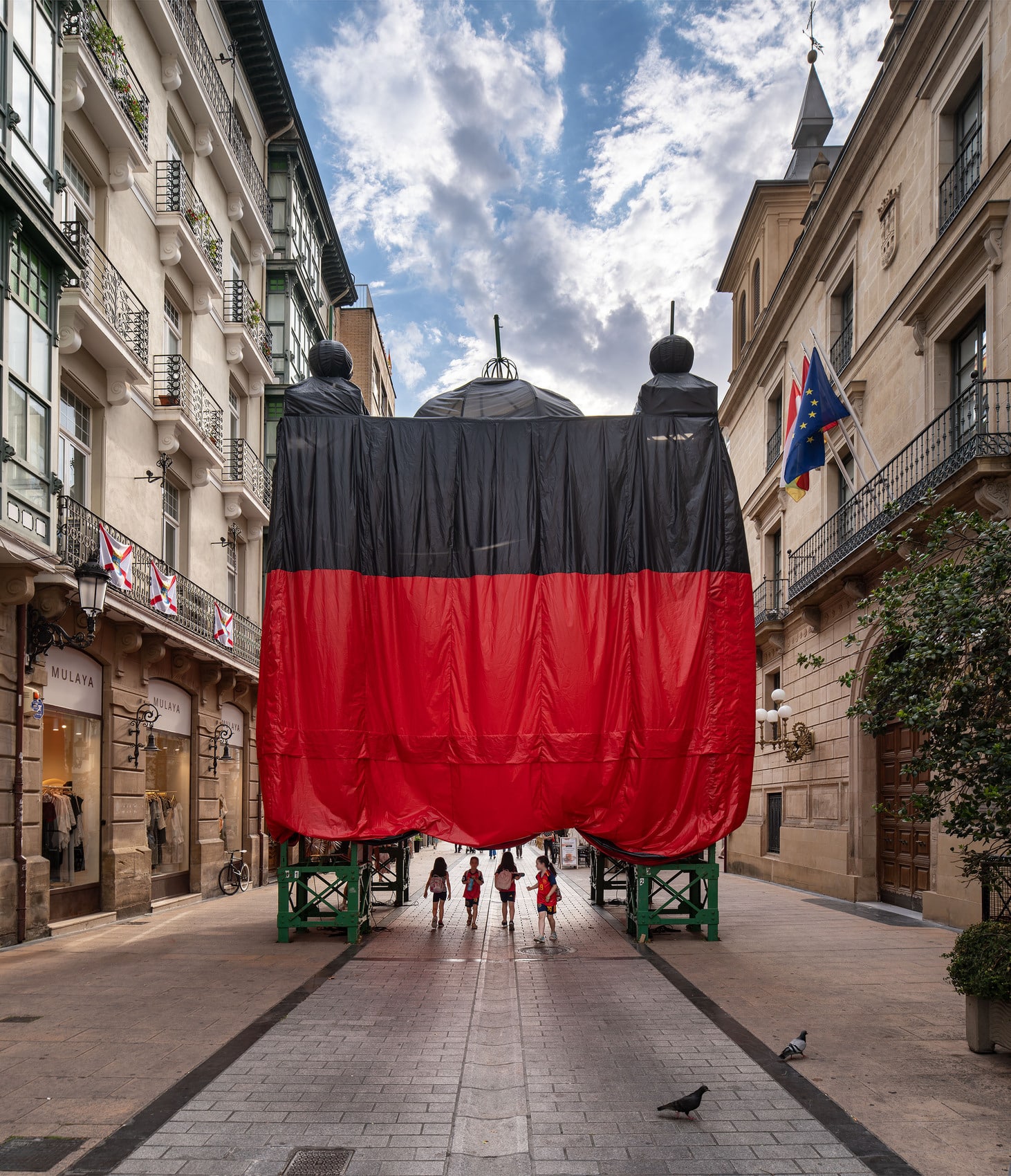
‘La serrana de San Bernabé’, de Matilde Cassani Studio. Foto: Josema Cutillas.
In this setting, the mayor of Logroño, Conrado Escobar, indicated that Concéntrico is a prime opportunity for urban planning, where interventions are adapted to the human scale to “make life better and healthier for those who live in the city, and where urban planning and architecture take on a key dimension.” For his part, the dean of the Official College of Architects of La Rioja, Ángel Carrero, stated that this international event demonstrates that architecture is understood as a public service and chose the phrase by the Italian architect Aldo Rossi, “the city builds collective memory,” to apply to the work of Concéntrico.
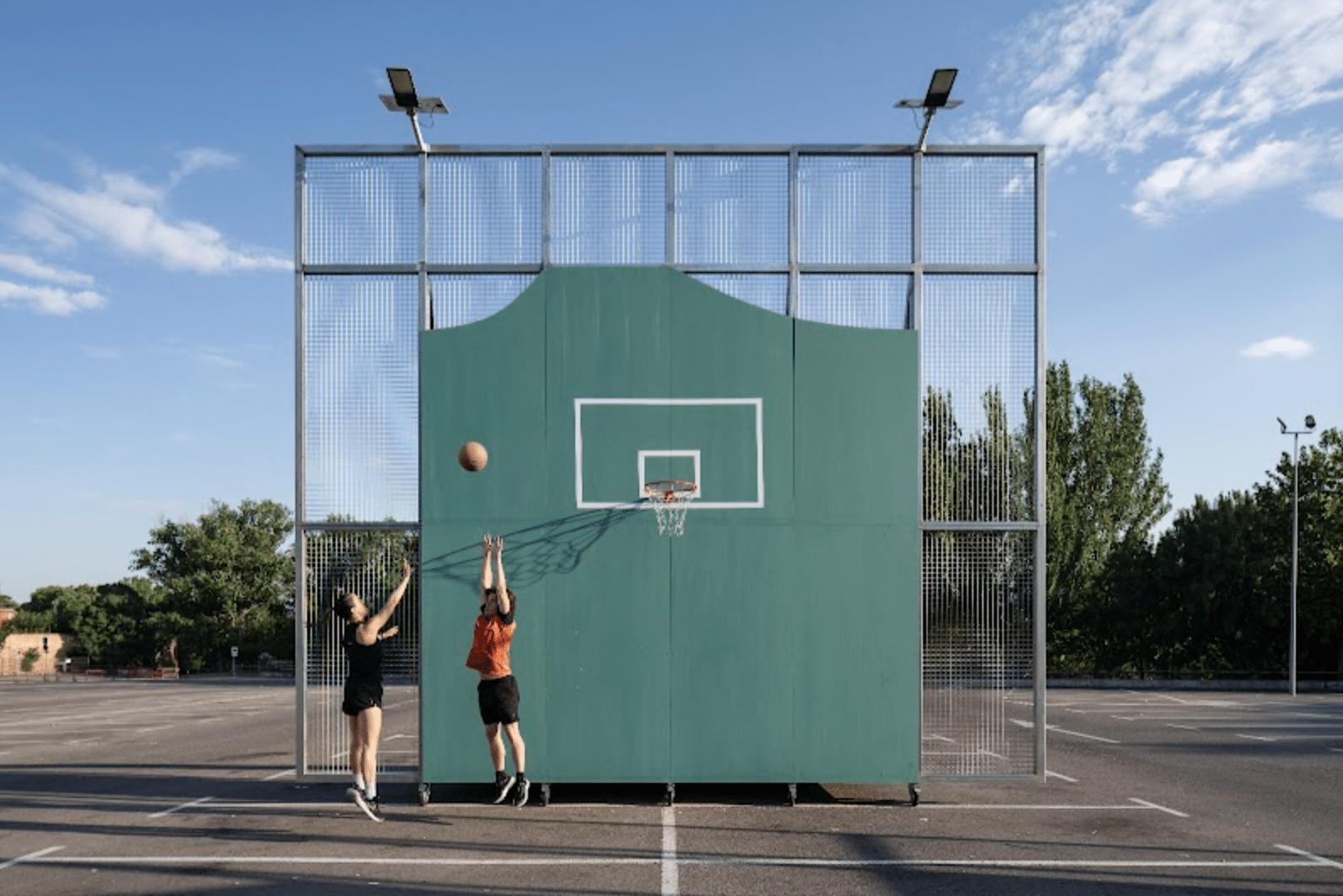
‘Frontones danzantes’, de 2050+, en el aparcamiento del Revellín. Foto: Josema Cutillas.
For the President of the Government of La Rioja, Gonzalo Capellán, the ultimate goal of this event is to “build community,” adding that the installations “are ephemeral, but transformative.” One example was the work ‘Dancing Frontons’ by 2050+, located in the Revellín parking lot, which explored the meaning of ephemerality. The result of an international competition, it won for its groundbreaking approach. Movable structures with wheels and facades that mimicked the profile of houses invited play, a way of creating community. Another installation, ‘The Stork’s Ladder’ by Future Firm at the Iron Bridge, aimed to bring the Ebro Park closer to the city in an accessible way. The structure was inspired by the nests built by storks, and the public requested that it remain in place because it facilitated access to the park.
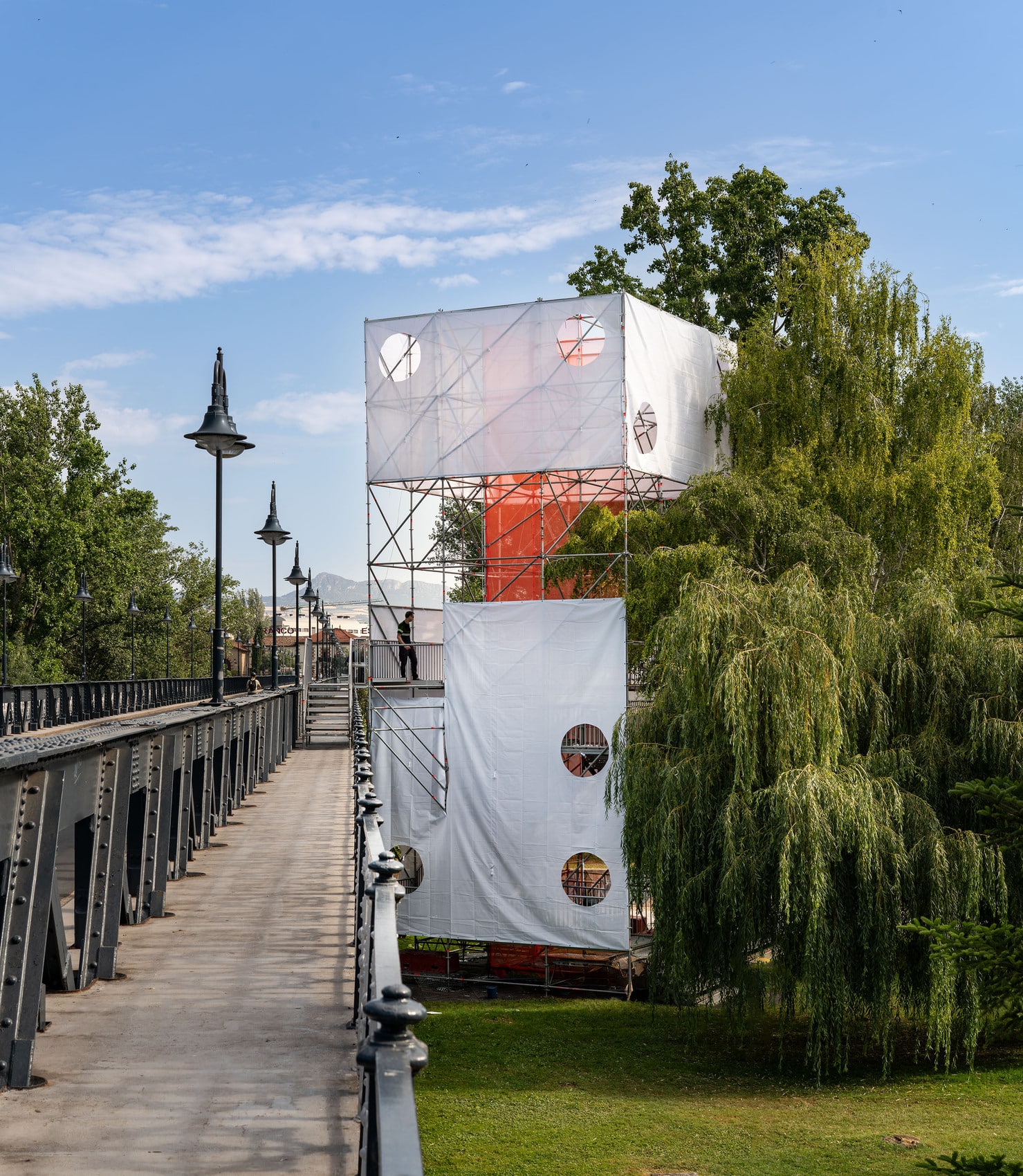
‘La escalera de la cigüeña’, de Future Firm, en el Puente de Hierro. Foto: Josema Cutillas.
The climate-related installations were in dialogue with a project undertaken by the Logroño City Council, which identified 19 critical points requiring action against heat waves and is promoting the construction of a permanent climate island to be installed in Felipe VI Park. One of the most noteworthy was the proposal by the Chilean studio Noof Group, titled ‘Shade, Breeze, Cooling,’ for the intersection of Gran Vía and San Antón. This green space addressed the question of how to tackle heat waves in built environments. It proposed creating a structure that was easy to assemble and replicable anywhere in the world, employing the following strategies: providing shade for pedestrians; ventilation, hence its aesthetic with a large opening in the roof to allow airflow; and cooling, using water sprinklers to reduce the temperature.
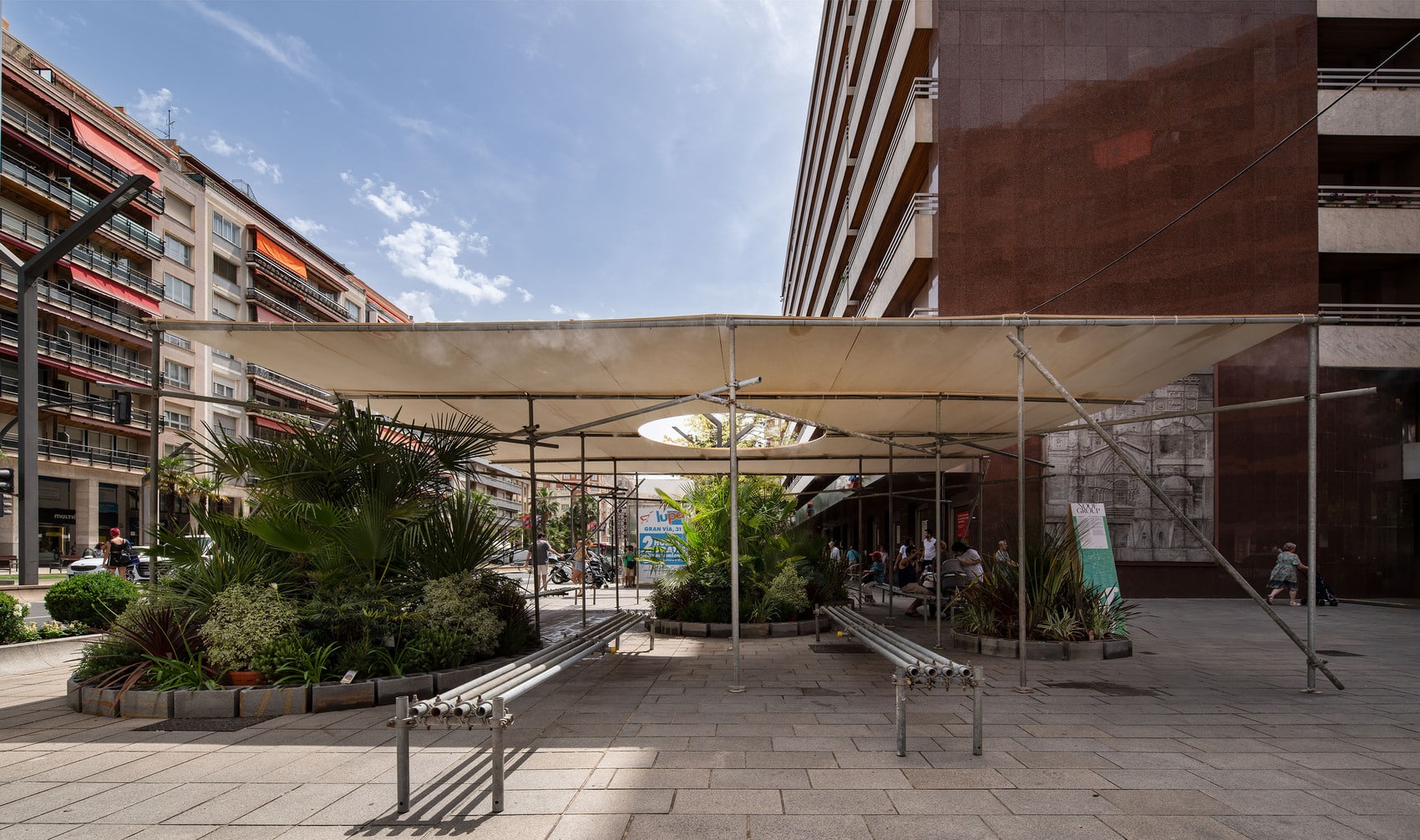
‘Shade, Breeze, Cooling’, de Noof Group. Foto: Josema Cutillas.
One of the installations that forged a sense of identity was ‘Terroir,’ located near the Church of Santiago and framed within the urban ecology theme of this year’s Concéntrico festival. Created by Boltshauser Arkitekten and Garbizu Collar, it blended seamlessly with the walls and arches of the religious building and highlighted the material used to construct the two vertical pavilions of rammed earth, an ancestral technique employed in La Rioja that speaks of place and tradition. Furthermore, its connection to wine lies in the fact that the structure was built using wine barrels.
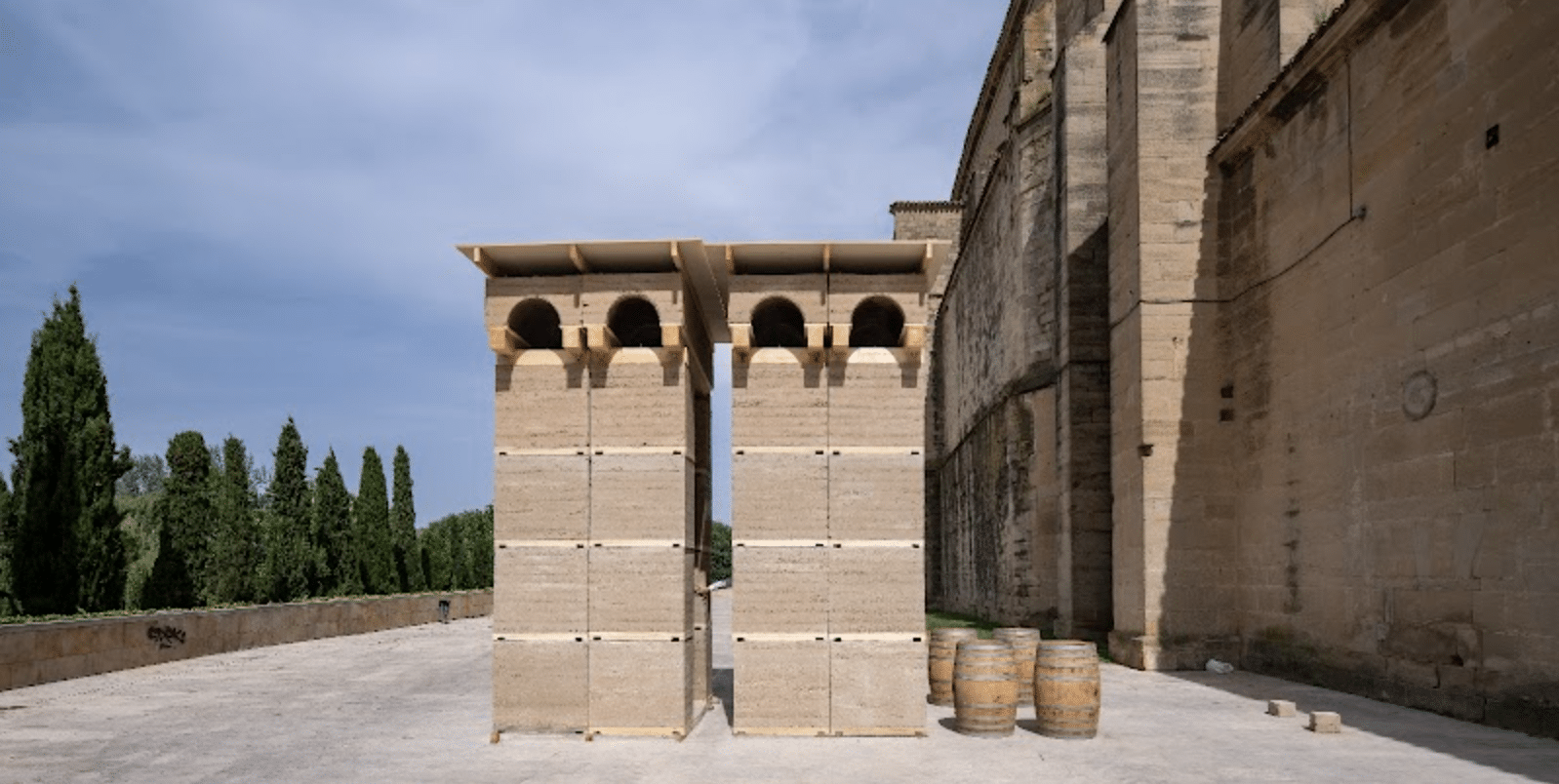
‘Terroir’, de Boltshauser Arkitekten y Garbizu Collar, junto a la Iglesia de Santiago.
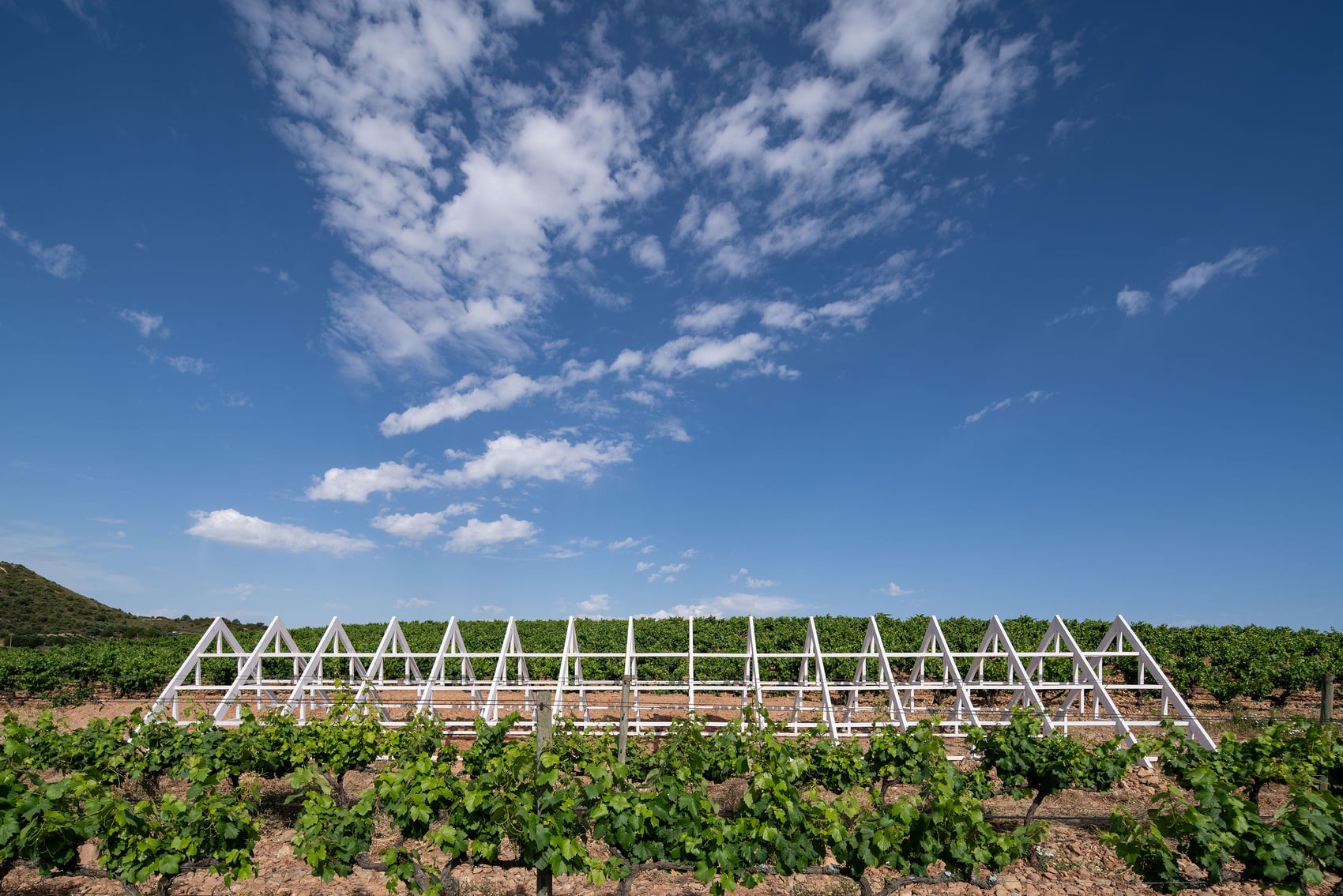
The piece conceived by Ane Arce and Íñigo Berasategui of BEAR was located in the heart of the terroir, installed at Viña Lanciano, owned by Bodegas Lan, sponsors of the festival since its inception in 2015. Set in ancient sediments of the Ebro River, an excavated furrow revealed the different strata accumulated over time and was crowned by a light structure whose geometry stood out against the green of the vine leaves. “Between fabric, water, and reflection, the project activates an entropic perspective that links wine culture, geological time, and the latent presence of Robert Smithson in the territory.”
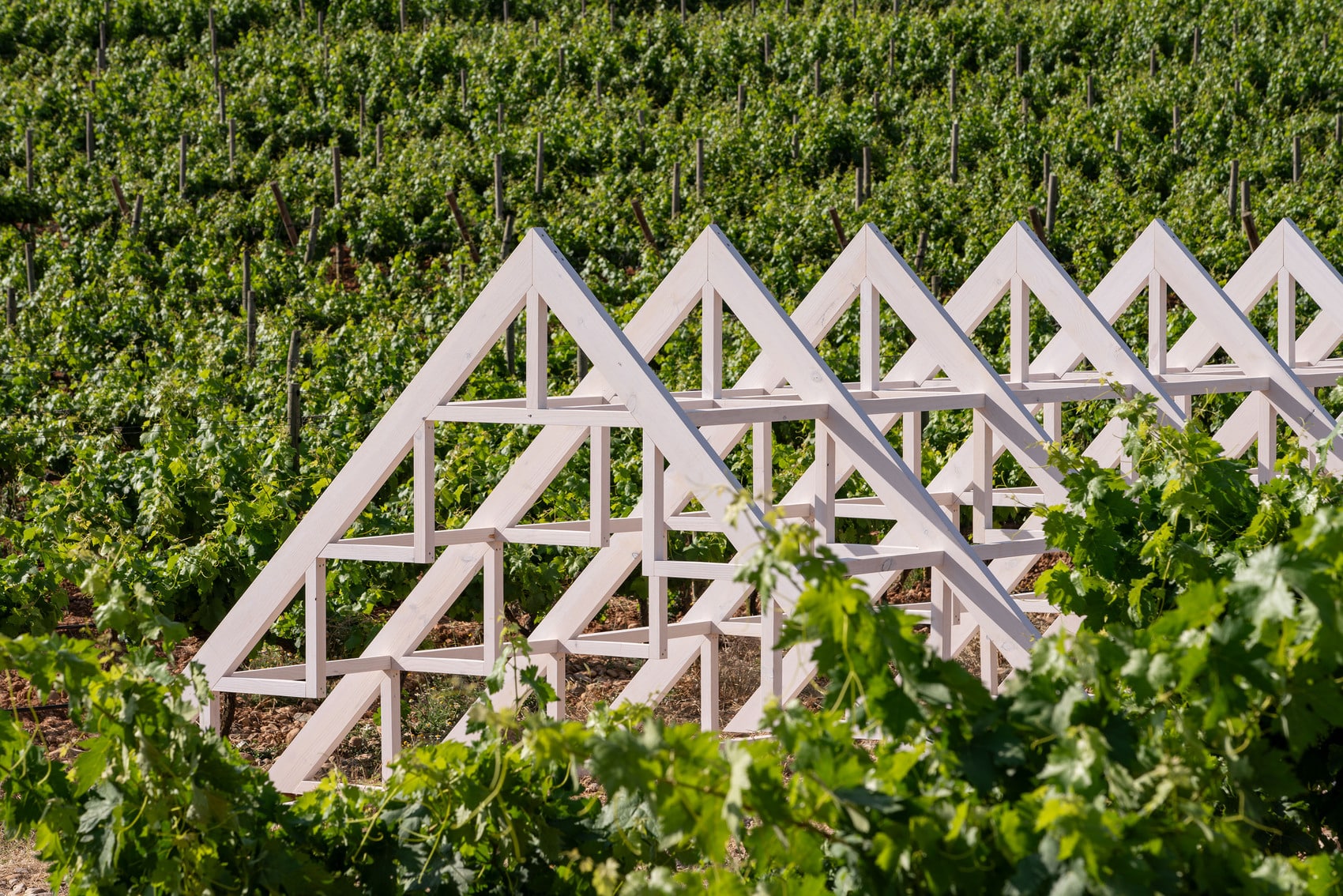
‘Temblores de superficie’, de BEAR, en Viña Lanciano. Foto: Josema Cutillas.
In addition to its architectural proposals, Concéntrico has carried out collective and performative activities, such as concerts and musical sessions, and has also launched the Concéntrico Summer School, “a training and exchange program linked to the festival.” Another initiative is Sounds of Architecture Records, a vinyl record dedicated to Logroño and Concéntrico that, “through recordings of voices, stories, and soundscapes of the city, constructs a sensitive and collective portrait of the place.”
Beyond its ephemeral interventions, Concéntrico once again raised questions about how architecture can activate public space, strengthen collective identity, and explore new ways of inhabiting the city. This commitment has made Logroño an international benchmark for urban innovation.
Written by: Beatriz Fabián
Beatriz is a journalist specializing in offline and online editorial content about design, architecture, interior design, art, gastronomy, and lifestyle.