The CentroCentro space in Madrid is hosting an exhibition until November that traces the long career of the Spanish architect, painter, and sculptor from the 1960s to the present day.
Eduardo Chillida’s geometric exploration
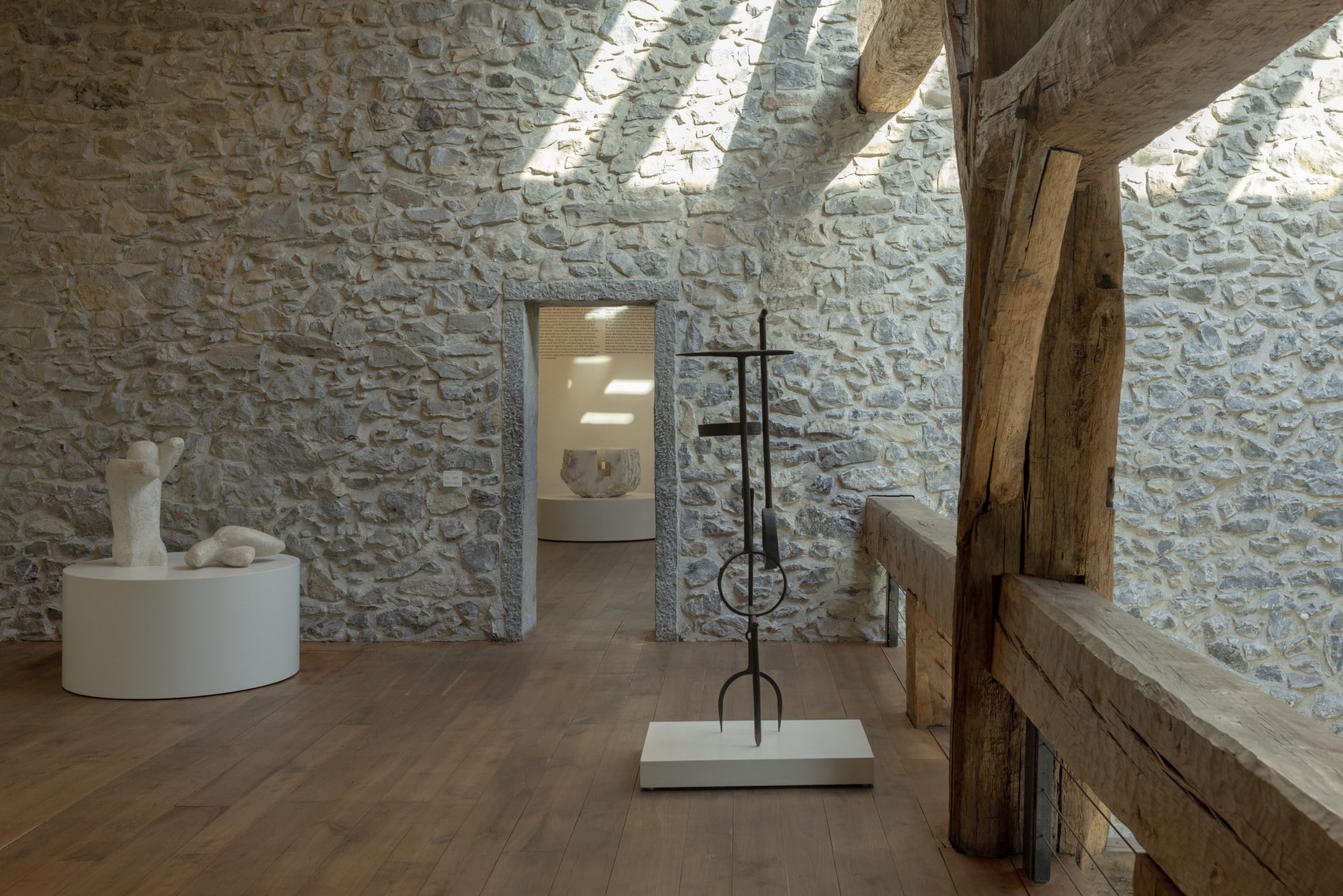
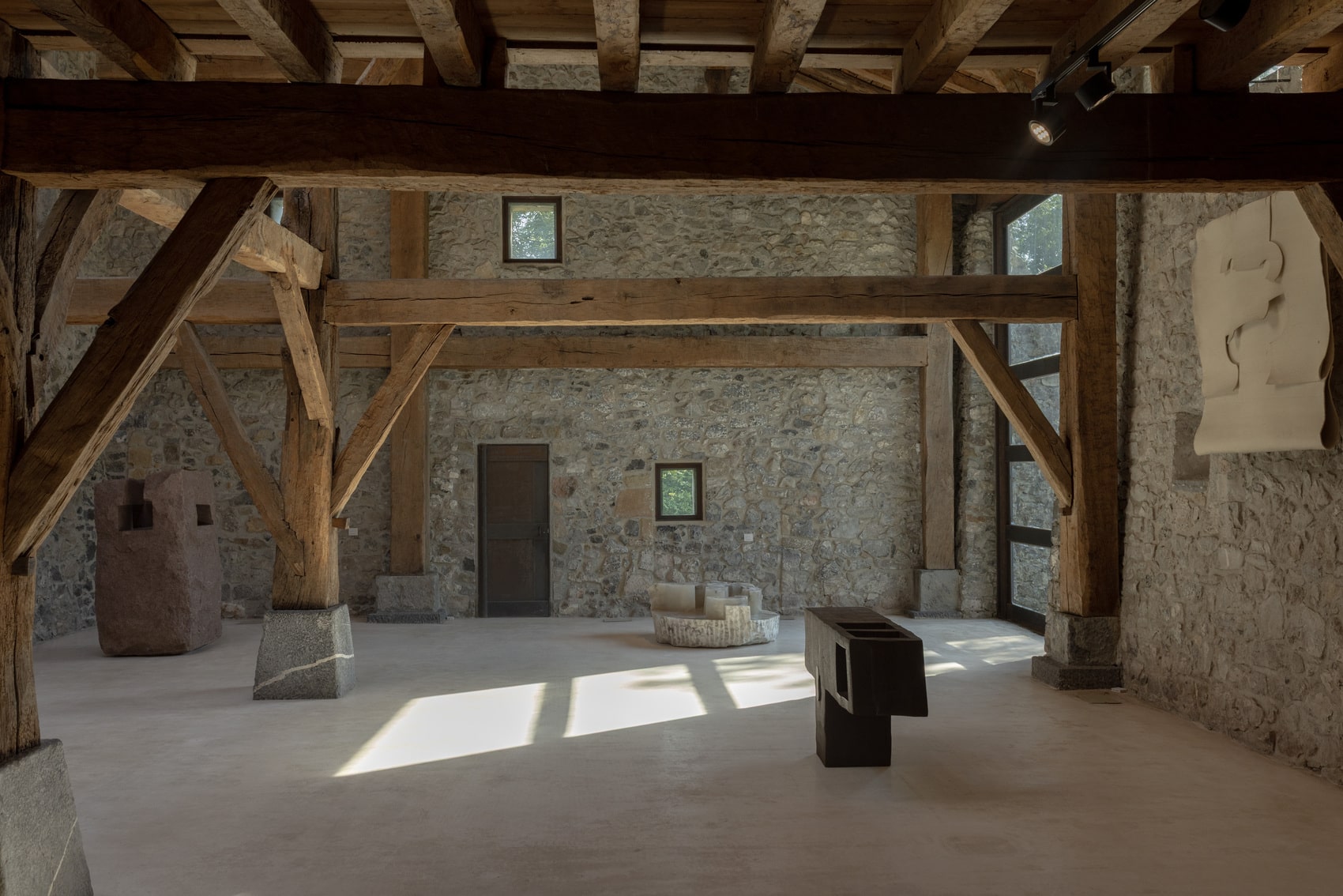
Until October 26, Chillida Leku is presenting the exhibition *Geometric Bodies*, in which works by Eduardo Chillida engage in a dialogue with two pieces by artists Larry Bell and Nora Aurrekoetxea.
Vista de la exposición Cuerpos geométricos en Chillida Leku. Foto Alex Abril
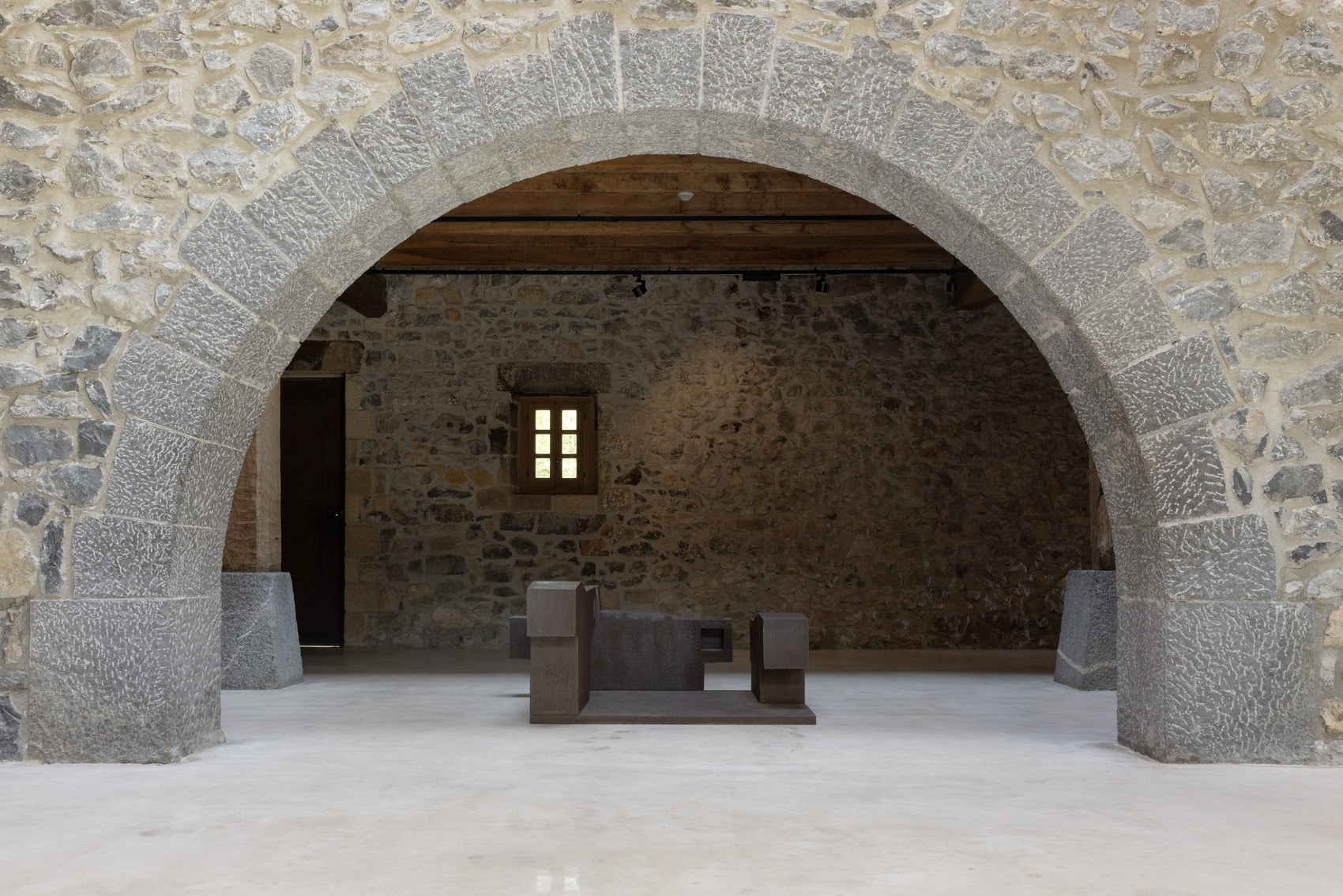
The new exhibition format presented by Chillida Leku this summer aims to generate fresh readings of Eduardo Chillida’s work by juxtaposing it with pieces by two contemporary artists. Titled *Geometric Bodies* (*Cuerpos geométricos*), the exhibition brings together works by Larry Bell and Nora Aurrekoetxea to offer new interpretations of the artist’s oeuvre; Bell explores laminated glass and the way it reflects, transmits, and absorbs light, while Aurrekoetxea establishes a relationship between body, object, and material. *Eduardo Chillida: Geometric Bodies* (featuring Larry Bell and Nora Aurrekoetxea) surveys various stages of Chillida’s creative output to analyze his use of geometric forms as a formal device.
Vista de la exposición Cuerpos geométricos en Chillida Leku. Foto Alex Abril
The sphere and the cube are two geometric forms present in the sculptor’s work—ranging from his early plaster pieces of the late 1940s, which were “linked to figuration,” to his later, publicly oriented architectural projects characterized by greater formal synthesis—according to Chillida Leku.
The spaces of the Zabalaga farmhouse—restored and adapted by Eduardo Chillida and his wife, Pilar Belzunce, in collaboration with Basque architect Joaquín Montero—house 40 works that examine how Chillida explored spatiality through the sphere and the cube. “It invites us to discover how geometry, far from being a closed or purely formal language, becomes a tool for conceptualizing space, scale, limits, and the relationship between matter and void,” says Mikel Chillida, director of Chillida Leku.
Vista de la exposición Cuerpos geométricos en Chillida Leku. Foto Alex Abril
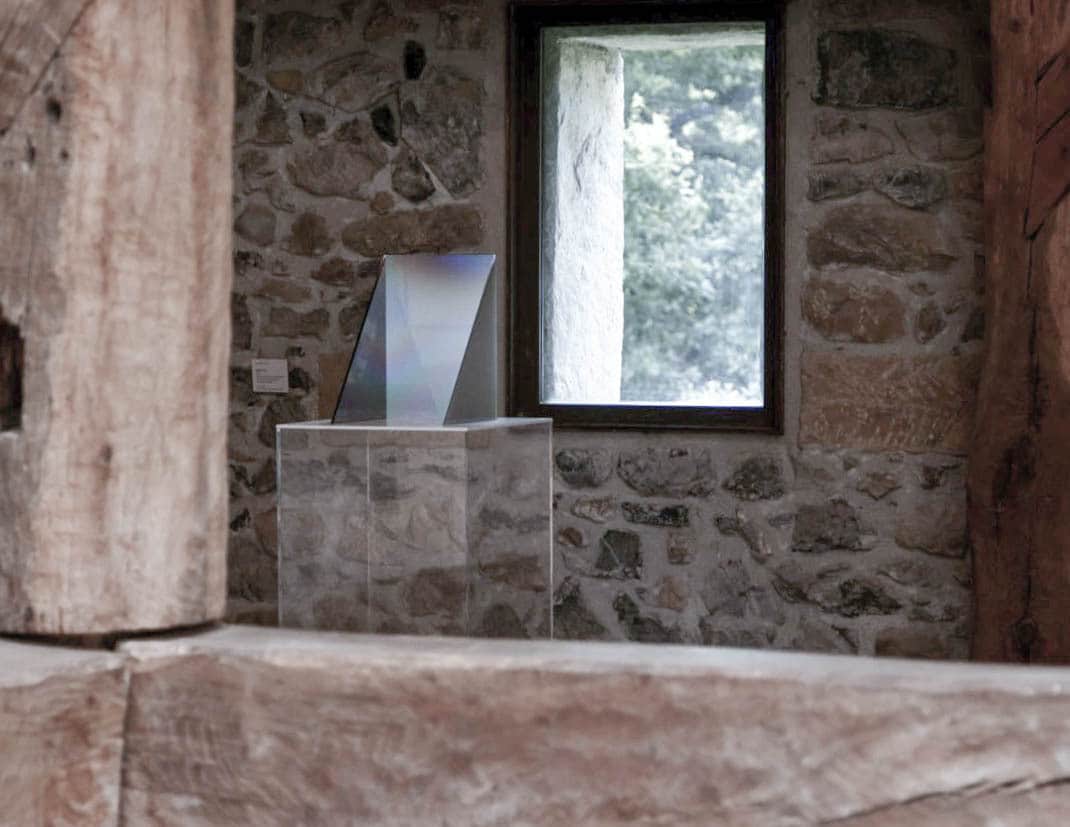
Larry Bell’s glass sculpture *Triolith D* (2020), on loan from Hauser & Wirth, alters the perception of space and the visitor’s visual experience in relation to the site. “As is often the case in Bell’s work, light becomes another material that transforms the piece, making it come alive and shift,” notes the text explaining the project.
Vista de la exposición Cuerpos geométricos en Chillida Leku. Foto Alex Abril
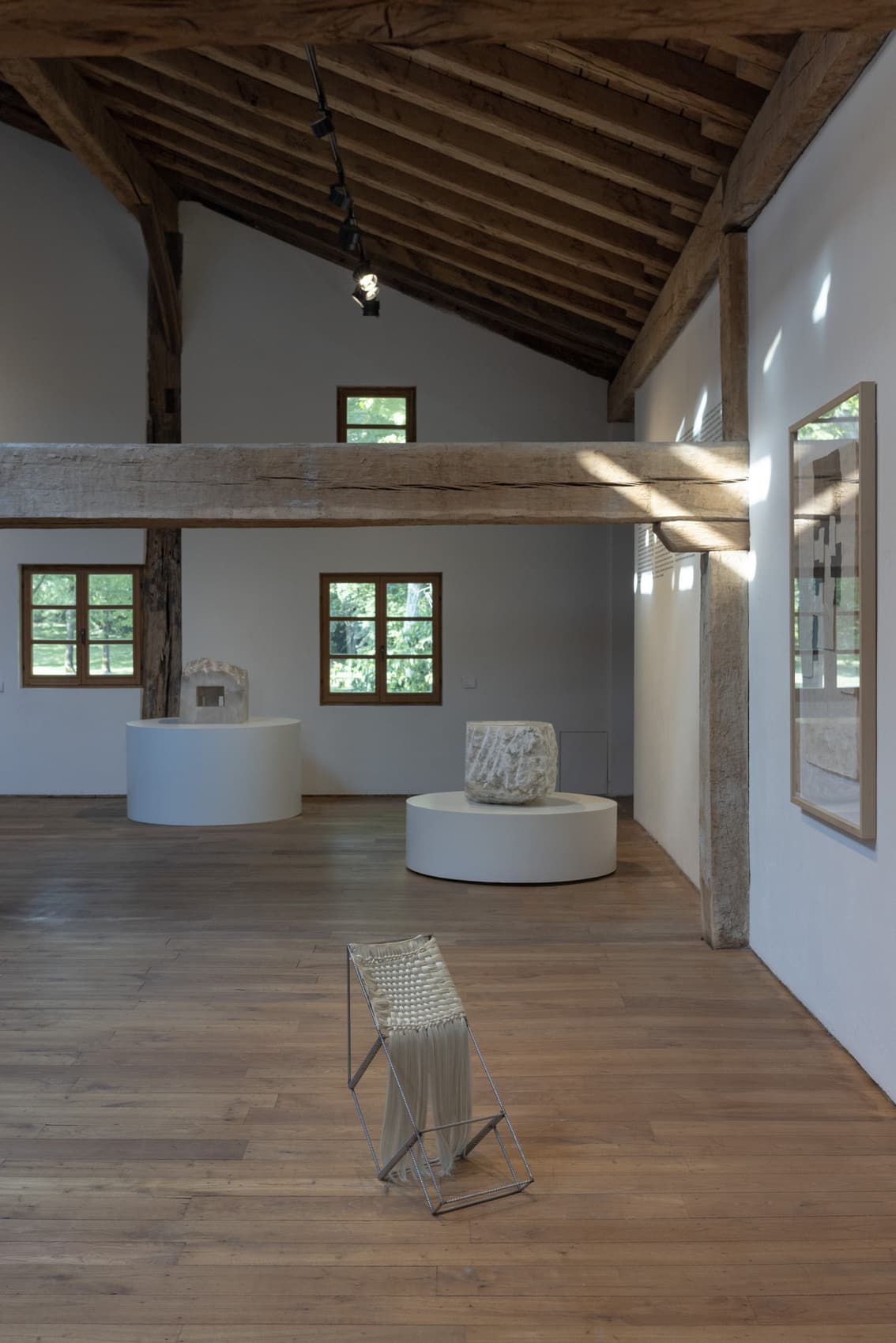
Meanwhile, the second guest work—*aulki bat* (2019), created by Basque artist Nora Aurrekoetxea during her residency at the Royal College of Art—comes from the collection of the CA2M museum in Móstoles. It consists of a piece made of metal rods and synthetic hair woven using macramé techniques, created in collaboration with stylist Milena Diekmann. The result alters the function of an everyday object—the chair—to invite reflection on the relationship between body, object, and space.
Vista de la exposición Cuerpos geométricos en Chillida Leku. Foto Alex Abril
For Estela Solana, Head of Exhibitions at Chillida Leku, these two works “generate a productive tension among the three practices: the ephemeral versus the solid, the connection between body, space, and sculpture, or the reflectivity of glass set against alabaster open up a particularly interesting field of interpretation.” She adds: “Eduardo Chillida belongs to a generation of artists who sought to transform art through sculpture. He did not aim to break down the sculptural object, but rather to redefine its spatial presence.”
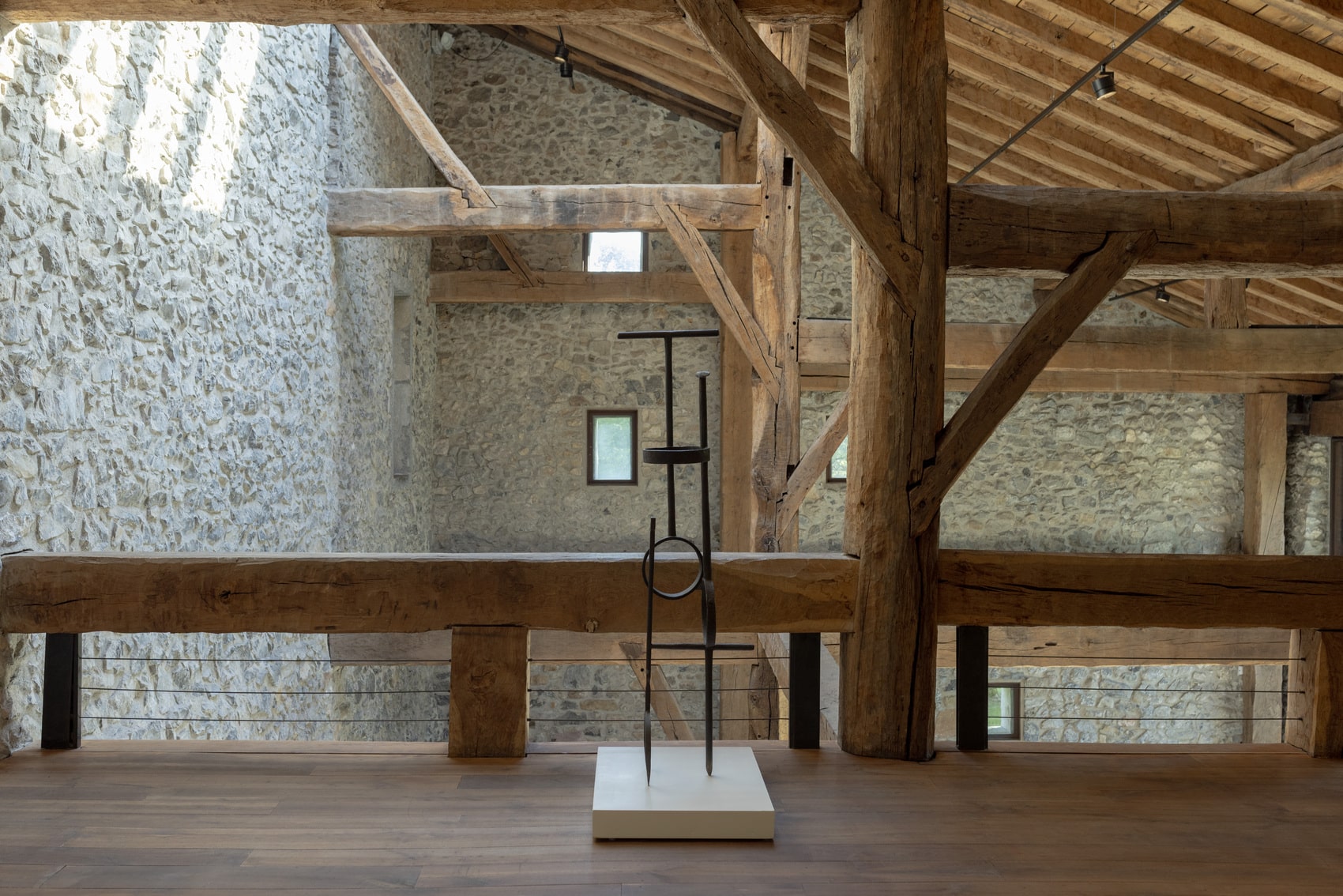
Vista de la exposición Cuerpos geométricos en Chillida Leku. Foto Alex Abril
In conjunction with the exhibition, Chillida Leku is self-producing a work by the artist to feature in the show and publishing “Collectible No. 09” to expand upon the exhibited content. This complements a program of activities that includes guided tours, family art workshops, a guided meditation session with Silvia Hoyos, and a conversational tour with Nausica Sánchez from the museum’s Education Department.
The exhibition runs until October 26, 2026, and was organized in collaboration with the Hauser & Wirth gallery and private collectors, as well as institutions such as the CA2M Museum, the Bilbao Fine Arts Museum, the Museum of the University of Navarra, and Artium Museoa.
Written by Beatriz Fabián
Beatriz is a journalist specializing in offline and online editorial content covering design, architecture, interior design, art, gastronomy, and lifestyle.