Target Madrid: These are the new nationalities that are buying property
The nationalities seeking property in the prime segment are increasingly diverse, causing the average price of luxury housing in Spain to rise by 5% annually over the last three years, with Madrid being the most sought-after destination.
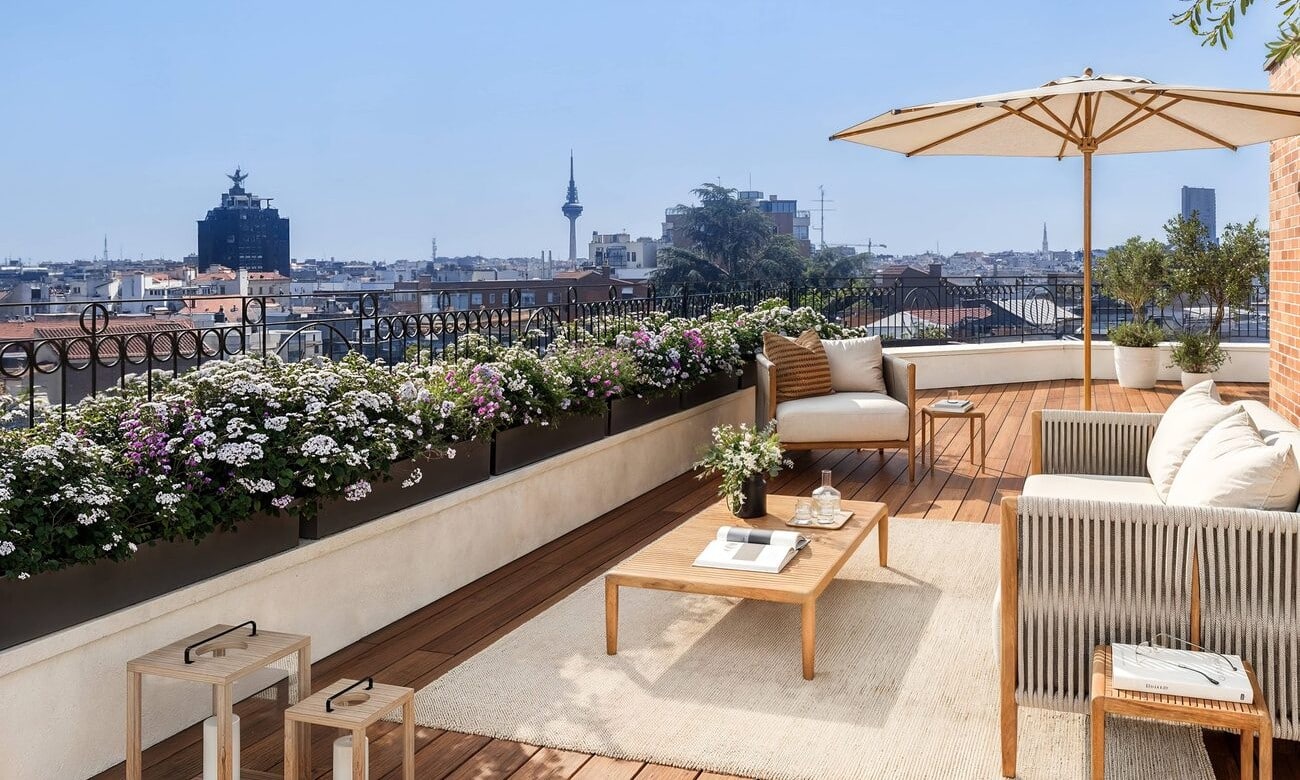
Spain is a key destination for high-net-worth individuals seeking a residence in Europe.
The world’s wealthiest individuals have shifted their investment focus to Europe, increasingly targeting Mediterranean countries, a departure from the traditional destinations of countries like Germany, Switzerland, and the United Kingdom, where these investments have been concentrated for decades. In this new real estate landscape, Madrid is playing a crucial role, already accounting for 43% of real estate investments in Europe. Geopolitical tensions in various parts of the world are an incentive to relocate, or at least to have a stronghold where one can do so. Furthermore, Spain boasts privileged conditions: climate, culture, gastronomy, cost of living, and a favorable ranking compared to other cities in terms of safety, healthcare, transportation network, and price per square meter for quality housing.
On the other hand, cities like Madrid not only enjoy all these characteristics, but are also the chosen location for large companies and wealthy individuals as the base of their operations. Yet, it remains more affordable than other top-tier European cities: buying a medium-sized apartment in the Salamanca or Jerónimos districts for 4 or 5 million euros is still a competitive advantage compared to the price of the same square footage in London or Paris. Transportation connections to the rest of the world are excellent, and Madrid Airport is undoubtedly one of the largest and newest in Europe.
What is the profile of the foreign buyer in Spain?
If we speak in general and statistical terms about the nationalities that buy property in Spain, the picture is fairly balanced between British, German, Moroccan, and French buyers, followed, with a notable increase in recent years, by Poles, Chinese, Ukrainians, Dutch, Mexicans, Venezuelans, Colombians, and Americans. But undoubtedly, each autonomous community, and even each city, has its own particularities. Therefore, if we focus on Madrid, as a destination for investment or residence, the trend is more concentrated among certain nationalities. Thus, we find a profile of Chinese buyers looking for low prices, Latin American and North American buyers in the luxury sector, and Europeans (Italians, French, British, and Scandinavians) with a significant presence in the general market.
But in the housing market, and especially in the luxury housing market, it’s not so much the quantity that matters, but rather the cost per square meter, because we’re talking about special properties that often aren’t even on the open market. In this sense, the nationalities that invest the most per square meter are Americans, Mexicans, Swiss, Swedes, Norwegians, and Germans. With one million euros (according to KF’s The Wealth Report 2025), in Madrid you could buy 87 square meters of a home in the city center (92 square meters in Lisbon), compared to 42 square meters in Paris or 31 square meters in London.
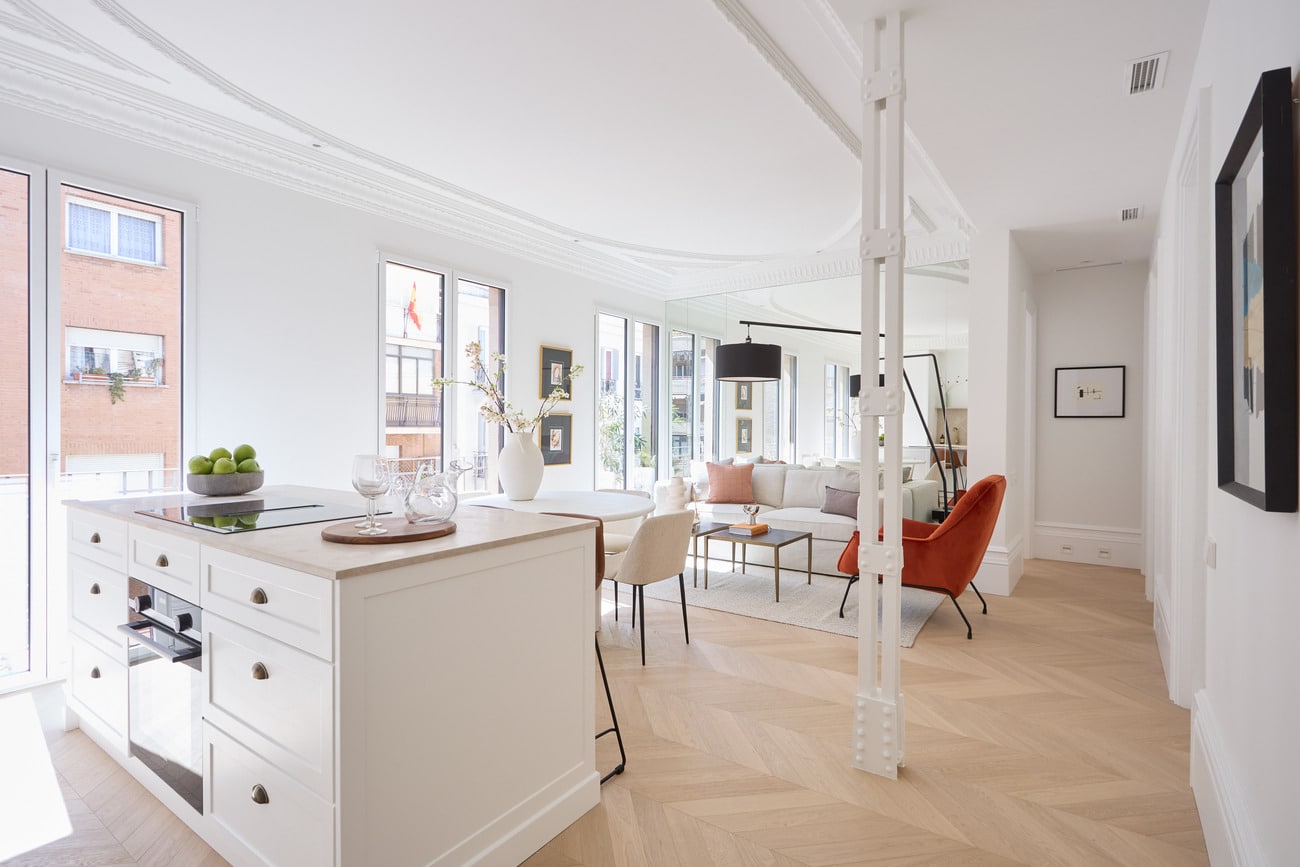
What type of housing does each profile/nationality buy?
Americans: They look for housing in the center of large cities, but also a large size, so they also consider developments with single-family homes and security in luxury developments outside the city center. Another concept to consider is the pied-à-terre, as a short stopover in Madrid, a stepping stone and connection to Europe. This nationality seeks a property in a newly built condominium or a residence with amenities similar to a high-end hotel, which is very common in American metropolises. In this segment, branded residences are a type of property that fits very well with this American buyer. If the prices in the private units of Four Seasons Canalejas ranged between 15,000 and 18,000 euros per m², those of Mandarin Oriental ranged between 18,000 and 25,000 euros per m², an average price of between 25% and 30% more compared to traditional luxury housing.
Even so, and especially when traveling with family, American buyers still tend to prefer houses or villas, seeking extra-large spaces and privacy. For example, this spectacular home in the Ciudalcampo development, designed by the ABIBOO studio and Alfredo Muñoz, is an example of a large property that could suit a buyer looking above all for space (1,700 m² built); privacy (guaranteed on a 4,400 m² plot); security, in the gated community located north of the capital; and of course, exclusivity with a groundbreaking design. In short, it is a unique, signature work that also boasts every comfort: aerothermal heating and cooling; radiant floor heating and cooling; a gym; a large wine cellar; a garage; and numerous service areas.
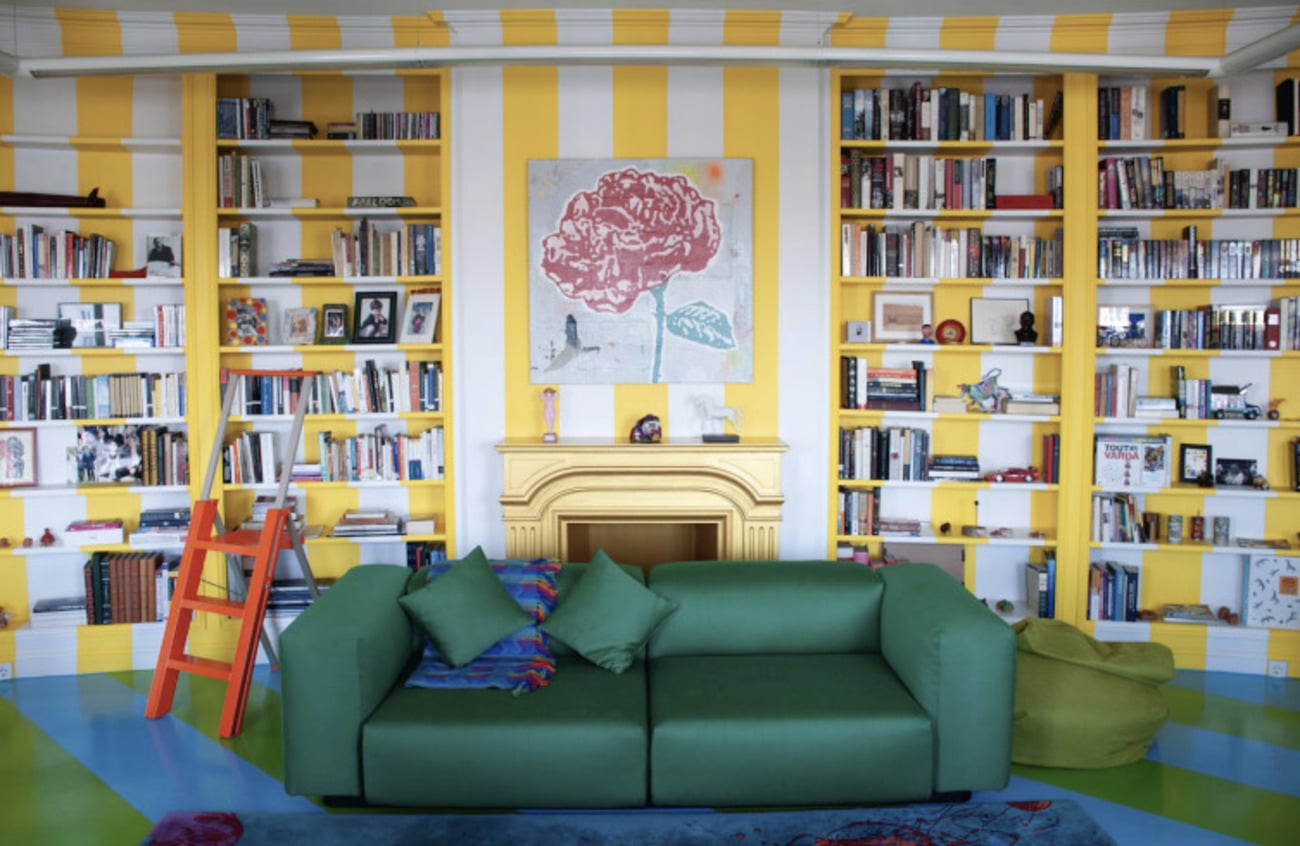
The French: they like urban areas, close to main shopping streets but also open, with green spaces or nearby parks. They consider a well-maintained home essential, with a stately facade and extras like a storage room. The Salamanca and Recoletos districts are the most sought after. And for expatriate families, the Arturo Soria-Conde Orgaz area is popular due to its proximity to the French Lycée. The various historic neighborhoods, such as El Viso or Cruz del Rayo, are also particularly appealing to French buyers. In homes as unique as this one, in the Castellana El Viso area, a discerning buyer would undoubtedly pay for its singularity. It’s a 561 m² house with a panoramic terrace of over 100 m² and a conservatory of approximately 50 m². A house full of color, design, and personality, perfect for book lovers, as libraries are a recurring feature.
Latin Americans in general: Mexicans in Madrid primarily seek luxury homes in central neighborhoods like Salamanca, Chamberí, and Recoletos, valuing spacious living areas, bedrooms with walk-in closets and en-suite bathrooms, and top-quality finishes. This type of buyer, although initially purchasing with the intention of having a property that connects them to Europe, often ends up bringing their families. Therefore, in their search for those extra square meters, we’ve seen a shift from neighborhood areas like Salamanca or Recoletos to premium suburbs such as La Moraleja or various developments in Pozuelo de Alarcón. Demand is focused on purchasing properties for second homes or investment, including fractional ownership models, although there is also interest in premium rentals.
The Chamberí district has become one of the most sought-after areas, both by Spanish and international buyers. The latter, in particular, are drawn to the Almagro neighborhood (within the Chamberí district), prized for its stately character and elegant buildings reminiscent of the Salamanca district. Both neighborhoods were chosen by much of Spain’s upper class as their residences in the late 19th and early 20th centuries, and remain popular today with affluent foreigners.
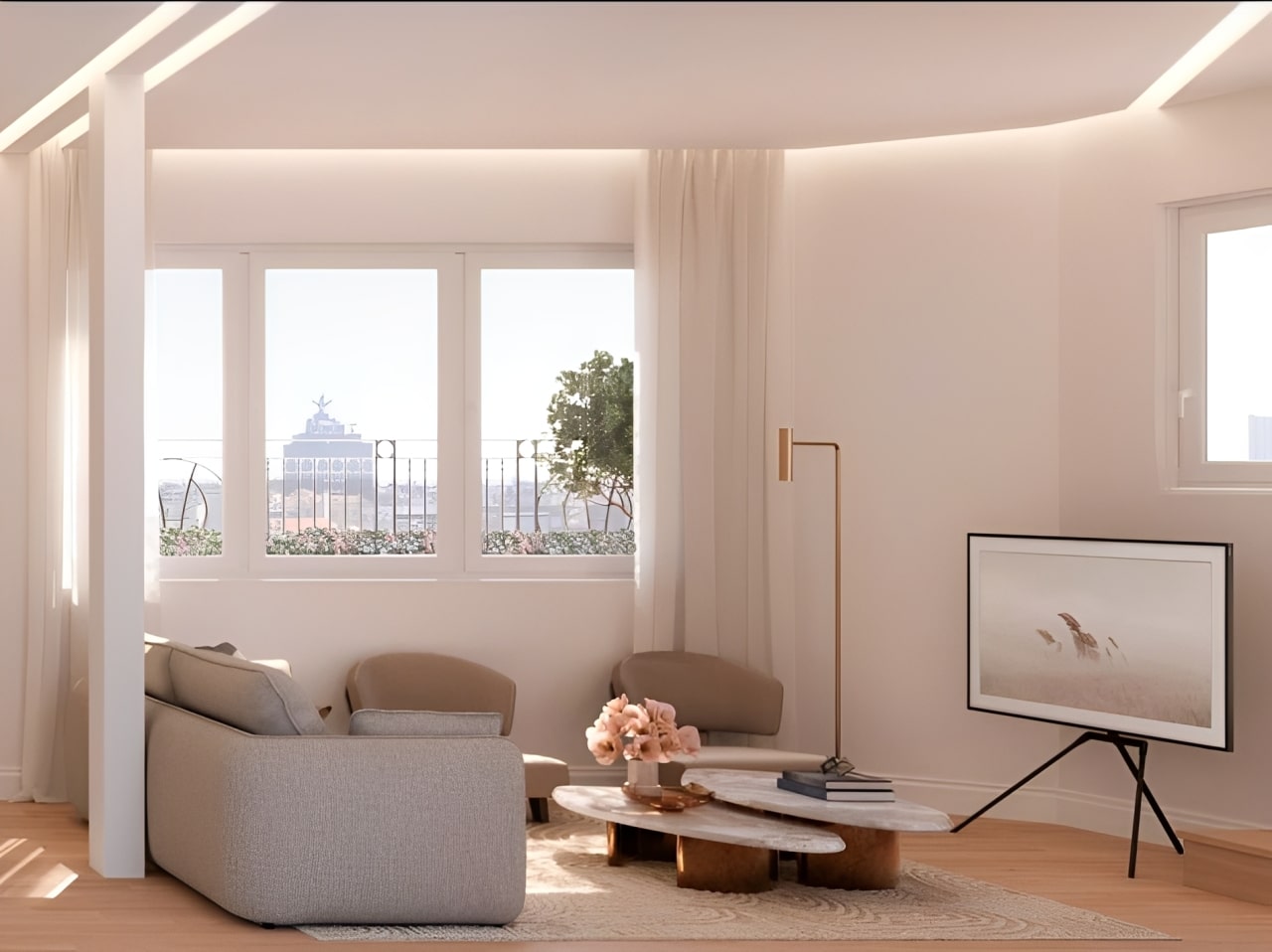
This apartment, currently being renovated, is going to be absolutely spectacular. Located on one of the most exclusive streets in the Almagro neighborhood, it boasts exceptional natural light and a large terrace, undoubtedly one of the key features that makes this property so special. It has two en-suite bedrooms and is being sold furnished, making it a perfect property to move into and very versatile.
Germans: They look for well-located homes in the city center, but in areas with good transport links and low pollution levels. These buyers highly value energy efficiency measures in the home, as well as advanced technology and home automation.
In general, this last point is something that all Nordic buyers take into account, which is why they tend to prefer new builds. Increasingly, well-being and sustainability go hand in hand, and it’s common for clients to ask about things like energy ratings, BREEAM or LEED certifications, renewable energy sources, and home automation systems.
Another point shared by all of them is the search for very bright apartments, one of the advantages of living in Spain, which buyers from Nordic countries especially value; the hours of sunlight and large windows are also considered luxuries. In these newly built homes in Aravaca, designed by the prestigious Rafael de la Hoz studio, in a gated community of ten designer residences, natural light is guaranteed. They have 545 m² and are delivered finished with top-quality materials and a layout that maximizes space to allow for visual connection between different areas and achieves maximum brightness through their enormous windows and floor-to-ceiling sliding doors.
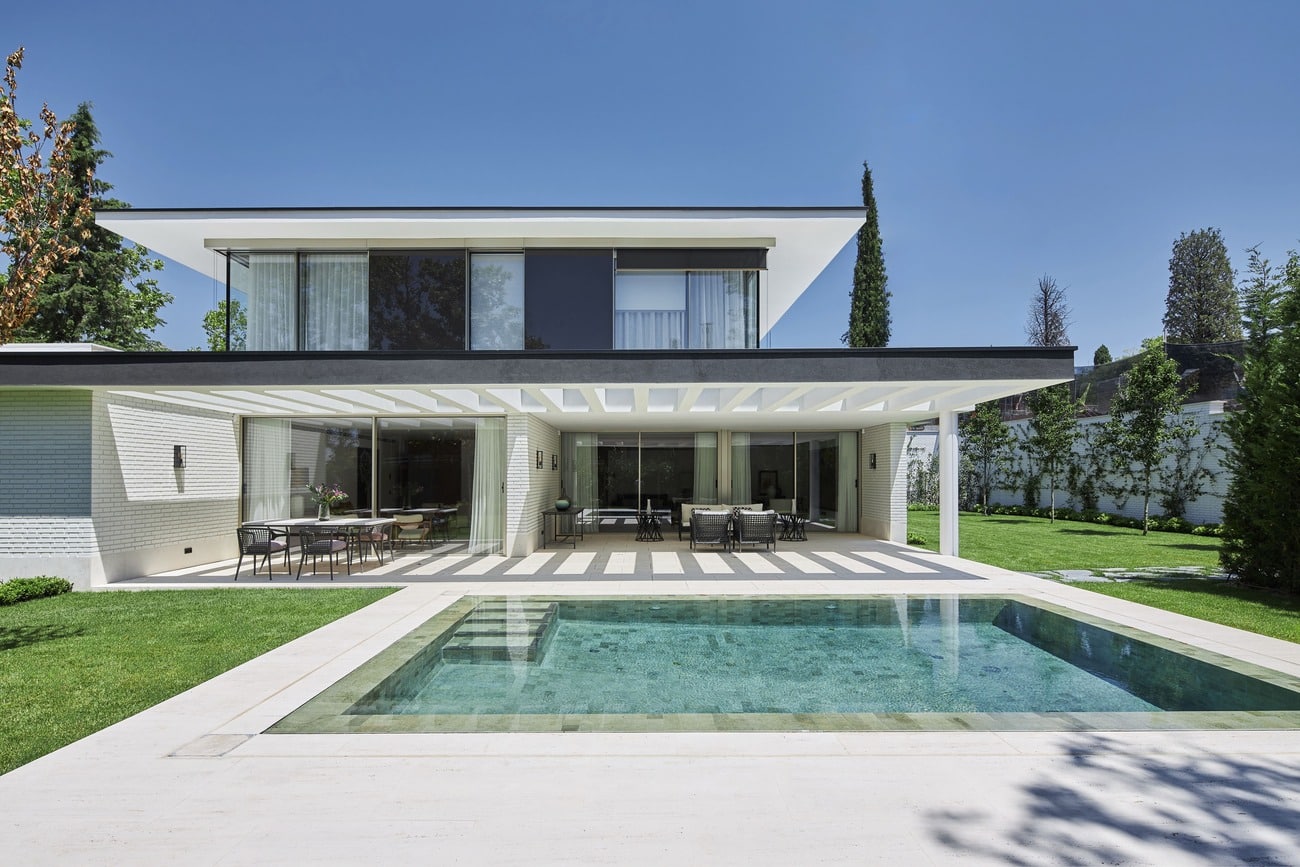
Among Chinese buyers, it’s difficult to summarize because the circumstances are so diverse. Those buying property to live in value being close to other buyers in their community and also in gated communities with security. On the other hand, those with a more investor-oriented profile look for medium-sized properties that, after renovation, can be quickly put on the rental market.
Spain’s quality of life comes at a price
Foreign buyers in Spain still account for 19.3% of home purchases so far this year, although this isn’t the highest figure (reached in 2022). However, the prices they are paying are higher, with a 7.6% year-on-year increase, compared to the five-year average of 5.5%. It’s important to remember that these buyers are largely unaffected by market cycles or financing options, and are therefore driven more by instinct and the search for unique properties. “As we at The Sibarist have explained several times, this is one of the reasons why almost half of the market’s transactions are being closed by foreign buyers. And despite the wide selection of properties we offer, equally, if not more, important is our client base, who share their preferences with us to initiate a personalized search,” says Silvia Hengstenberg, a partner at the firm.
On the other hand, sales transactions aren’t the only service that has grown; “testing” properties before buying is becoming increasingly common, often with year-long rentals that allow prospective buyers to experience the quality of life firsthand: by living in them. As a preliminary step, it’s typical for prospective buyers to settle in Madrid by renting, allowing them to experience the future purchase firsthand and simultaneously build social connections. If they plan to relocate their families, they can also manage all the necessary services and procedures, for which they often hire relocation experts.