The festival's three major exhibitions articulate a common narrative between object ethics, territorial memory and cultural transmission within the framework of the ninth edition of Madrid Design Festival, which takes place from February 6 to March 8, 2026.
We talked with Kavita Parmar
The activist and co-founder of XTANT has directed this year's Generational Shift exhibition presented by Amazon within Fiesta Design, one of the main events of the Madrid Design Festival.
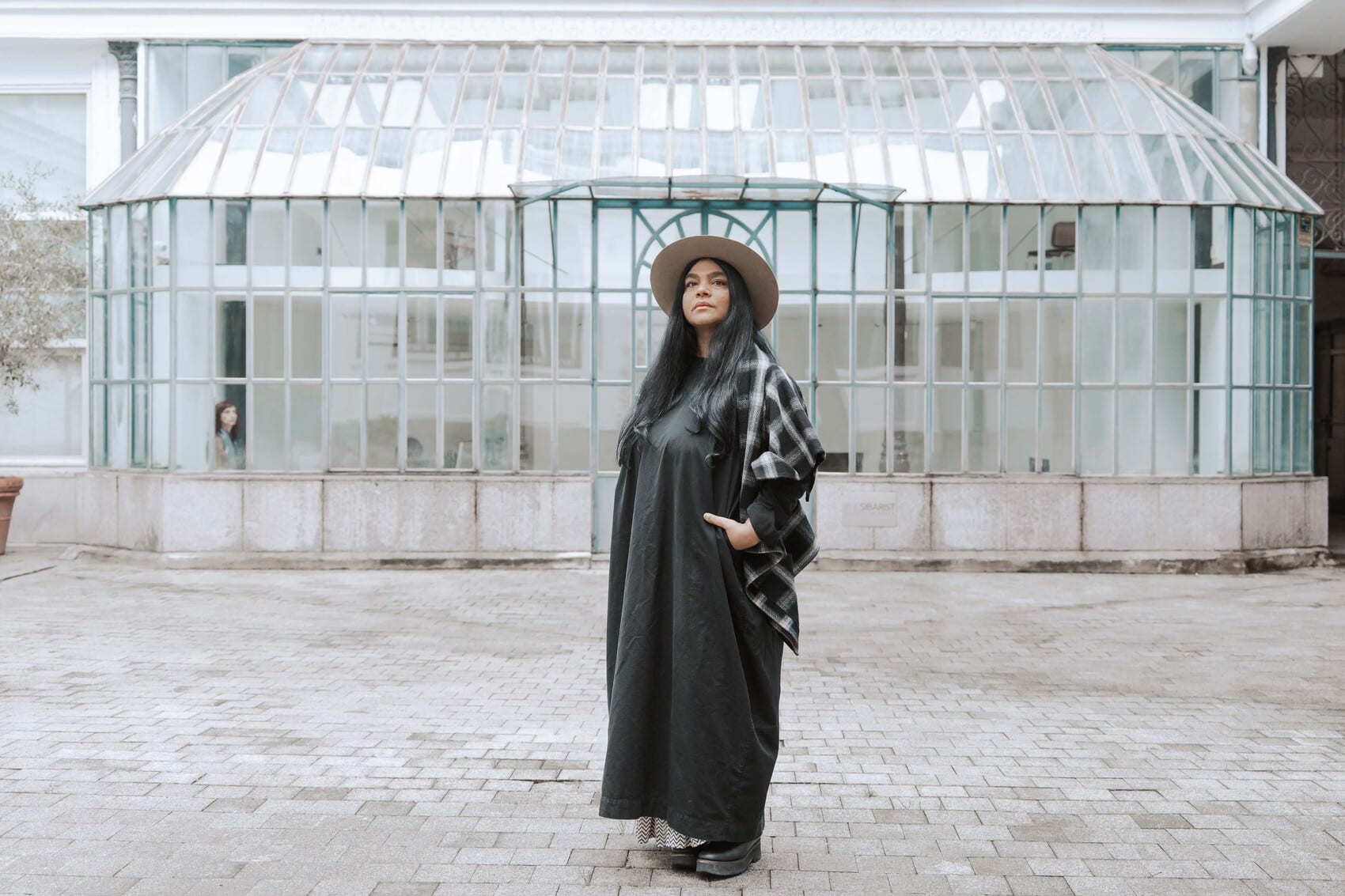
Kavita Parmar en El Invernadero
Kavita Parmar was born in Gorakhpur, India (age 53), but left the country at the age of three. Her family moved first to England and then to Canada. At 17, she became independent and began working. Today, after 25 years living in Madrid—the city where she has resided the longest—she considers herself a true Madrileña. Her perspective combines philosophical thought and practical experience, and together with her discourse, conveys beauty, knowledge, and a commitment to the textile industry that transcends cultures, generations, and social contexts.
In a mass consumer society, Parmar sees design as a transformative tool. In her early career, she worked for brands such as Ralph Lauren, Gap, Banana Republic, and Ann Taylor, among others. She also managed the licensing of the iconic children’s fashion brand OSHKOSH B’gosh in India. Back in Spain, she created two women’s brands based on craftsmanship, Raasta and Suzie Wong, and opened a shop in the Jorge Juan alleyway. In 2010, she founded The IOU Project, a pioneering initiative in textile traceability linked to the hashtag “whomademyclothes”. Each garment included a QR code that allowed the buyer to learn about the artisan weaver and the tailor who had made the piece, thus giving a face and name back to the production chain.
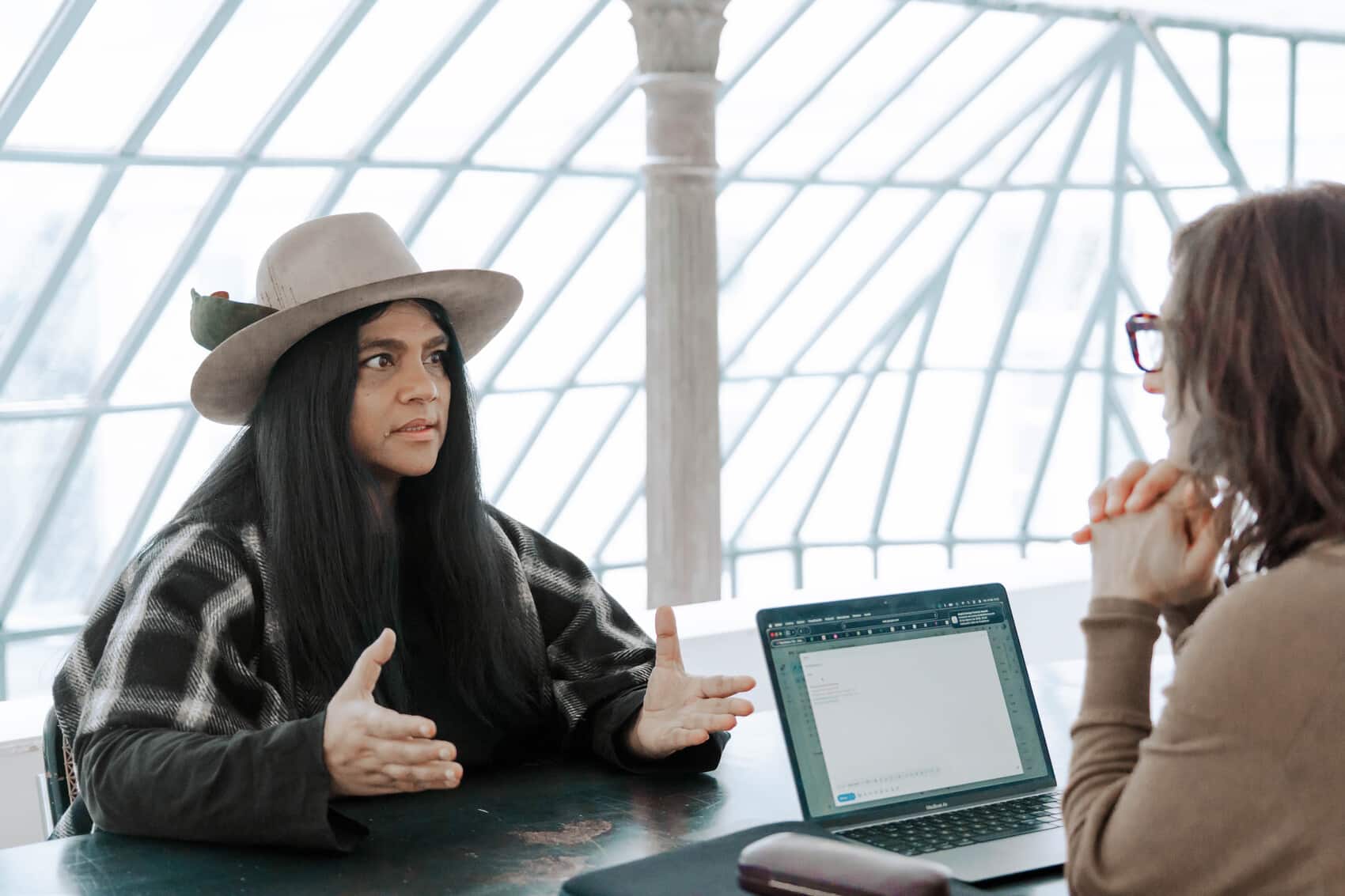
Kavita Parmar en El Invernadero, en un momento de la entrevista con Beatriz
She has received international recognition, including awards from the United Nations, the Ethical Fashion Forum, and the Sustainable Luxury Awards. She is also a speaker on topics related to craftsmanship, regenerative systems, activism in fashion, and the interrelationship between craftsmanship and technology. As an educator and mentor, she has taught at institutions such as FIT, Borås School of Textiles, Parsons, IED, IE, UPM, and UC3M.
She is the co-founder of XTANT, her most personal project, a non-profit platform that champions the ancestral value of textile knowledge. Since 2019, it has brought together artisans, designers, scientists, and cultural figures to “forge a more inclusive and sustainable future.” Its next edition, XTANT Nomad 2026, will be held from May 8 to 12 in Palma de Mallorca. Parmar argues that “technology cannot define our destiny without us having defined our purpose.” In this interview, he reflects on craftsmanship, technology, cultural diversity, and the role of design in a time of global transformation.
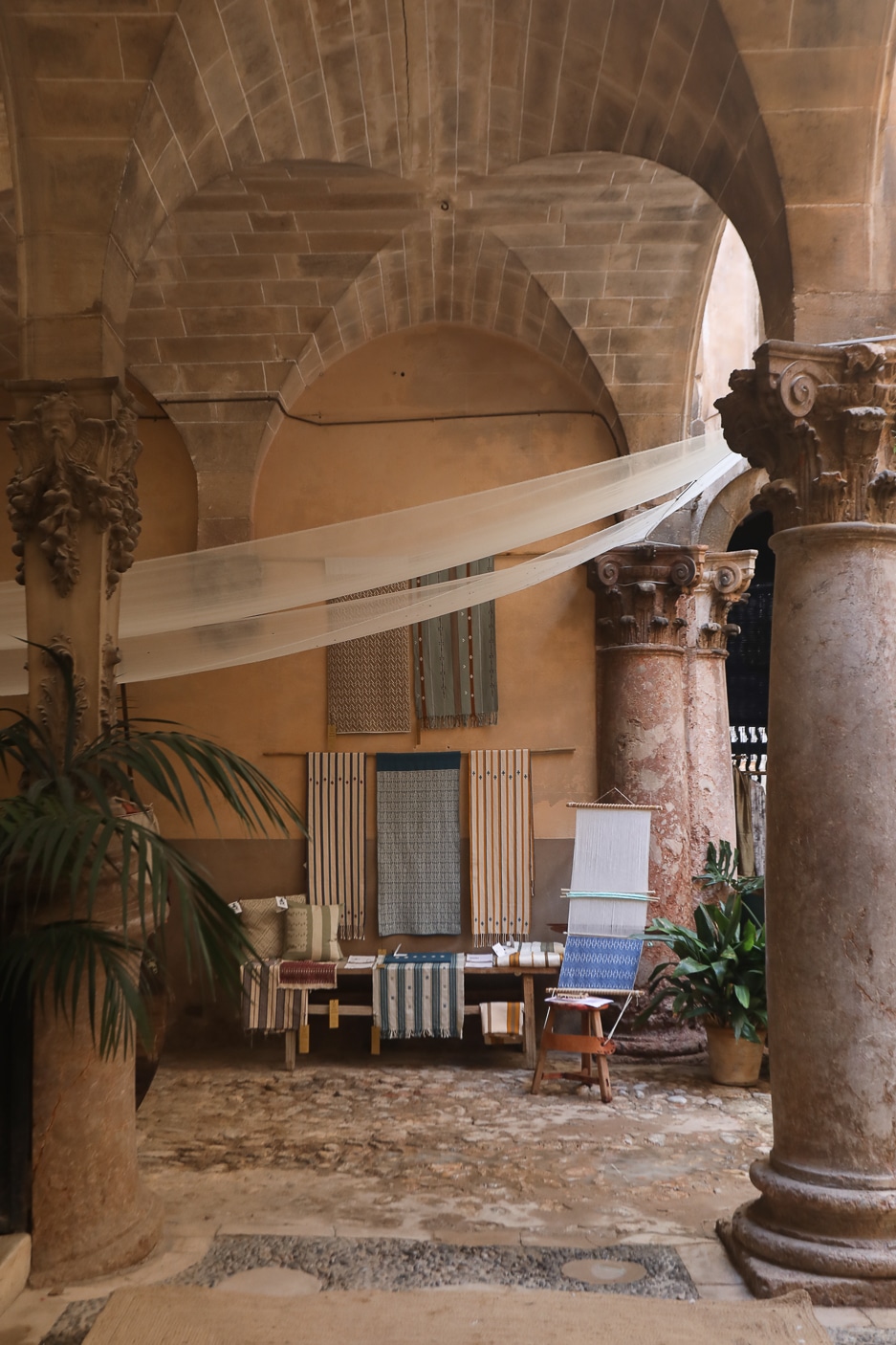
Imagen de XTANT. Foto por cortesía de Kavita Parmar.
I’ve read that you love what you do so much that you don’t consider it work, is that right?
Yes. I’ve been incredibly lucky to find something I’m deeply passionate about. When you love what you do, work stops being an obligation and becomes a way of life. It doesn’t mean there’s no effort involved, but the driving force is vocation, not a burden.
Your career has spanned industrial fashion, crafts, and activism. At what point did you feel that your work stopped being just fashion and became a tool for cultural and social transformation?
I came to fashion almost by chance. At 16, I wanted to change the world—without really knowing how—with posters of Che Guevara in my room and a pretty typical revolutionary energy. With my first job, I started traveling and understood that clothing wasn’t just about aesthetics: it was about economics, identity, territory, politics. That’s when I realized that fashion could be a powerful cultural tool. It wasn’t about trends, but about systems. And if the system could be built, it could also be transformed.
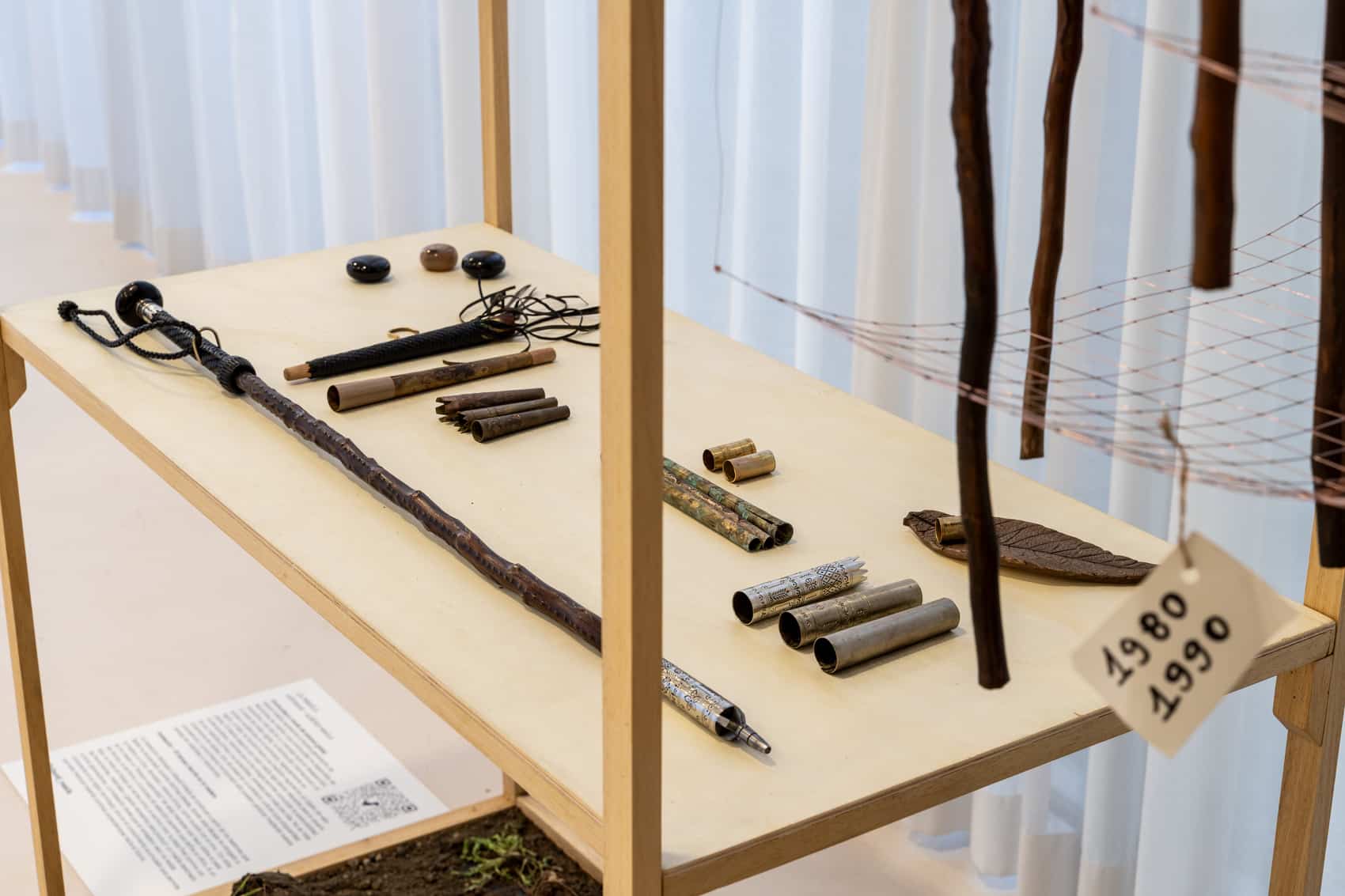
Makila, en la exposición Relevo Generacional de Kavita Parmar para Amazon en Fiesta Design de Madrid Design Festival 2026. Foto: Jorquera.
You’ve worked with both large corporations and artisan communities. What lessons from each of those worlds do you still apply today in projects like XTANT?
After years in the industry, I understood that real change usually comes from the ground up. Large, publicly traded companies find it very difficult to modify their model if they don’t clearly see that change is also profitable.
I worked with multinationals like Levi Strauss & Co., Nike, and Gap Inc. I’ll never forget a conversation with Chip Bergh, then CEO of Levi’s, who supported my research on natural dyes and water consumption. He told me, “I’m at the helm of a large ship with more than 18,000 families on board. I can’t turn sharply without breaking it. But I can support small vessels like yours that explore new routes.”
That’s when I understood my place: working from the grassroots level, where there’s less inertia and more capacity for immediate impact. With ranchers, farmers, artisans, and small workshops. I have spent fifteen years dedicated to strengthening those “small boats” that, little by little, pave the way.
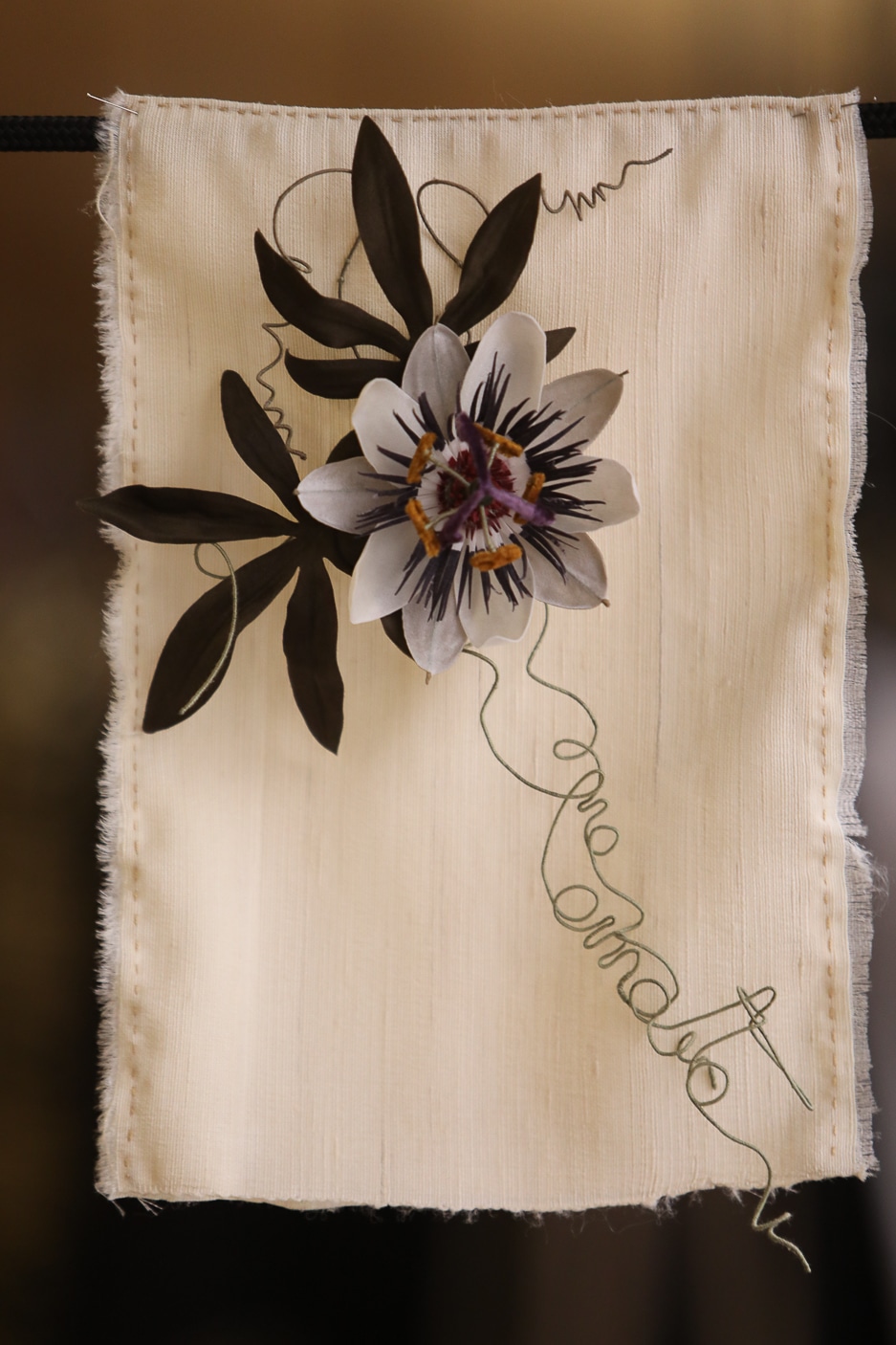
Una de las obras presentadas en XTANT. Foto por cortesía de Kavita Parmar.
To mark Madrid Design Festival, you collaborated with Amazon. What did this work entail?
It involved reflecting on the role of technology in a turbulent time. I’m passionate about technology and deeply believe in its transformative potential. But before deciding where we’re going, we must ask ourselves who we want to be. Technology cannot define our destination without us having defined our purpose. To move forward, we need to look at where we come from, understand what makes us human, and collectively decide our course. That, for me, is the true generational shift.
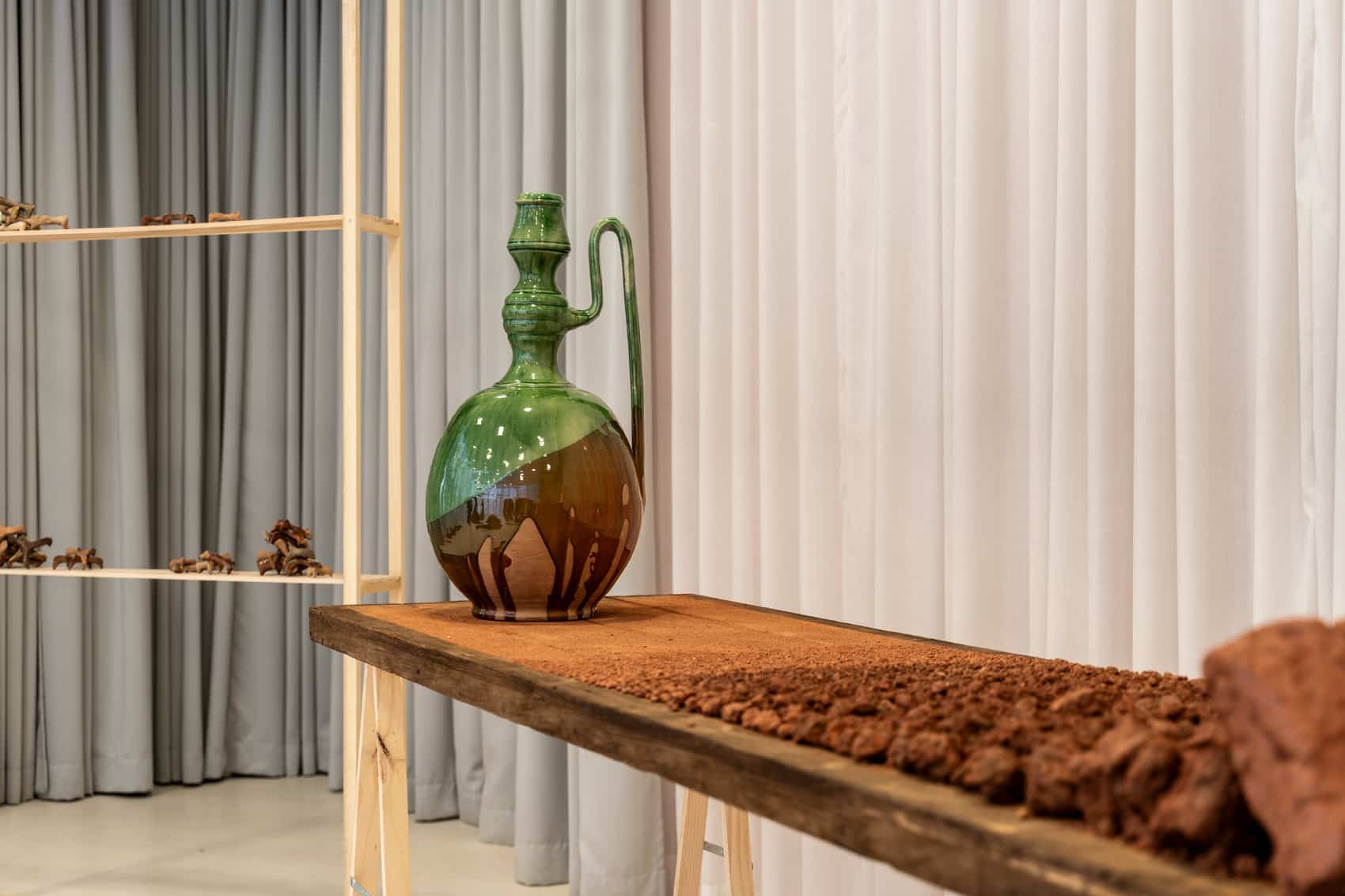
Pieza del alfarero Pablo Tito en la muestra Relevo Generacional, en Fiesta Design de MDF26. Foto: Jorquera.
What does your installation propose, and why did you choose these workshops?
The research for this installation has been a gift. I thought I knew Spain well, but traveling through its 17 autonomous communities revealed ancient knowledge, now almost forgotten, for example: the makila of the Basque Country or the Sanandresiños of Galicia. I wanted the installation to be an act of seduction toward young Spanish audiences: a reminder of the cultural richness we have inherited and of the responsibility to keep it alive. Not from nostalgia, but from pride and a sense of possibility.
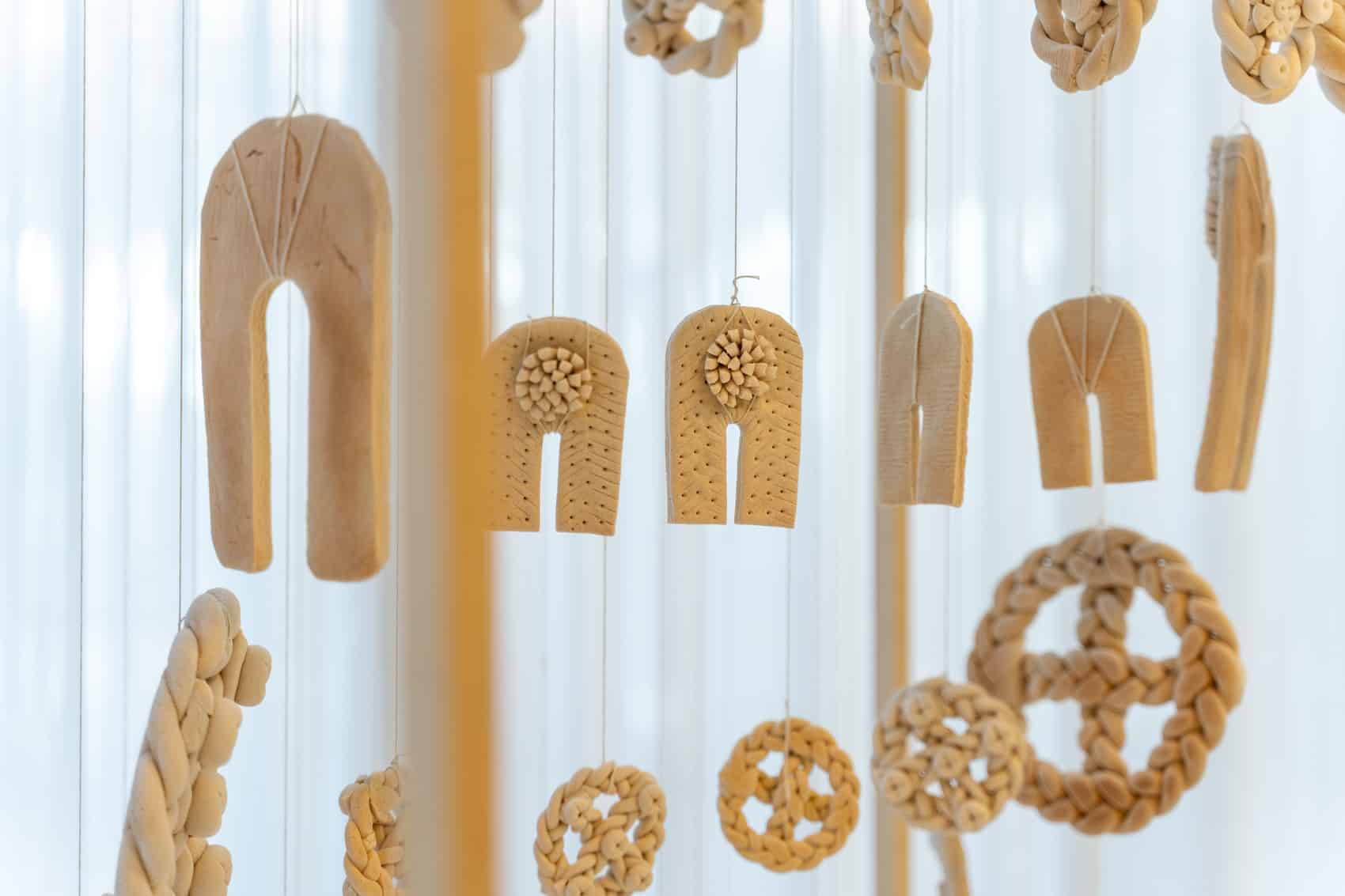
Sanandresiños, en Relevo Generacional, de MDF26. Foto: Jorquera.
Do you think younger generations are aware of this and will take up the mantle of these trades?
New generations have been inundated with information to the point of exhaustion, which sometimes leads to apathy. But I also perceive in them a profound search for meaning. The world of crafts offers something essential: the tangible experience of creating beauty with one’s own hands. Faced with the narrative that we must compete with artificial intelligence, I believe that view is limited. Human beings have an intrinsic desire to create. Perhaps the future of work lies in recovering its dimension of inner growth and deep connection. In this transition, the diversity of trades offers infinite possibilities. I am deeply optimistic.
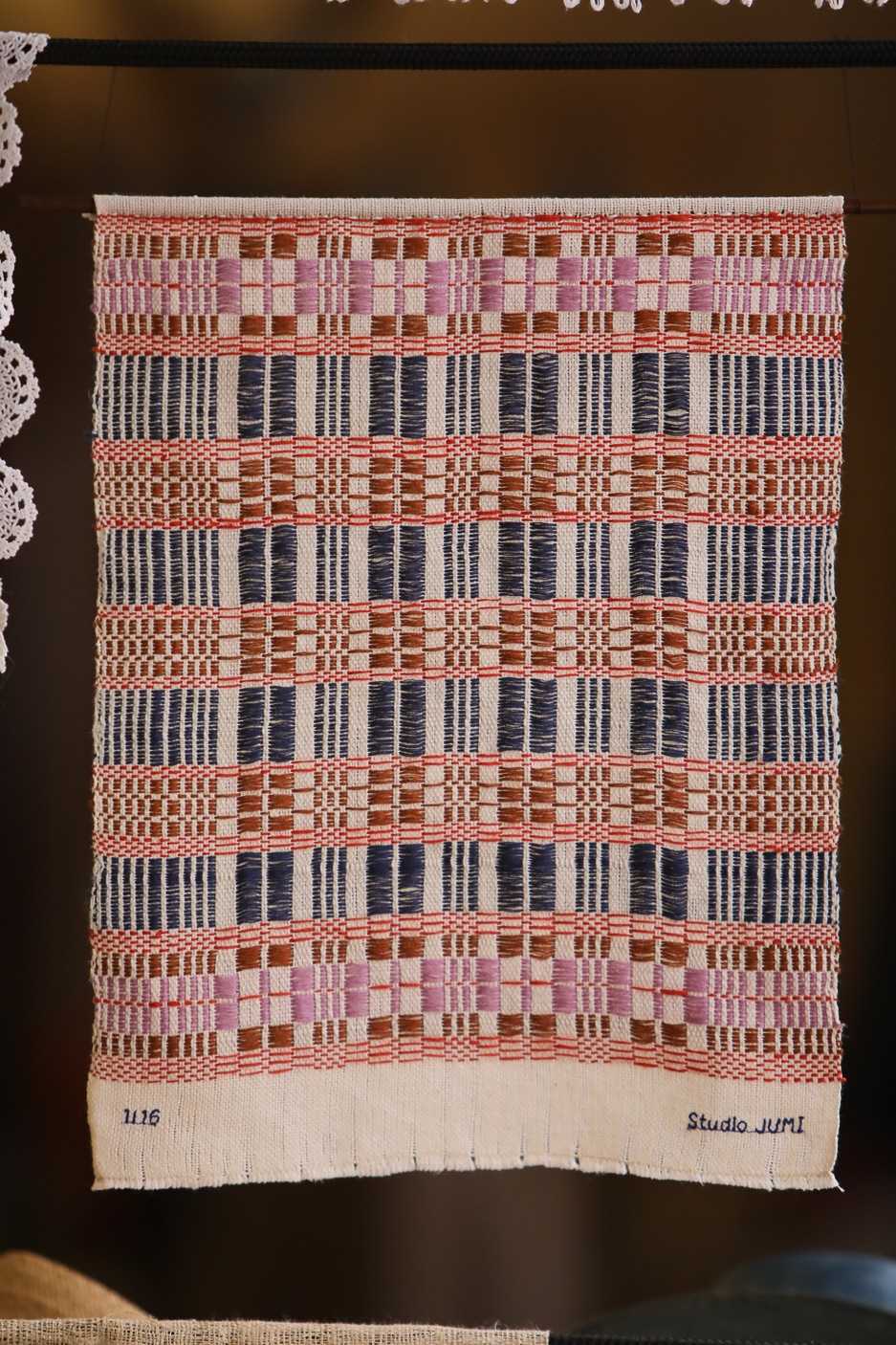
Obra expuesta en XTANT. Foto por cortesía de Kavita Parmar.
You created the IOU Project, and transparency and traceability were pioneering ideas back then. Looking back, do you think the industry has truly grasped that message, or has it become just empty rhetoric?
When I launched the IOU Project and the question “Who made my clothes?” more than 15 years ago, I never imagined that in 2025 that message would be shared millions of times.
The industry can turn any idea into empty marketing, but I firmly believe that the consumer awakening is real. More and more people are asking how and by whom things are made.
I’m in no hurry. I come from India, and there I learned that profound changes take time. If we keep our intentions clear and don’t lose sight of our goals, change will come.
Perhaps I won’t see it in my lifetime, but as Rabindranath Tagore said, “He who plants trees knowing that he will never sit in their shade has at least begun to understand the meaning of life.”
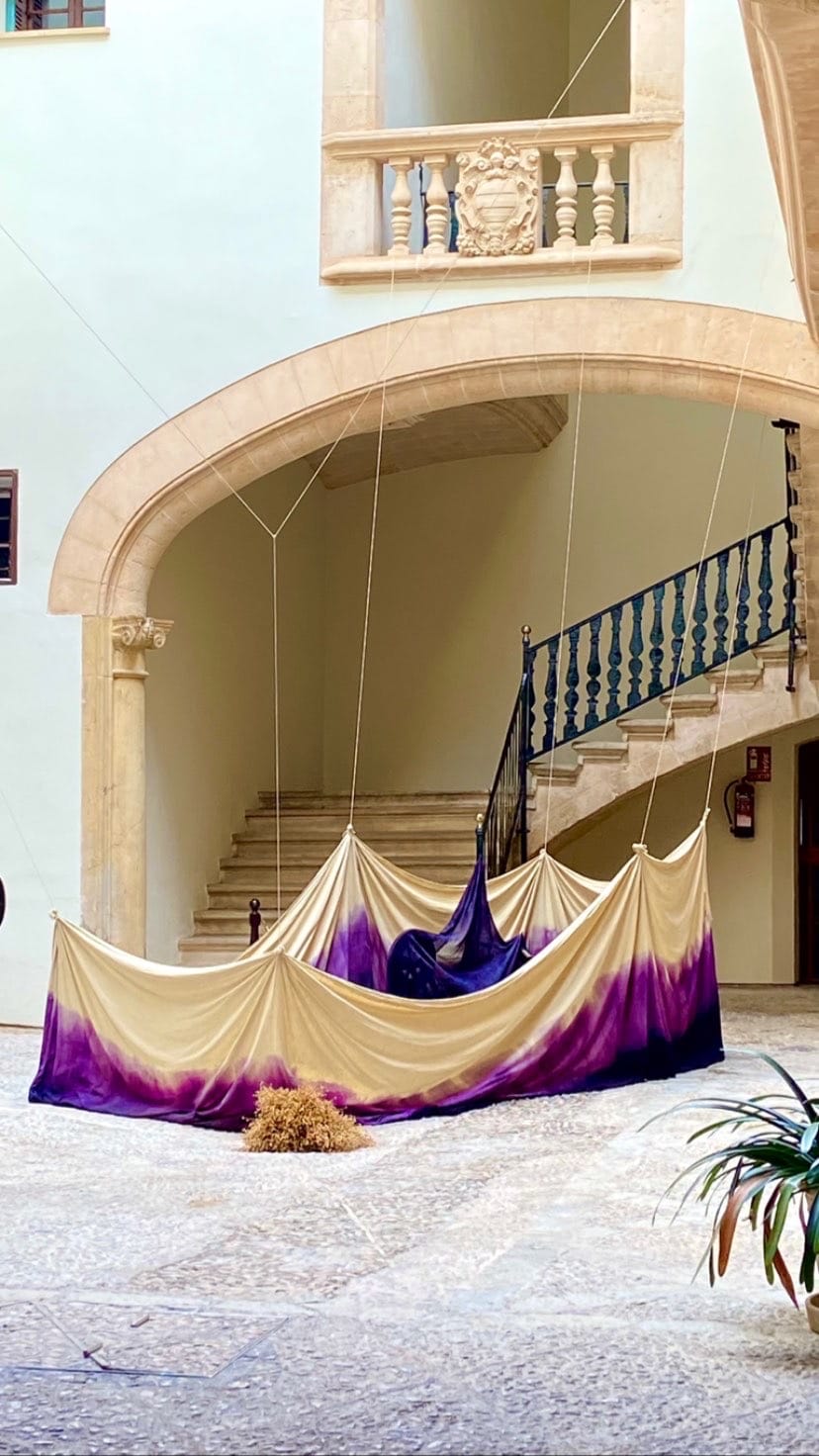
XTANT. Foto por cortesía de Kavita Parmar.
XTANT was born as a deeply personal project. What part of your own history and heritage is present in it, even if it’s not immediately apparent?
XTANT was born out of personal frustration with the traditional system of fairs and multi-brand stores. I needed to be surrounded by people who shared a way of working based on respect, excellence, and purpose.
Since that space didn’t exist, I decided to create it.
For me, XTANT is a community. A place where the common good takes precedence over competition. Its organic growth over these seven years is due to word of mouth and the creative and generous energy that permeates the space.
TEXTO brought together artisans from all over the world in one space. What unexpected conversation or human exchange particularly resonated with you during that gathering?
We created TEXTO to celebrate something that is a true luxury today: the diversity of fiber, knowledge, and living culture.
What was unexpected was the audience’s emotional reaction to being able to speak directly with the artisans. It was also moving to see how, even without sharing a language, the artisans themselves connected with each other through mutual respect and admiration.
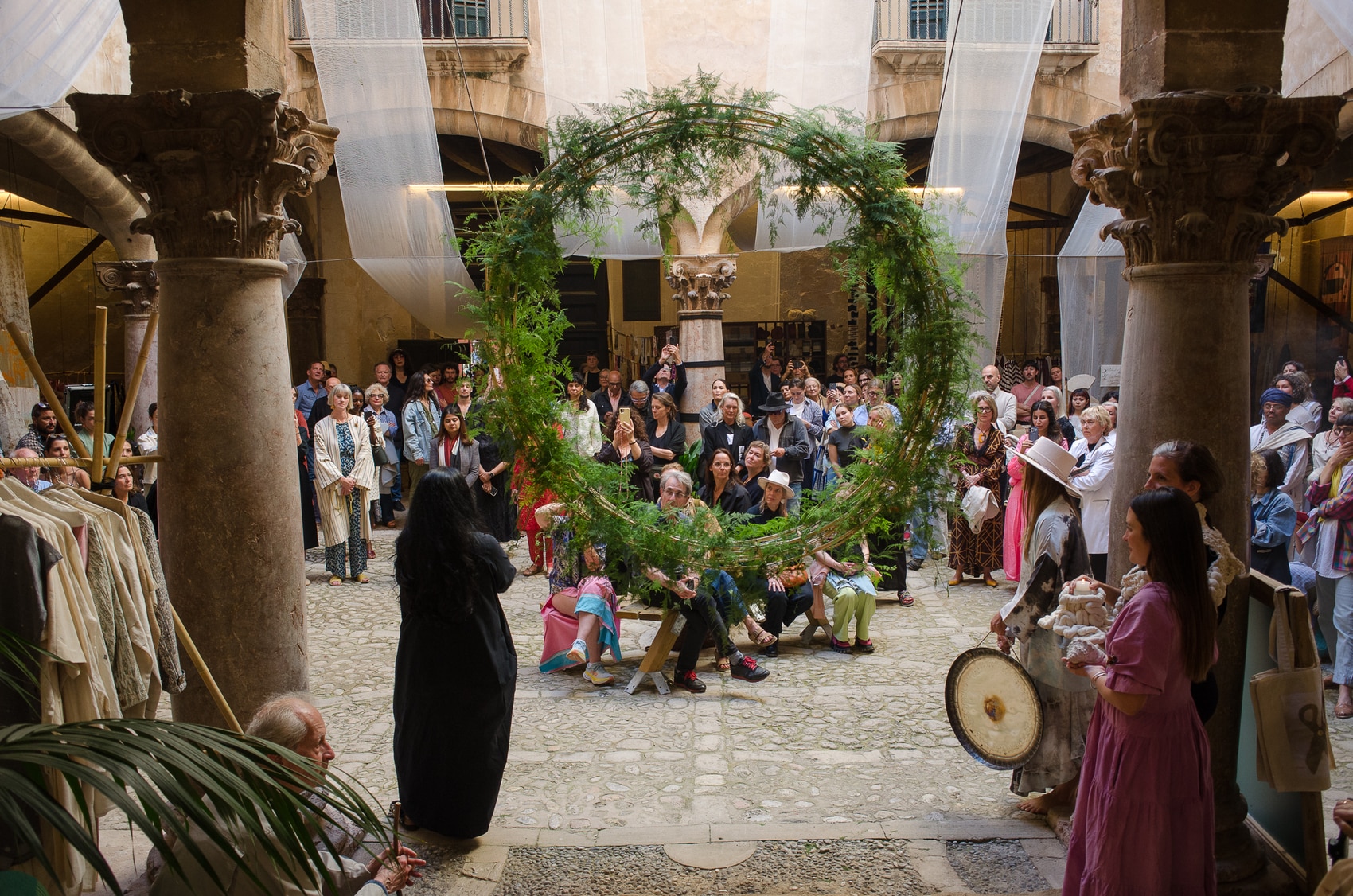
Un momento de la celebración de XTANT. Foto por cortesía de Kavita Parmar.
In a time of hyperproduction and accelerated consumption, what does luxury mean to you today, and how does it relate to time, know-how, and imperfection?
For me, luxury is the pursuit of beauty, not only in the result but also in the process. It’s quality over quantity. It’s time, know-how, a connection with the environment, and cultural authenticity.
True luxury doesn’t shout; it’s perceived in the intention and the care taken.
You’ve documented and worked with artisans from various countries. What do communities that have managed to keep their traditions alive have in common with those that have lost them?
Communities that have preserved their traditions haven’t remained stagnant: they’ve continued practicing, innovating, and passing on their knowledge.
They’ve created a strong sense of identity and belonging that resonates with new generations. Furthermore, they often become drivers of value for their regions, especially in areas like cultural tourism or the creative industries. Tradition, when alive, is a competitive advantage.
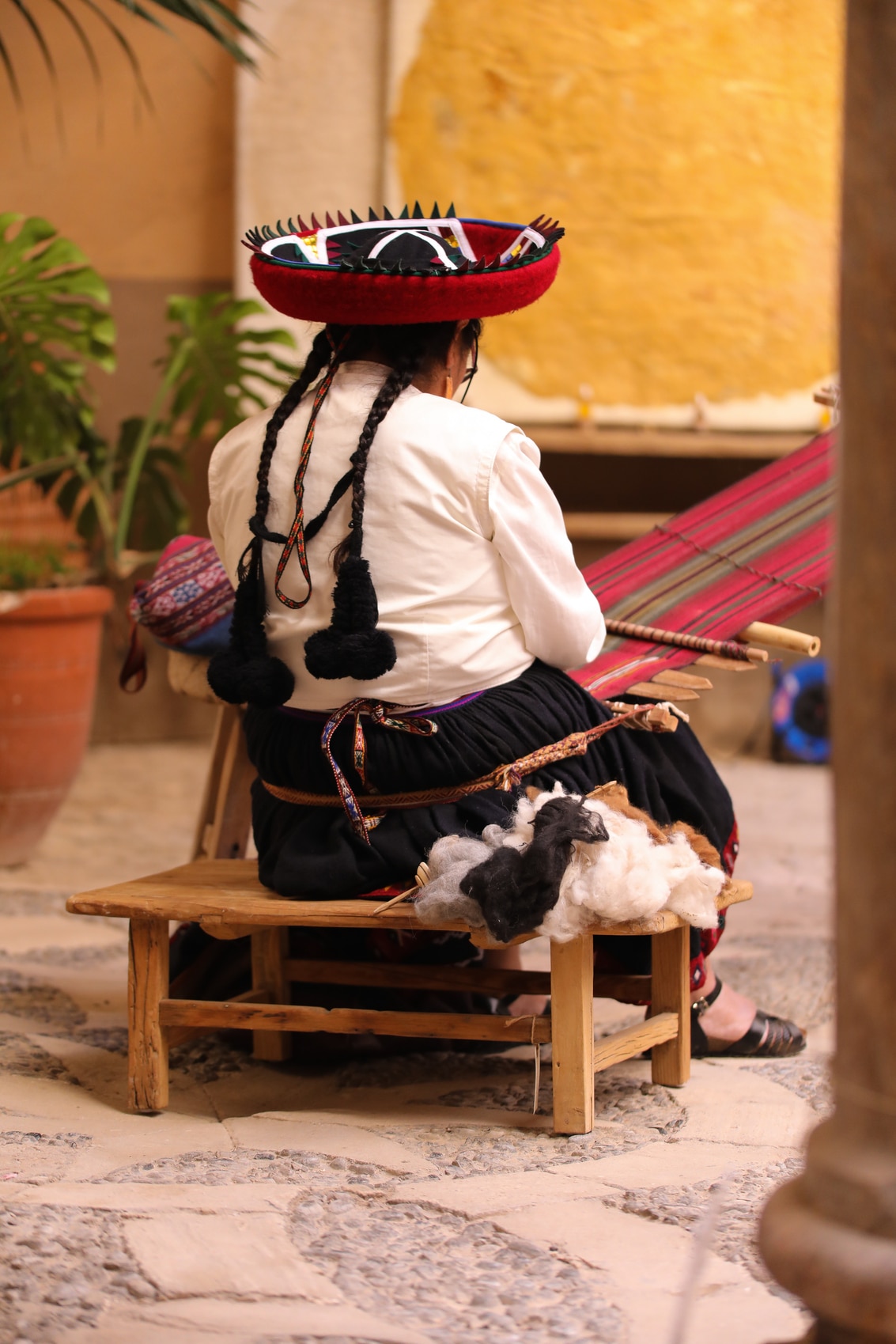
Foto de Leyre López de la Paz. Por cortesía de Kavita Parmar.
Do you consider the world of textiles to be one of the creations most closely linked to humankind since the dawn of civilization?
Without a doubt. Along with food and shelter, clothing is a basic necessity.
But textiles are also a language. Before we wrote, we wove. In many cultures that never developed writing, textiles contain their history, their mythology, and their worldview.
Weaving is storytelling.
You also do educational work; in what areas do you share your knowledge?
I’ve been an entrepreneur since I was very young. Creating ideas, testing solutions, and exploring new technologies applied to textiles and fashion are things I’m passionate about.
I collaborate with universities in different countries, teaching courses on future business models, systemic innovation, and regeneration in the creative industry.
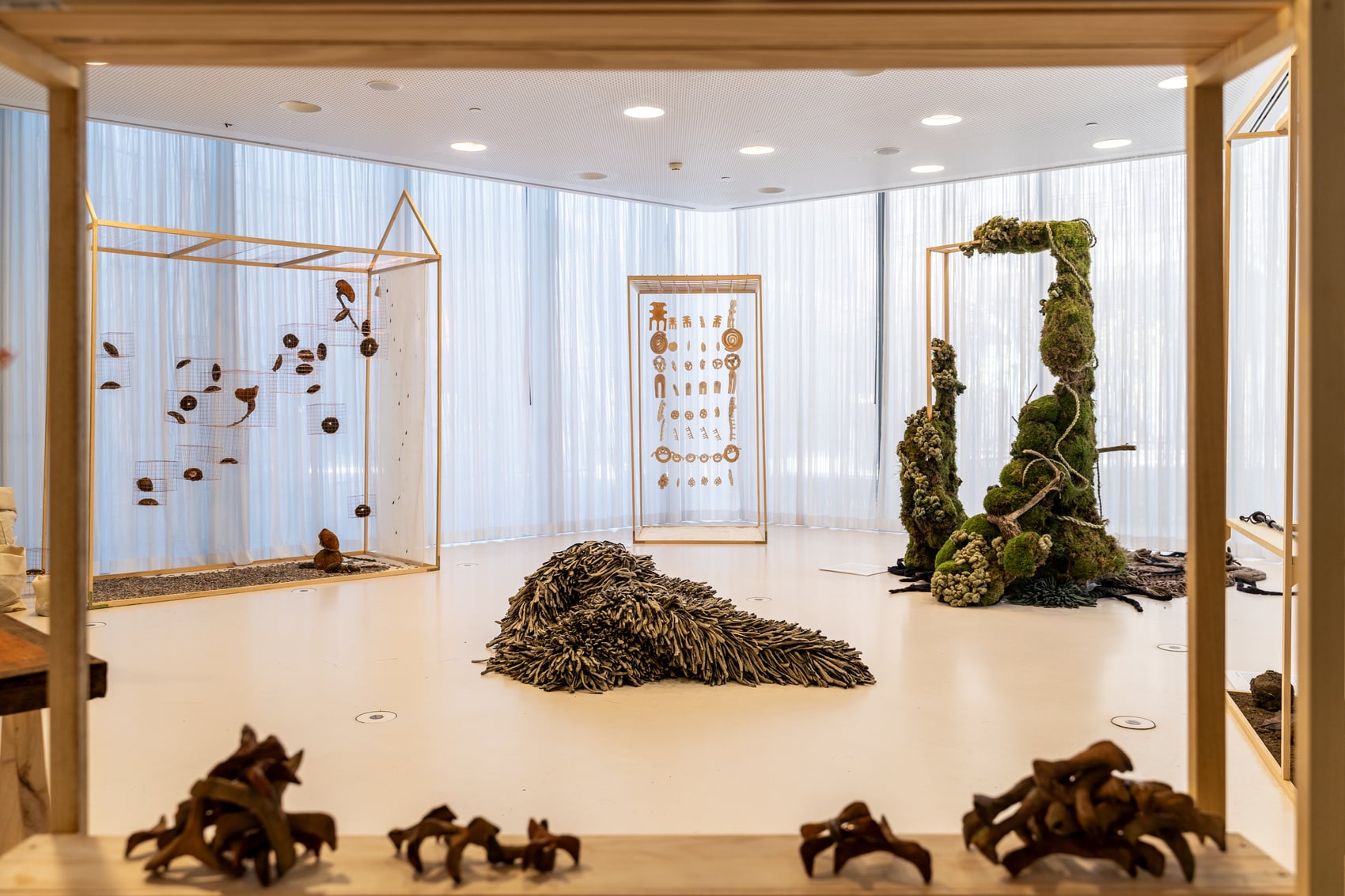
La muestra diseñada por Parmar para Amazon en Fiesta Design en Madrid Design Festival 2026. Foto: Jorquera.
You do consulting work; what kind of projects are you currently working on?
I work with a wide variety of clients: large and small companies, governments, and foundations. From product development to aligning supply chains with the Sustainable Development Goals, creating training programs, or designing events. All under the same focus: building regenerative systems.
#Aspiretoinspire
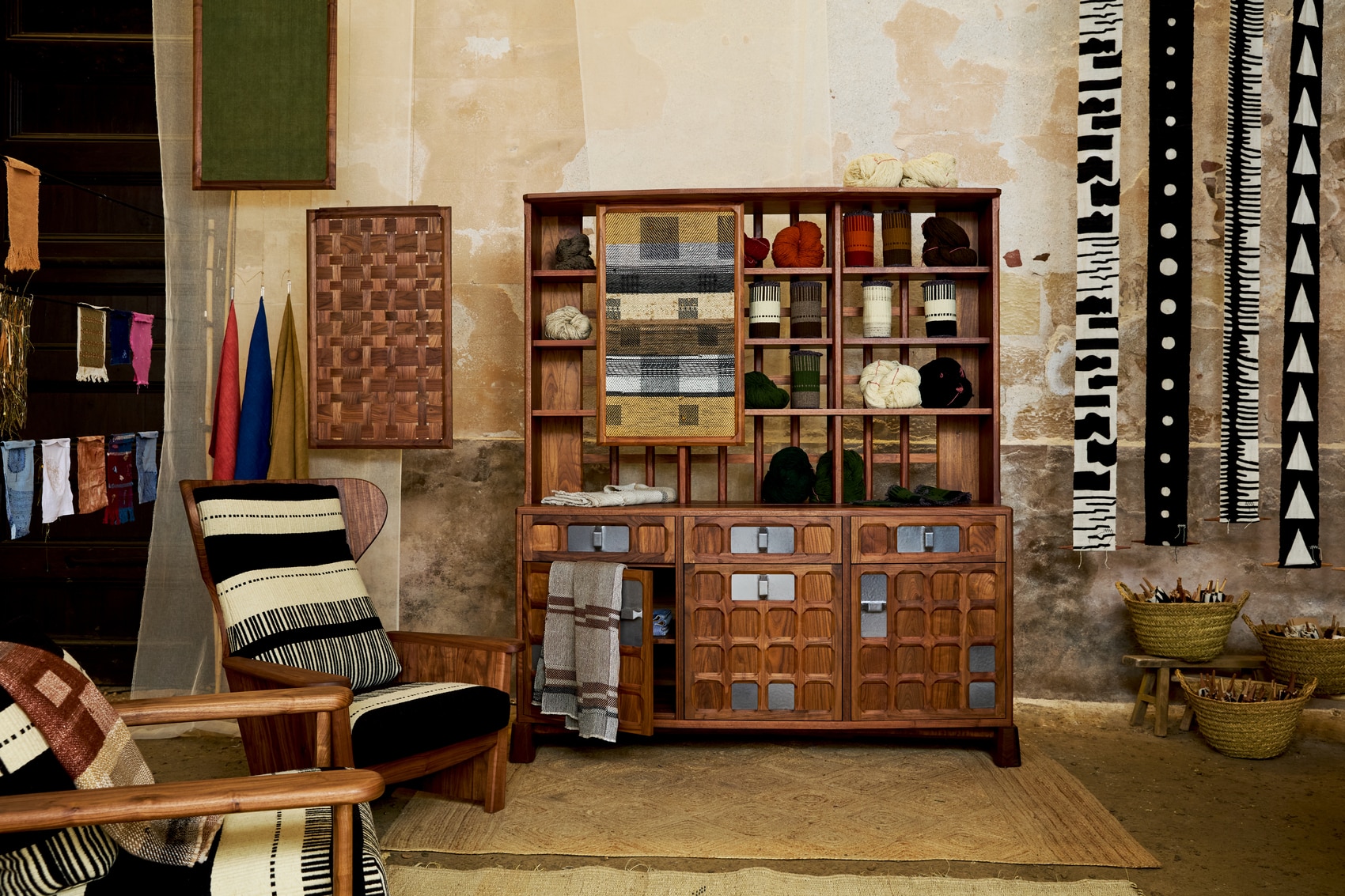
Alacena de De La Espada con textiles de Fabricaal, en XTANT 2025. Foto de Yuki Sugiura. Por cortesía de Kavita Parmar.
What are your main sources of inspiration?
Books and travel.
Reading ignites my imagination and allows me to inhabit other lives, other eras, other questions. Traveling gives me perspective and forces me to step outside my certainties. Both remind me that the world is much broader and more complex than we think, and they keep me in a constant state of curiosity.
After so many projects and accolades, what continues to spark your curiosity and what would you like to explore in the coming years, beyond fashion?
We are living through a unique moment in human history: a leap driven by unprecedented technological change.
I believe that, with intention and hard work, we can rewrite our course. I’m not interested in the narrative of collapse, but rather in the possibility of a new, fairer rebirth, one more aligned with nature. All my projects are in line with this.
As Marshall McLuhan said, “There are no passengers on ship Earth; we are all crew.”
So it’s time to assume our collective responsibility. And get to work. @kavitaparmar
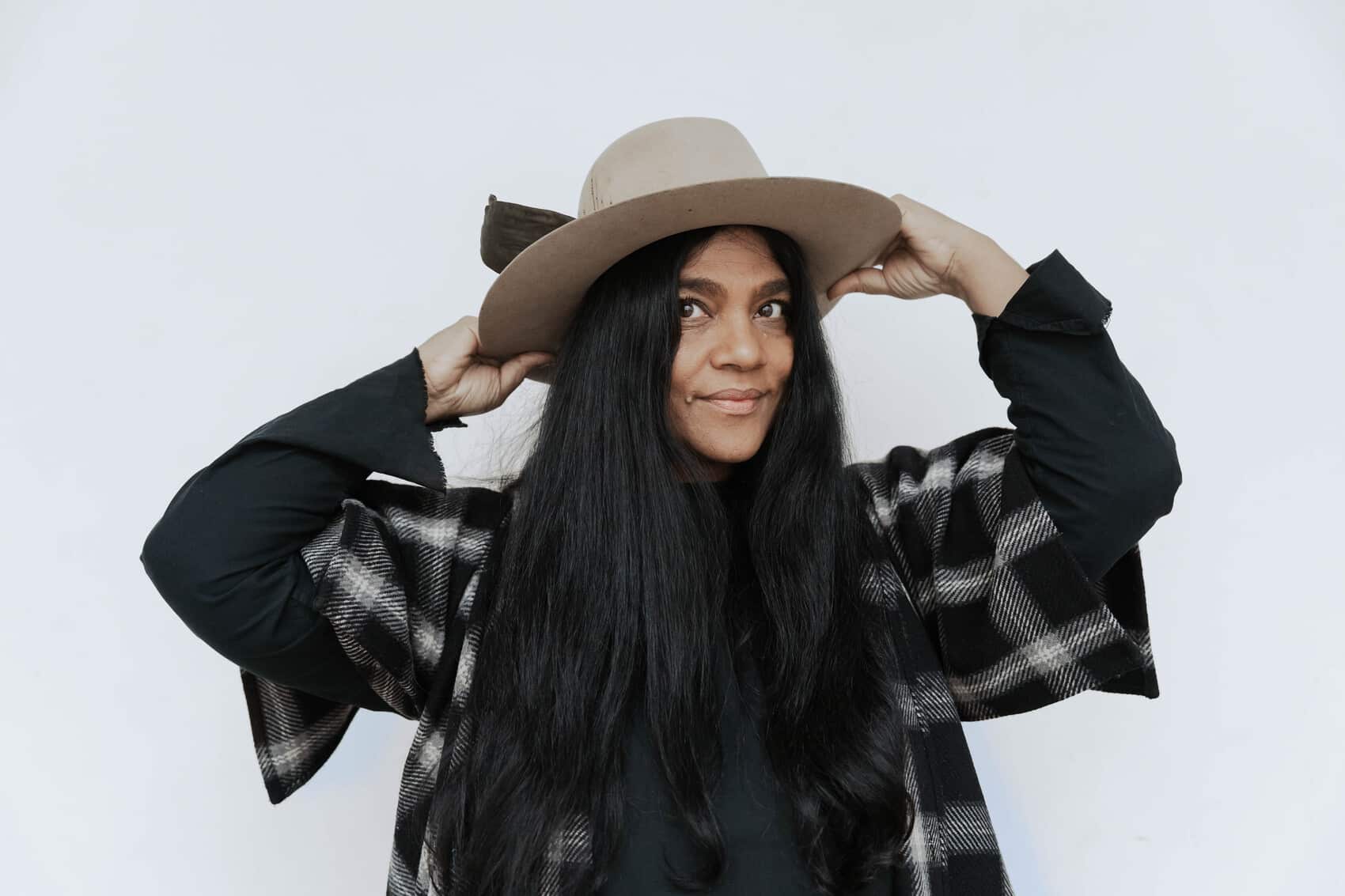
Kavita Parmar en El Invernadero
Written by: Beatriz Fabián
Beatriz is a journalist specializing in offline and online editorial content about design, architecture, interior design, art, gastronomy, and lifestyle.
From 7 February to 9 April, the city of Madrid will once again host interesting design, architecture and craftwork events for the sixth edition of the Madrid Design Festival which, under the slogan Redesigning the World, this time has Seville as its guest city and, with the participation of leading brands and cultural institutions, will bring together almost 600 professionals from the aforementioned disciplines.
Watch out for our recommendations.
Watch out for our recommendations.