We spoke with one of the founders of Debajo del Sombrero, an artistic platform that supports people with intellectual disabilities in developing their artistic practice.
Interview with Marta Pascual
We spoke with Marta Pascual, a designer as well as a speaker, curator and disseminator at congresses, festivals and meetings specializing in design, creativity, sustainability and social innovation.
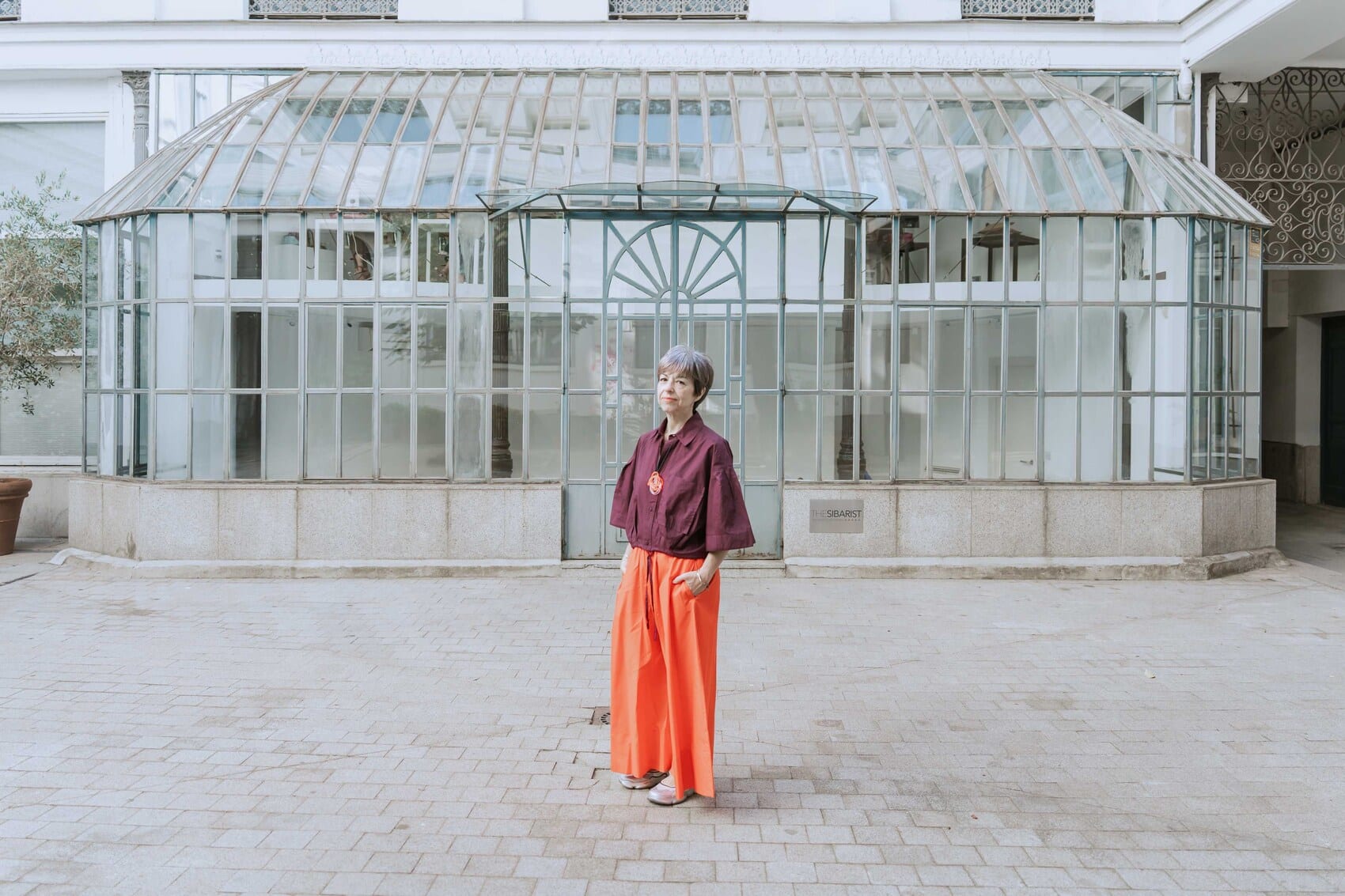
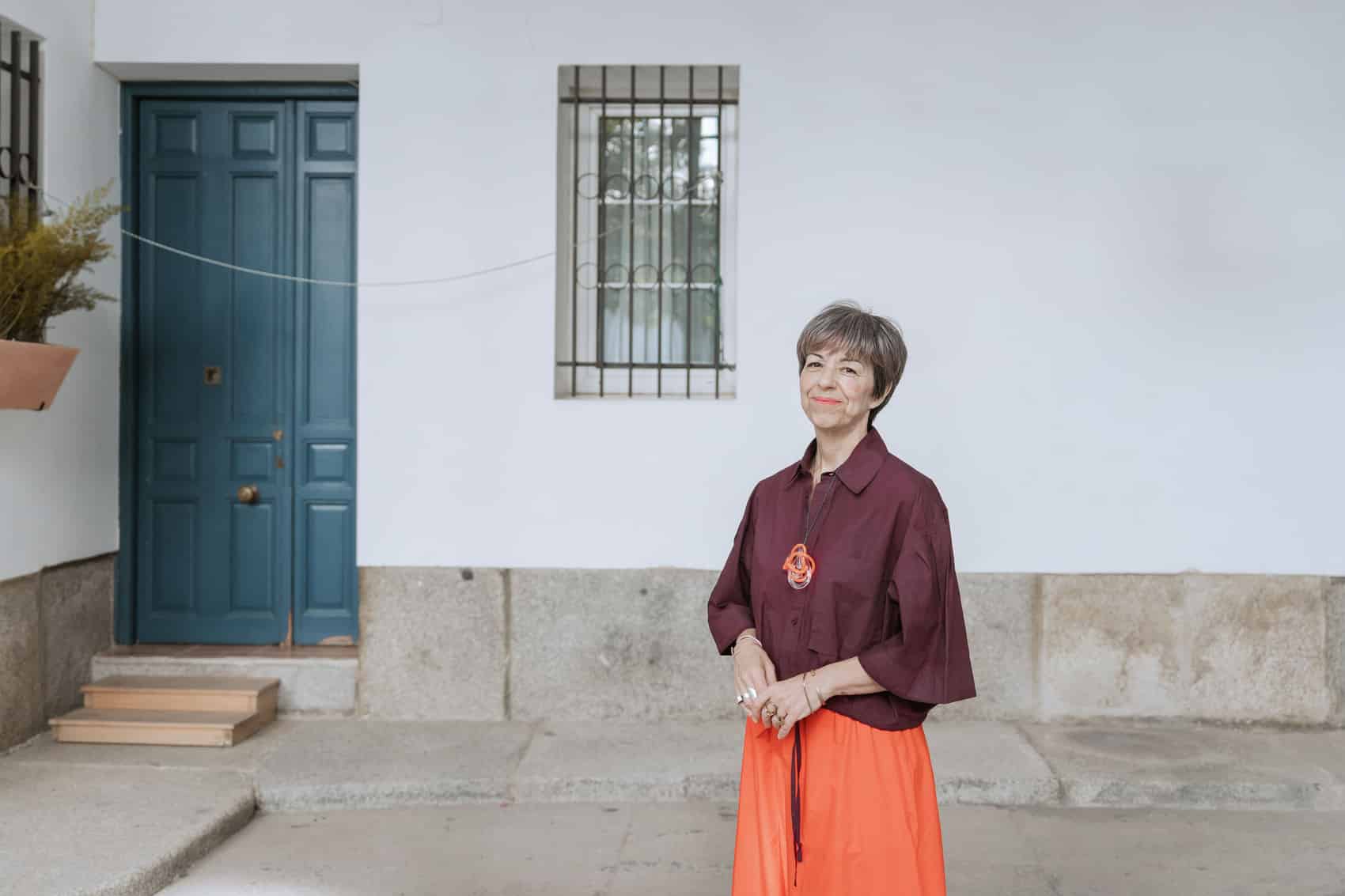
Marta Pascual en El Invernadero
Since 2009, she has been the founder and creative director of U-ak Estudio, specializing in furniture, lighting, and home accessories. Innovation, sustainability, 3D printing with biodegradable materials, and collaboration with textile workshops and social inclusion projects are central to her work. Her two main lines of work are product design and training related to social design, and she believes that everything she does is permeated by research and learning. “If you’re training other people, you need to be constantly learning,” she says.
She develops the Viveros Project, a social design program featured at the Madrid Design Festival for the last two editions, since its creation in 2021 in collaboration with Norte Joven, an association that works with young people in socially disadvantaged situations. A member of the boards of READ (Spanish Network of Design Associations) and DIMAD, and a trustee of the Madrid Design Foundation, she is currently a co-founder of the TetuánCrea association and has taught at institutions such as EOI, IED Madrid, UDIT, and IE University. She has designed and coordinated various initiatives for organizations such as IKEA, La Casa Encendida, Casa Árabe, Fundación Aladina, TEDxKids, and the Pozuelo City Council. She has presented her work at international events such as Dutch Design Week, Milan Design Week, Beijing Design Week, and Madrid Design Festival, and was nominated for the 2024 German Design Awards for her piece, Don’t Waste Time Clock.
In this talk, she explains how design offers much more than simply creating objects. “It involves observing, researching, solving problems, and developing critical thinking.”
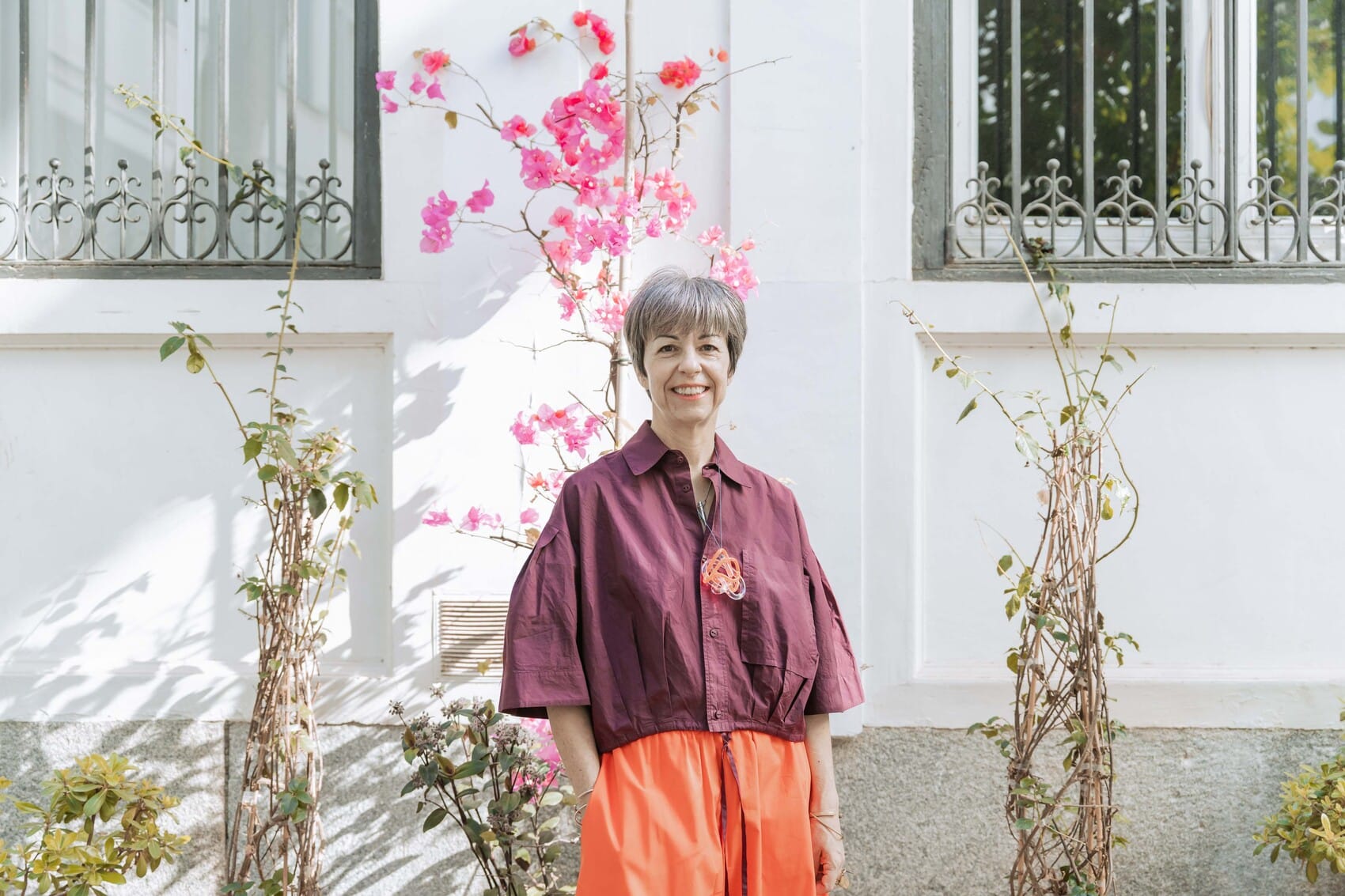
Do you remember the moment you decided to dedicate yourself to design? What initially attracted you?
I remember that, from a very young age, what made me happiest was playing at my parents’ house, building houses for my dolls inside a wardrobe. I could spend hours using foam, modeling clay, or any material I could find to make furniture, create spaces, and give shape to small imaginary worlds for my characters.
My father was a building engineer, so I grew up surrounded by conversations about spaces, construction, and design. In a way, that sensitivity was part of my life from the beginning. Actually, everything related to creating fascinated me. I’ve always needed to stay connected to my creative side, and I’ve been deeply interested in the creative process, the way an idea takes shape and becomes something tangible.
What has determined your career path?
On the one hand, the functional dimension of design, and on the other, the human scale, that closeness to people and their daily lives. Whenever I think of an idea, I do so with the intention of applying it to something real, something with a concrete purpose. I find it difficult to imagine an object or develop a project that doesn’t serve a function or provide some kind of value to its user.
I’ve also always been drawn to the idea of thinking about what’s to come, the future, and how we can make the life around us more pleasant, simpler, or more meaningful. That’s why I’ve been so interested in techniques, materials, and innovation processes.
I believe that, precisely because of all this, design is the perfect discipline for me. I understand it as a tool for innovation in the broadest sense: a way to connect creativity with reality to generate solutions that integrate aesthetic, technical, functional, and social aspects. Designing is about imagining new possibilities, but also about making them a reality.
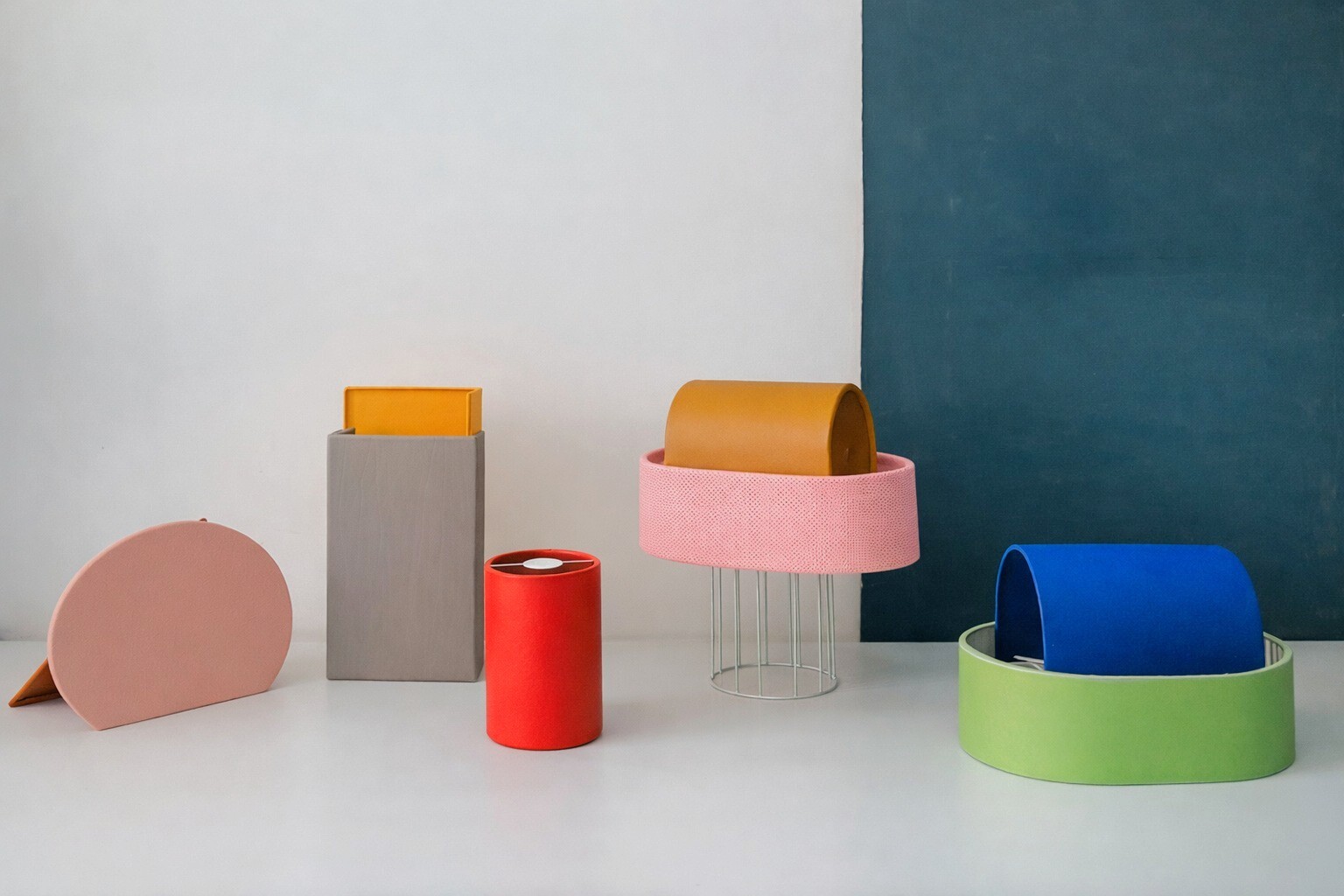
Lámparas del proyecto desarrollado junto con Elmo Leather y TetuánCrea. Foto: Marian Moncayo.
U-ak is a unique and easily recognizable name. What does it mean, what’s the story behind it?
The studio’s beginnings came about alongside my partner, who worked in international development. We wanted to find a way to combine development and design to give meaning to the pieces we created. She had access to social projects in different parts of the world, many of them linked to communities that preserved ancestral artisanal textile techniques. We found it fascinating to showcase these projects and cultures through the textiles they produced. This led to the idea of incorporating them into pieces designed here, creating a link between the craftsmanship and culture of other parts of the world and local design. It was a captivating research process. We even collaborated with Lala de Dios, who brought us absolutely stunning textiles from some of her travels: pieces made on traditional bamboo looms, where both hands and feet were used in their creation.
They were extraordinary textiles, so delicate that they practically fell apart when handled. After exploring different ways to add value to what we did, in 2009 we began developing an idea that could enrich the experience of those who enjoyed our creations: designing pieces for children’s spaces.
We found it interesting to create textiles and furniture made with high-quality materials, such as 100% wool felt, whose properties were especially valuable. We also incorporated handcrafted textiles from other cultures, highlighting different ways of living, creating, and preserving traditional techniques. Therefore, our first steps were focused on designing for children, and that’s where our name, Muakbabi, came from. “Muak” refers to the onomatopoeia for a kiss, and “babi” is a nod to the world of childhood.
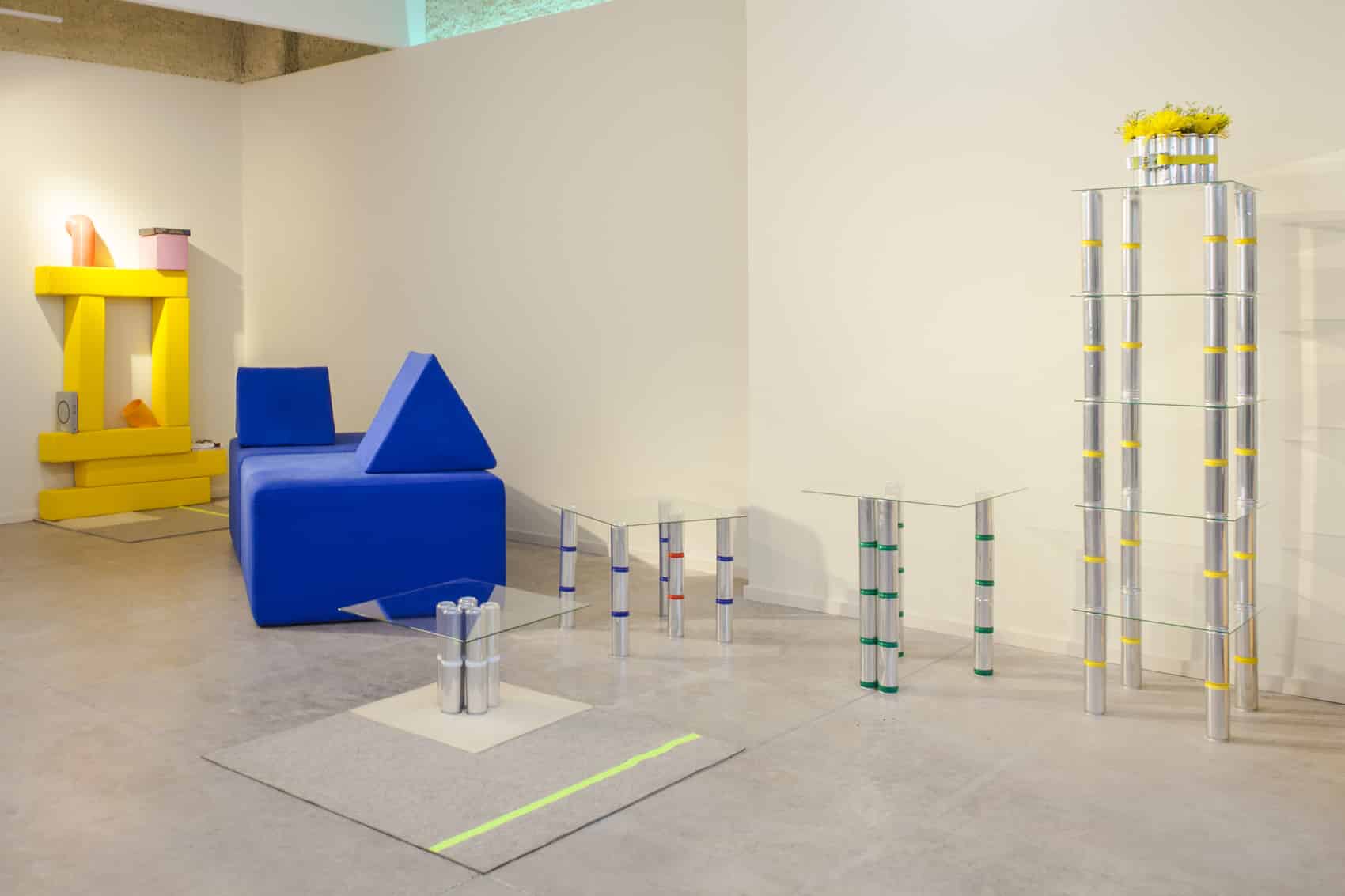
Piezas de mobiliario y Colección experimental con Asociación Latas de bebidas. @Paula Arroyo
That first stage came to an end, and I decided to continue in a different direction, while keeping intact the philosophy that had given rise to the project. That’s why I removed the “m” from Muak and the reference to “babi,” keeping only the central part of the name: U-AK. In a way, it was a way of keeping alive the same spirit with which it all began.
After more than fifteen years, has its meaning changed, or does it still reflect the same intention with which it was born?
The most interesting thing is that, although the studio has evolved and transformed over time, the essence remains. In fact, I still have a mind map that I created at the beginning of the project, which outlined its conceptual and strategic roadmap. When I look at it today, I’m surprised to see that many of the principles that appeared in that diagram continue to guide my work.
What was the studio’s purpose?
It had a social dimension that has not only been maintained but has strengthened over the years. The pursuit of environmental balance also remains, both in the choice of techniques and materials and in the commitment to local and responsible production. Likewise, the desire to add value through design continues, exploring new forms, new meanings, and new ways of relating to the objects and people around us.
From the beginning, there was also an international focus. Influences, especially Dutch and Scandinavian design, have shaped this open-minded perspective. I have always felt the need to observe what is happening beyond our immediate surroundings, to learn from other cultures, and to connect with different ways of understanding design, innovation, and everyday life.
But above all, this project is very much a personal mission. It is deeply connected to what I want to contribute as a person through my work and to how I understand my relationship with society. That is why I have never felt a clear separation between the personal and the professional. Both areas feed off each other and are part of the same quest. My work is, to a large extent, a vocation. I need what I do to have meaning and be aligned with my values, my understanding of the world, and the contribution I want to make through my profession. In a way, the studio has become a tool for shaping that vision: a way of being in the world and, at the same time, trying to transform it, even on a small scale, through design.
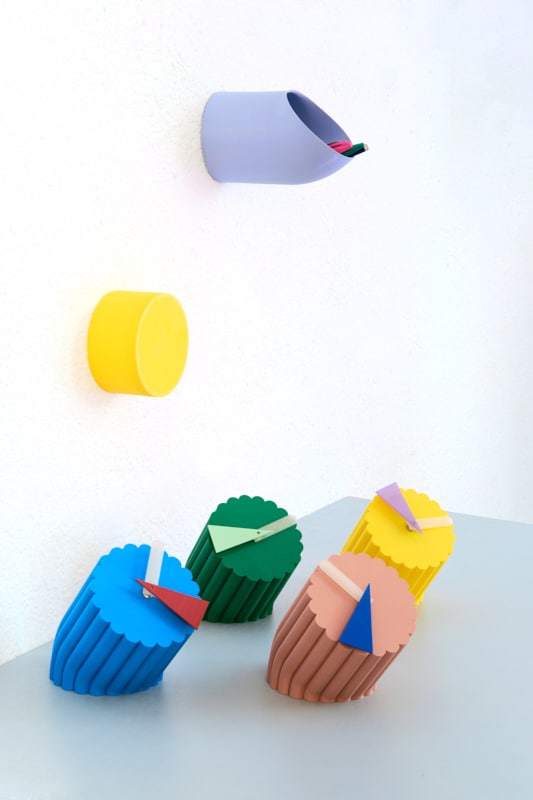
Reloj Don’t waste time y estante impreso en 3D. @Pablo Torres.
Your work spans product design, teaching, research, and community projects. What’s the common thread that unites it all?
Creativity, value creation, and people’s well-being are three dimensions that have been present from the beginning and continue to guide every project I undertake. As André Ricard points out in his book, The Creative Adventure: The Roots of Design, “perhaps creativity is thus the answer to the ‘why’ of life.” In my case, I would say it’s the answer to the ‘why’ of my work and also of an important part of my life. Creativity isn’t just a professional tool, but a way of observing, interpreting, and relating to the world.
These inseparable elements enrich each other. Creativity becomes meaningful when it’s capable of generating value; value is most significant when it contributes to people’s well-being; and the pursuit of that well-being constantly fuels new creative processes. It’s a continuous cycle of learning, exploration, and transformation.
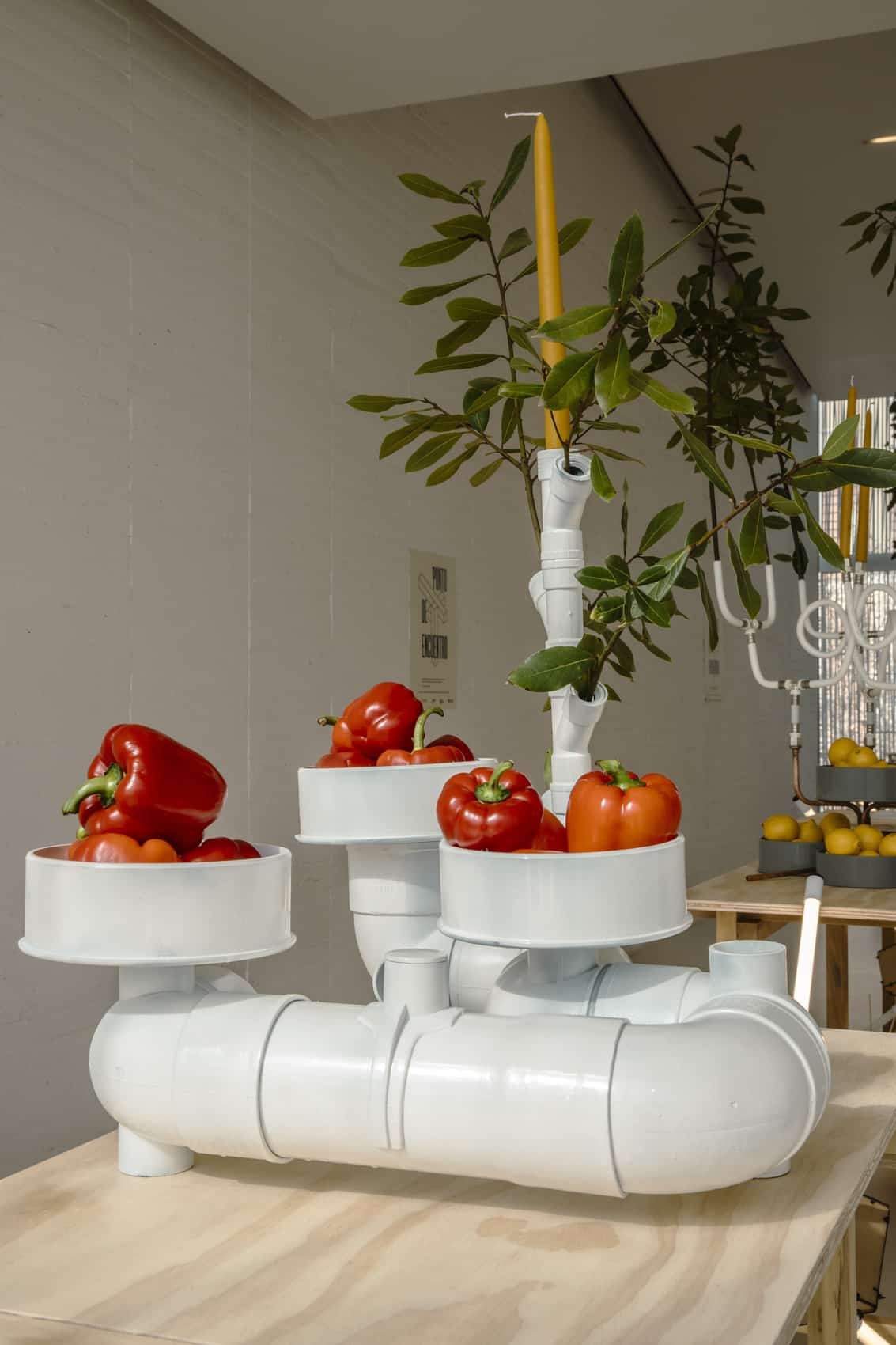
Exposición TCx Norte Joven para MDF 25. @Victoria Muñoz
You often talk about design as a tool for social transformation. What does it really mean to design from that perspective?
This question is central to my doctoral research: the capacity of design to transform social contexts and generate real opportunities for people. I remember that this quest began to take shape in 2012, when I read a reflection on a design blog that deeply affected me. It started with a well-known phrase: “With great power comes great responsibility.” The author then raised an idea that immediately resonated with me: “Designers aren’t superheroes. We don’t shoot webs or fly over buildings, but as design professionals, we have the power, and therefore the responsibility, to help design a better world.”
That reflection led me to become increasingly interested in the relationship between design and social impact projects. In 2017, thanks to Silvia Gómez Cisneros, I discovered Ellas lo Bordan, a sewing workshop that was developing an interesting social inclusion project through its work with women. From then on, I began collaborating with them on the textile production of some projects.
A year later, during Dutch Design Week in Eindhoven, I discovered Social Label, an initiative that works with local social groups and renowned Dutch designers to develop products that generate social economy and new opportunities for its participants. Beyond the resulting objects, what impressed me most was the project’s ability to combine training, technical skills development, social and professional integration, self-esteem building, and the creation of support networks.
Was that when you first learned about similar initiatives in Spain?
The need to explore similar approaches here led me to the Asociación Norte Joven, an educational organization that offers second chances to disadvantaged youth through vocational training programs in trades such as carpentry, plumbing, electrical work, and cooking.
In 2021, we launched an initial pilot program with the collaboration of various designers, which has gradually grown into a stable line of work. In this context, design is used as a tool for co-creation, teamwork, critical thinking, and problem-solving. Over the past two years, and due to the creation of the TetuánCrea collective, I found it very interesting to involve the designers in the project, resulting in exhibitions built around concepts that integrate the work of all the center’s workshops.
How has the project gained visibility?
The results were presented at the Madrid Design Festival, which also brought recognition to the work done by the participants.
Furthermore, in the most recent edition, we incorporated a collaboration with Elmo Leather to develop lighting pieces co-designed by the participants and intended for the pop-up shop featured during the festival. These kinds of partnerships demonstrate how design can connect educational institutions, businesses, professionals, and social groups around shared objectives. For me, designing from a social perspective means using the tools, methodologies, and processes inherent to design—such as design thinking, co-creation, human-centered design, strategic design, and participatory design—to contribute to improving the quality of life for individuals and communities, regardless of their geographic, economic, or cultural context.
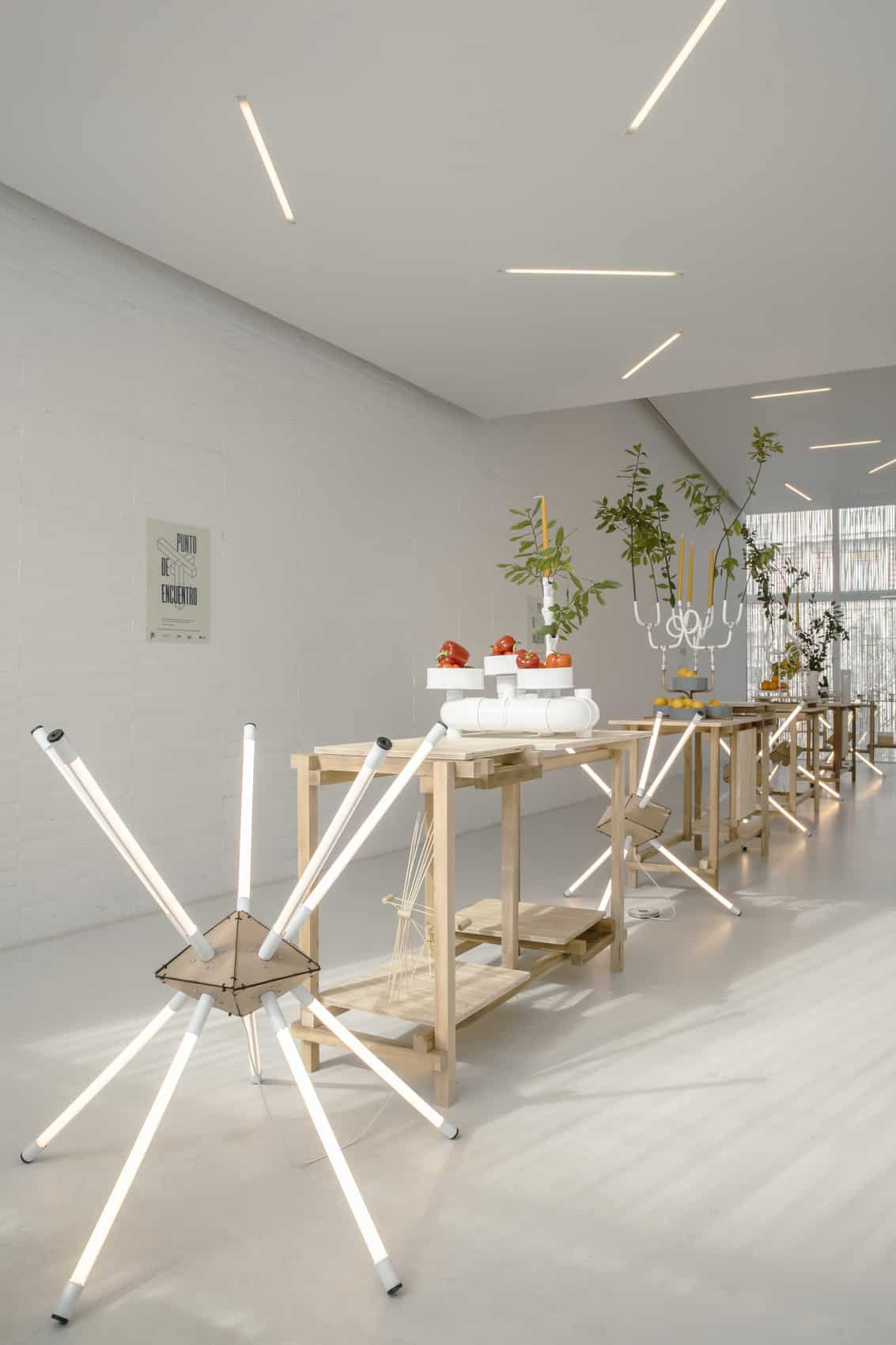
Exposición TCxNorte Joven 25 MdF @ Victoria Muñoz
Do you believe design has the capacity to generate real change in people’s lives?
It’s one of the aspects that interests me most and, at the same time, one of the greatest challenges in this line of work. The most valuable effects of these processes are often also the most difficult to measure and demonstrate. It’s relatively easy to count the number of participants, the hours of training, or the products developed, but it’s much more complex to evaluate aspects such as personal empowerment, increased self-esteem, the creation of social connections, a sense of belonging, or a person’s ability to envision new opportunities for their future.
However, it is precisely these results that I consider most important. They are also the ones that need to be rigorously demonstrated so that these kinds of initiatives can be consolidated, replicated, and receive the necessary support to continue growing.
What conclusions have you drawn?
Over the years, the various collaborations and projects I’ve participated in have allowed me to directly observe the effects these processes have on people. Although in many cases we haven’t yet had sufficiently developed quantitative measurement tools, the accumulated experience consistently points in the same direction: when design methodologies are applied in social contexts, they foster empowerment, stimulate active participation, strengthen interpersonal relationships, and generate collaborative dynamics that contribute to individual and collective development.
I’ve seen how people gain confidence in their abilities, discover previously unknown skills, learn to work as a team, and begin to see themselves as agents capable of adding value. Design, understood as a shared creative process, then becomes a tool for imagining possibilities, experimenting with new ways of doing things, and building real opportunities.
Furthermore, these projects have the capacity to create collaborative ecosystems involving a wide range of stakeholders: users, design professionals, companies, suppliers, cultural institutions, social organizations, and the general public. Their participation broadens the scope of the projects and fosters the creation of sustainable economic, social, and cultural connections.
What do you consider the main challenges of social design?
These connections are what allow us to build more creative, resilient, and self-sufficient communities, capable of continuing to grow beyond the specific duration of each project. That’s why I believe one of the biggest challenges will be developing methodologies that allow us to more clearly demonstrate their impact. Not to justify their existence, but to better understand their transformative capacity and broaden their reach. Because if we can demonstrate how these processes contribute to improving people’s lives, we will also be creating new opportunities for design to play a more relevant role in building a more inclusive, participatory, and sustainable society.
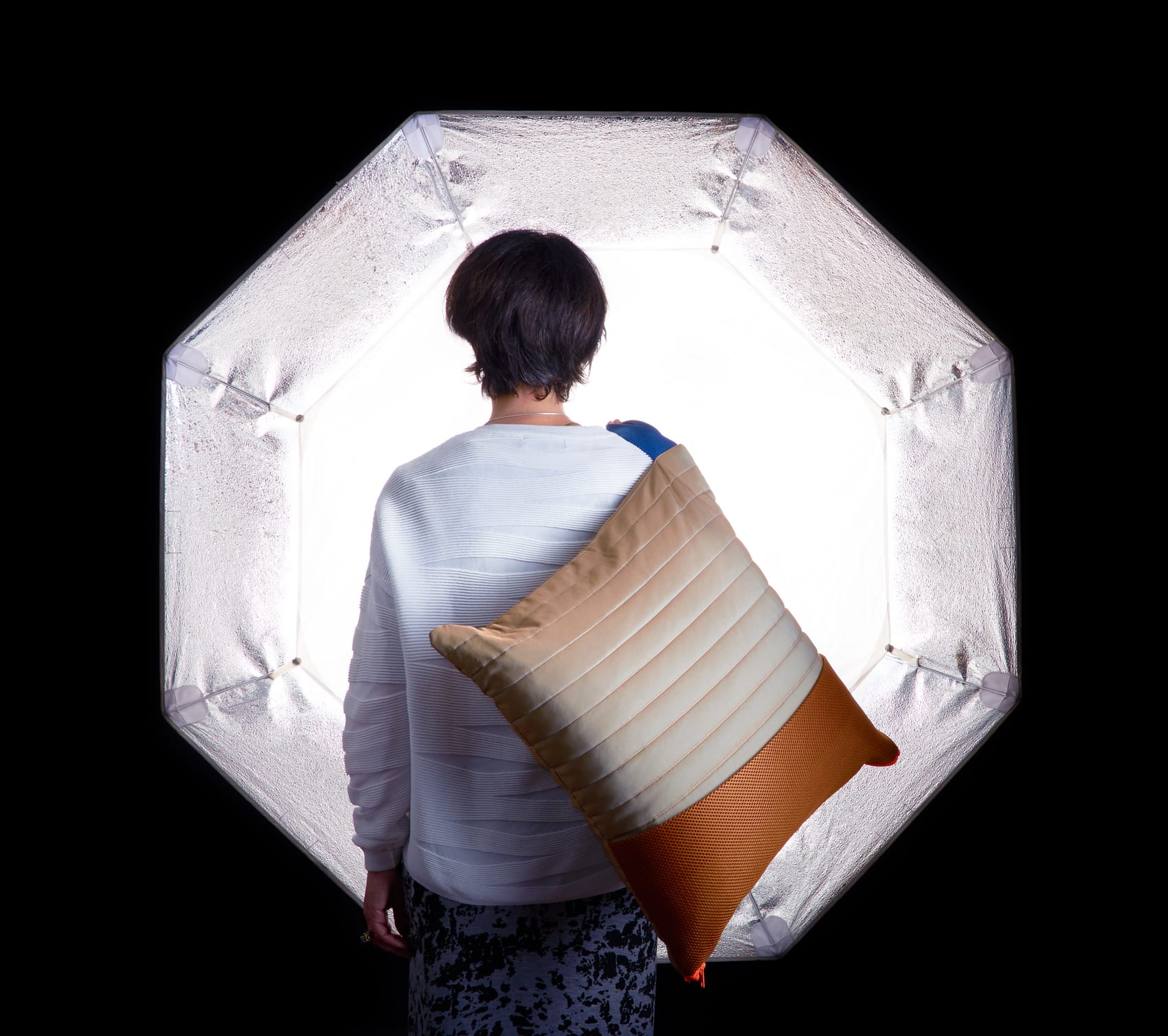
IN TRANSIT en colaboración con ellas lo Bordan. @Pablo Torres
From all these collaborative projects, with workshops, collectives, or social inclusion initiatives, what have you learned?
I believe that for any designer, it’s fundamental to work from a place of empathy, which is part of the very essence of the design process. Designing involves understanding people, putting yourself in the shoes of those who will use a product, service, or experience, understanding their needs, their expectations, and also their difficulties.
This capacity for observation and understanding is essential both when we work for a client and when we design for an end user. However, when the process unfolds in diverse social contexts and through co-design dynamics with people who have very different realities from our own, this capacity for understanding expands enormously. It forces us to question our own perspectives, to listen more deeply, and to discover needs, abilities, and ways of relating to the environment that might otherwise go unnoticed. For me, one of the greatest contributions of these kinds of experiences is precisely this broadening of perspective. Working alongside people with different life trajectories allows us to better understand the complexity of the human condition and recognize that design is not only about objects or services, but also about relationships, contexts, and opportunities.
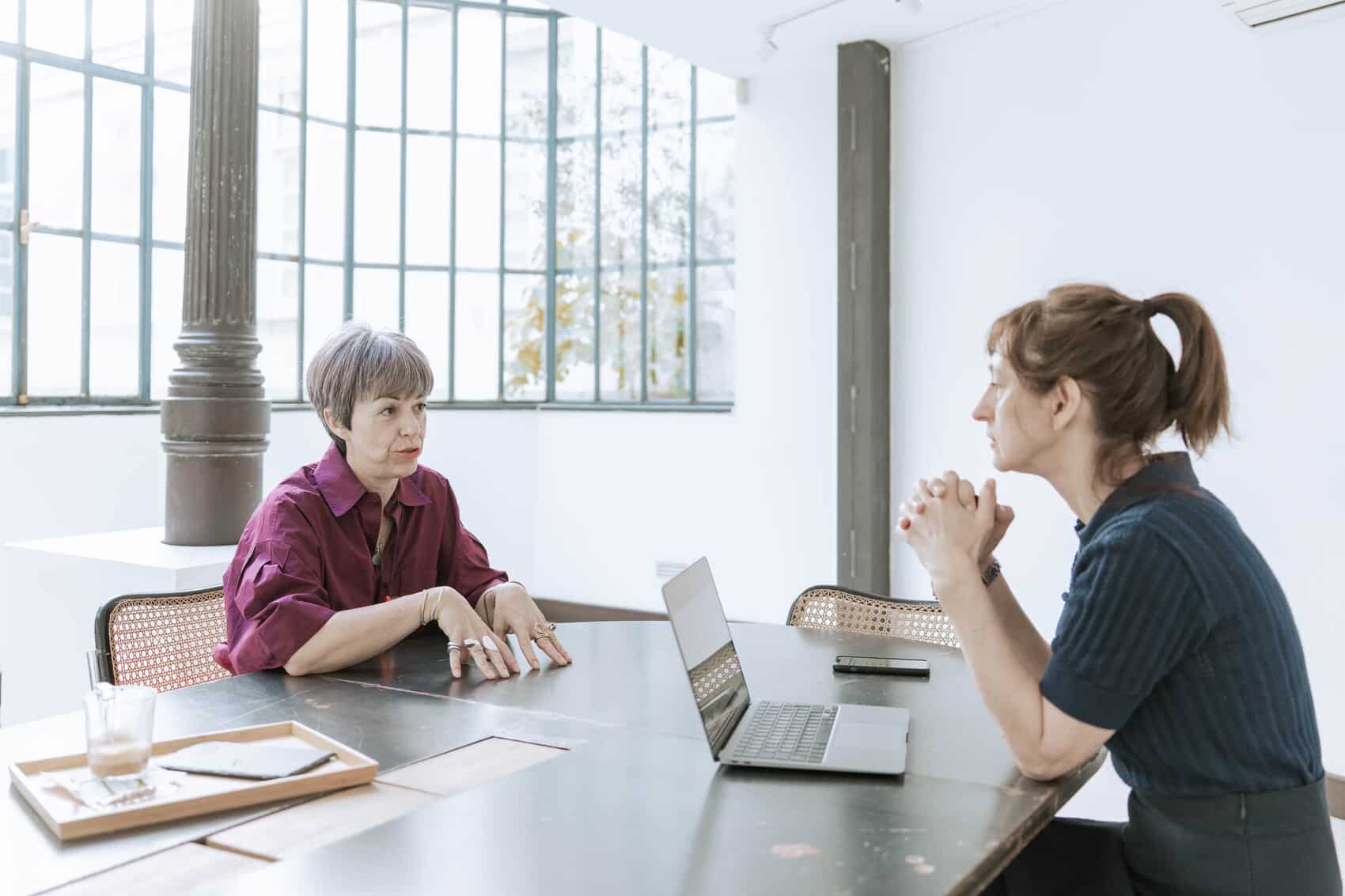
Marta y Beatriz en un momento de la entrevista en El Invernadero
When you look back at your early projects, what remains unchanged and what has changed in your design approach?
I think the foundation, values, and purpose of my work remain essentially the same as when I started. Looking back, I recognize the same concerns: curiosity, creativity, the pursuit of value for people, the social dimension of design, and an interest in generating a positive impact through projects. What has changed is not so much the purpose as the way I approach it.
Perhaps the main transformation has taken place in my research. In the early years, I designed in a more intuitive and impulsive way. There was an energy closely tied to discovery, experimentation, and the need to materialize ideas quickly. Over time, I’ve learned to give more space to observation, analysis, and prior reflection. Now I try to develop more deliberate, in-depth, and conscious research processes, understanding that often the best answers emerge when we dedicate enough time to formulating the right questions.
My understanding of the design process itself has also changed. If before the focus was more on the final result, today I place increasing importance on the journey that leads to it.
What interests you most?
Especially everything that happens during the process: conversations, shared learning, knowledge generation, and the relationships built among the people involved. In this sense, participatory processes have become fundamental to my work. I’m increasingly interested in incorporating users, collaborators, and other stakeholders into the development of projects. Not only because they enrich the final result, but also because they contribute perspectives that could hardly emerge from an individual viewpoint. Participation allows design to become a space for listening, exchange, and the collective construction of meaning. In a way, I feel that my professional practice has evolved from a vision more focused on designing for people to one that seeks to design with people. And that change, although it may seem subtle, has profoundly transformed how I work, research, and understand the role of design in society. Today, I continue to believe in creativity as an engine of transformation, but also in the importance of slow, deliberate processes, active listening, and collective intelligence. Because the more complex the context in which we work, the more necessary it is to build the answers in a shared way.
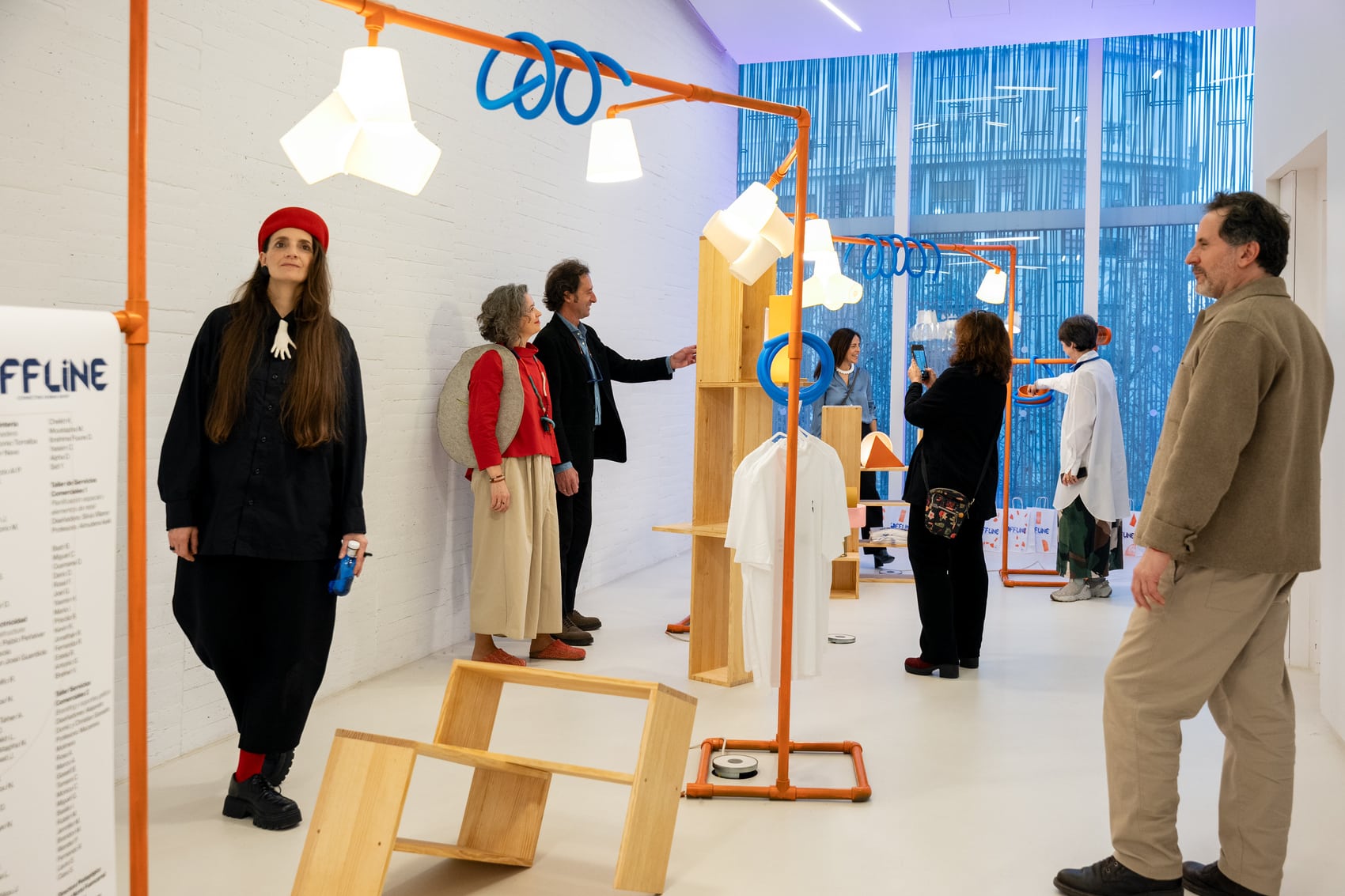
MDF26. Viveros. OFFLINE. Tetuan. @ Jorquera Wuhan
Are there any ideas you took for granted back then that you now question?
Yes, probably one of the ideas I’ve questioned most over time is understanding design primarily as a tool for creating objects or solving specific problems. When I started, I was much more focused on the end result: the piece, the product, the designed solution. Today I still consider that dimension important, but I believe that the true potential of design also lies in the processes it generates and the relationships it can activate.
Over the years I’ve come to understand that often the value of a project doesn’t reside solely in what is produced, but in what happens along the way. In the conversations that open up, in the shared learning, in the skills developed by the people involved, or in the connections created between actors who, otherwise, probably would never have collaborated. I used to think that a large part of my work consisted of finding solutions. Today I believe that, on many occasions, my role has more to do with formulating good questions, facilitating processes, and creating the necessary conditions for answers to emerge collectively.
Another idea I’ve been revisiting is the relationship between speed and effectiveness. For a long time, I associated the ability to produce, solve problems, and move forward quickly with an efficient way of working. However, experience and research have taught me the value of slow processes. I’ve learned that listening, observing, understanding contexts, and dedicating time to research often leads to more robust, relevant, and sustainable solutions. I believe I’m still pursuing the same goals and sharing the same values. What has changed is my understanding of the complexity behind them. The further I advance, the fewer absolute certainties I have and the more aware I am that design is, above all, a tool for learning, connecting, and building alongside others.
Your career is closely linked to the Tetuán neighborhood and the creation of networks like TetuánCrea. What role does the territory play in your creative process? Is it possible to design community?
I believe it is possible to design community. In fact, I’m increasingly convinced that one of design’s most valuable contributions lies precisely in creating the conditions for people to meet, collaborate, and build shared projects. It’s true that this kind of work requires time, dedication, and energy that often adds to the demands of daily work. Creating community is rarely the quickest or easiest option. However, for me, it’s one of the most enriching. Sharing projects, building networks of trust, and creating spaces for collaboration has always been a personal and professional necessity.
What professional groups and associations are you involved with?
First DIMAD and, more recently, TetuánCrea are spaces that have allowed me to see how collaboration transforms not only projects, but also the way we understand our work. When we share knowledge, experiences, and resources, processes are enriched, and opportunities arise that would be difficult to create individually. The most interesting thing is that these dynamics end up transcending the strictly professional. In the case of TetuánCrea, we haven’t just developed joint projects or generated new opportunities for collaboration among professionals who worked very close to each other without knowing one another. Personal bonds, relationships of trust, and even friendships have also been forged. In a way, a human network has been woven that strengthens both the individuals and the region itself.
That is precisely one of the reasons for this project’s existence: to ensure that the benefits of the initiatives reach the people and places where they are developed. I would like more and more projects to remain linked to the neighborhood, for residents to find ways to participate in them, and for there to be more opportunities to build shared processes from a local perspective.
Sustainability appears naturally in your work, whether through biodegradable materials, local production, or the revival of traditional crafts. How do you understand the designer’s responsibility today?
For me, sustainability has never been a trend or an added strategy. It has been present quite naturally since the studio’s inception, probably because I’ve always understood design as a tool for generating value and not simply for producing objects. Over time, I’ve come to the conclusion that the designer’s responsibility goes far beyond choosing sustainable materials or reducing a product’s environmental impact, although of course those aspects are fundamental. I believe our responsibility begins much earlier, in the questions we ask ourselves before designing: Is this product truly necessary? What need does it fulfill? What impact will it have on people, the environment, and the resources it uses? What relationships does it generate or what dynamics does it foster?
Designing involves making constant decisions, and each of those decisions has consequences. Choosing a material, a production process, a local supplier, or a particular distribution method are not merely technical matters; These are also cultural, social, and economic decisions. That’s why I believe the designer’s responsibility lies, to a large extent, in being aware of these implications and trying to act in the most consistent way possible.
How do you translate this into your work?
In my case, at different scales, it sometimes appears through biodegradable or low-environmental-impact materials. Other times through local production, collaboration with small workshops, or the revival of artisanal techniques and crafts that are part of our cultural heritage. And, increasingly, it also appears in the social dimension of projects, in how they can generate opportunities, strengthen communities, or activate collaborative networks.
In fact, today I understand sustainability in a much broader way than I did a few years ago. I don’t relate it solely to the environment, but also to people and territories. I’m interested in thinking about projects that can be ecologically sustainable, but also socially and economically sustainable. Projects that generate value for those who participate in them and that contribute to building more balanced and lasting relationships.
In this sense, I believe that the designer’s responsibility is not to offer perfect answers or to assume that they can solve complex problems single-handedly. Rather, it has to do with adopting a conscious, critical, and committed attitude toward the challenges of our time. I believe that designing responsibly means precisely that: exercising creativity with the awareness that everything we do is part of a much larger ecosystem and that our decisions can contribute to making it more balanced, more humane and sustainable.
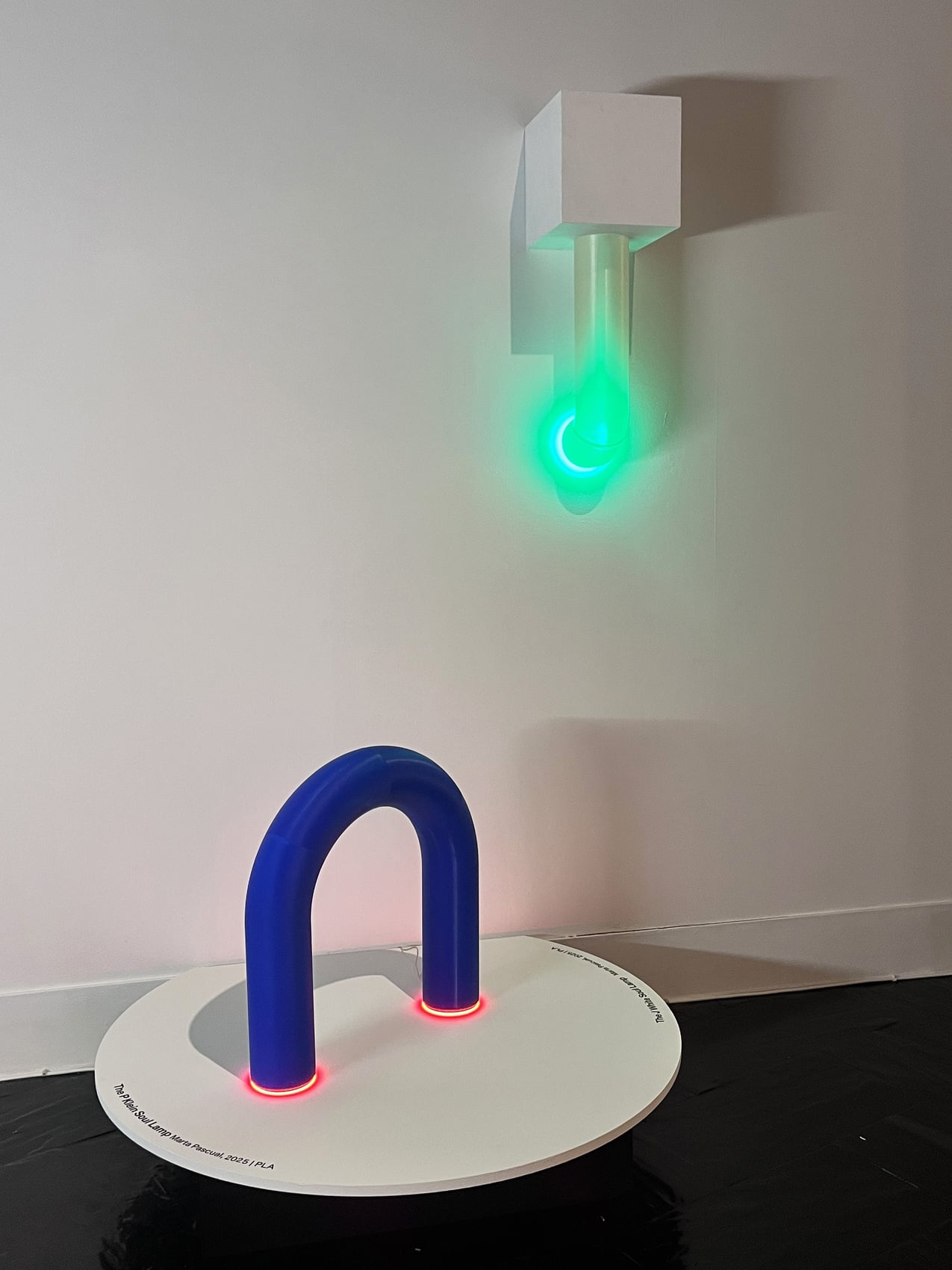
Piezas Soul Light para La Línea Sueña @U-ak
In fact, one of your latest projects was with Elmo Leather using industrial waste. Tell us about it.
Yes, this project with Elmo Leather was a great opportunity and a very representative example of the direction I’m interested in continuing to work in.
As I mentioned earlier, the collaboration arose from the social design project we developed this year between TetuánCrea and Norte Joven, which was presented at the Madrid Design Festival. We were fortunate that Elmo Leather wanted to join the initiative, contributing materials from their production surplus to develop a collection of lamps co-designed by Estrella Pozas and Ilaria Franceschini with the project participants.
The pieces were made in the Soulem workshop, another project with a significant social inclusion component, which gave the collaboration a special richness. It was very important for us that a company like Elmo Leather decided to get actively involved, not only by participating in the exhibition but also by hosting a presentation and showcase of the project in their Madrid space.
What I find particularly interesting about this collaboration is that it brings together many of the issues that are part of my research and professional practice. On the one hand, there’s a dimension of co-design and participation, where different profiles and expertise come together to develop a shared project. On the other, there’s the reuse of materials through the utilization of production leftovers, incorporating a sustainable perspective into the process. And, in addition, there’s a social dimension by involving organizations and workshops that work in training and job placement programs. In that sense, the lamps are almost the visible consequence of something much broader. What’s truly valuable is the network of collaborations that develops around the project and the ability to connect companies, designers, social organizations, and participants around a shared objective. Each one contributes different knowledge, resources, and experiences, enriching the final result and multiplying the project’s impact.
I also believe that these kinds of experiences open up very interesting avenues for the future. They demonstrate that it’s possible to establish collaborations between brands, designers, and social organizations based on a logic of mutual benefit and the creation of shared value. I am particularly interested in exploring how these models can be scaled up and replicated with other companies and sectors, creating new opportunities for design to act as a bridge between the business world, sustainability, and social innovation.
Ultimately, beyond the finished pieces, what I find truly relevant is that these kinds of collaborations allow me to materialize many of the ideas I’ve been working on for years: participation, resource reuse, generating opportunities, community building, and design’s ability to connect people and contexts that seemingly belong to different worlds.
What would you say are the three pillars that underpin your professional and personal practice?
If I had to summarize my professional and personal practice in three pillars, I would say they are creativity, collaboration, and generating value for people. Creativity, because it has always been the driving force behind everything I do. I don’t see it solely as the ability to generate new ideas, but as a way of observing the world, asking questions, connecting concepts, and finding possibilities where there appear to be none. Since childhood, I’ve felt the need to create, and over time, I’ve come to understand that creativity is an extraordinary tool for imagining possible futures and transforming realities.
The second pillar would be collaboration. Over the years, I’ve learned that the most enriching projects are rarely built in isolation. Collaboration, shared learning, and collective intelligence have been present at every stage of my career, from my early projects linked to international cooperation to the most recent initiatives developed alongside groups, associations, companies, educational institutions, and local communities. Each person brings a different perspective, and this diversity always ends up broadening the scope and quality of the projects.
And the third pillar would be generating value for people. It’s probably the one that gives meaning to the other two. I’ve always been interested in design having real utility and contributing in some way to improving the lives of those who interact with it. This idea has evolved over time, and today I understand it in a much broader way: generating value doesn’t just mean creating better products, but also generating opportunities, knowledge, well-being, participation, connections, and a sense of belonging.
In a way, these three pillars feed off each other. Creativity allows us to imagine new possibilities; collaboration enriches them and makes them viable; and value creation provides the purpose that guides the entire process.
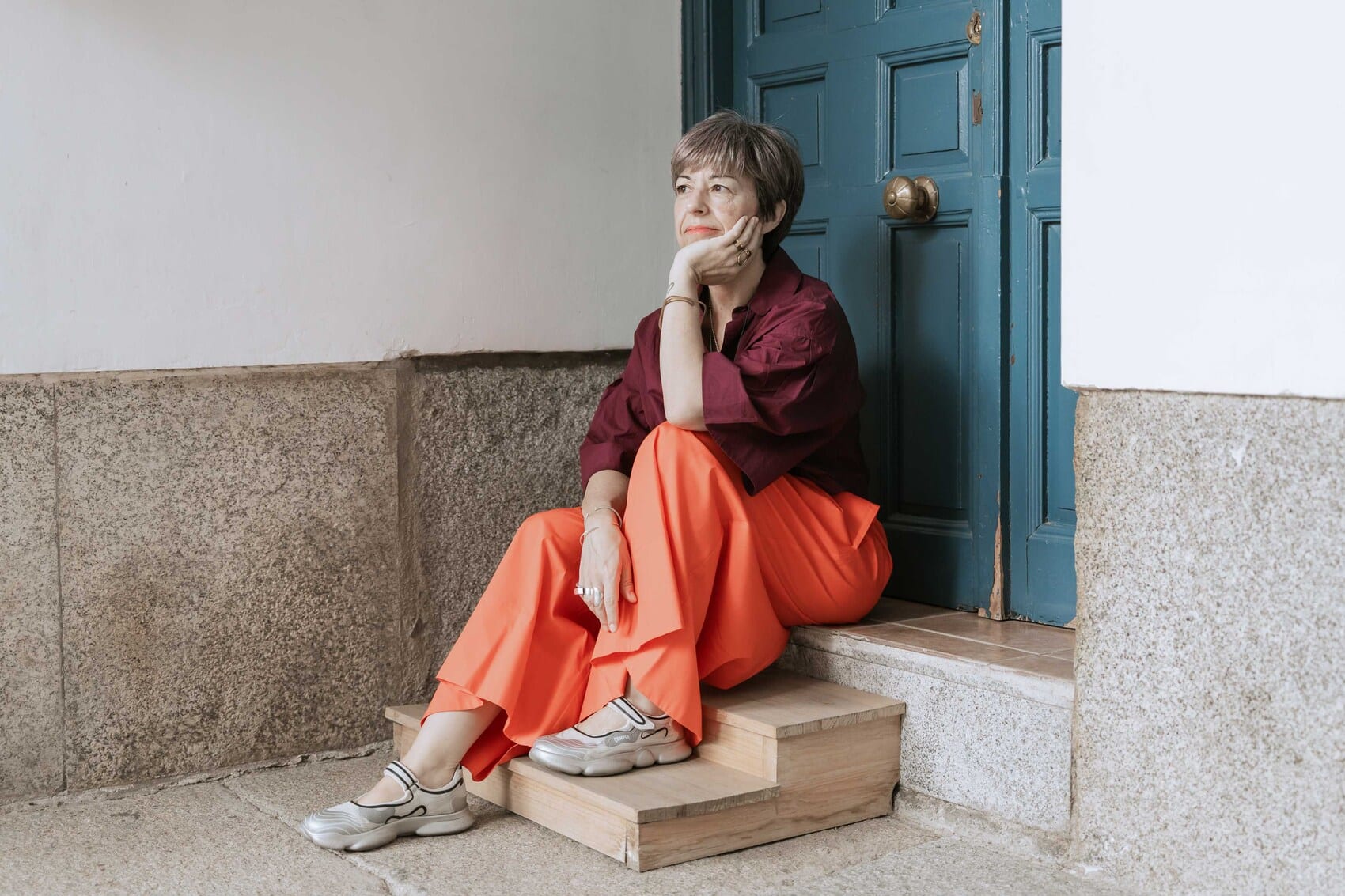
You are currently pursuing doctoral research on social design. What questions arise for you?
The main question guiding my research is to what extent design can truly contribute to transforming social contexts and creating opportunities for people. It’s a question that has been with me for years, stemming from both professional practice and the observation of specific projects I’ve participated in. I’m particularly interested in understanding what happens when design tools and methodologies are applied in contexts of social vulnerability, education, or community. What impact do these processes have on people? What skills do they develop? How do they influence self-esteem, participation, sense of belonging, or employability? What happens beyond the tangible outcome of a project?
One of the questions that most concerns me is precisely how to measure that impact. In many of the projects I’ve developed, I’ve observed very significant transformations at both a personal and collective level: people gaining self-confidence, discovering previously unknown abilities, establishing new relationships, or finding opportunities they hadn’t considered before. However, these results are often difficult to quantify and demonstrate from an academic or institutional perspective.
Therefore, a significant part of my research seeks to identify tools and indicators that allow us to better understand these transformations. I am interested in exploring how we can evaluate aspects such as empowerment, participation, community building, and the development of creative capacities. This is not only to validate these processes but also to learn from them and improve their future application.
I also wonder what the role of the designer should be in these contexts. For a long time, the discipline has been closely linked to the creation of products and services, but I am increasingly interested in understanding the designer as a facilitator, mediator, or activator of collective processes.
What skills do they need to develop to fulfill this role? How can they work alongside communities, institutions, businesses, and social organizations in a balanced and respectful way?
Another question that seems fundamental to me is how to build sustainable models over time. Many social design initiatives generate very valuable results, but they depend on specific projects, grants, or personal efforts that are difficult to maintain. I am interested in investigating what conditions are necessary for these processes to have continuity, be replicable, and generate a lasting impact in the territories where they are implemented.
Ultimately, all these questions converge on the same concern: how to use design to expand people’s opportunities and strengthen communities without losing sight of the complexity of social problems. I’m not trying to prove that design is a universal solution, because it isn’t. What interests me is understanding its specific contribution and how we can best leverage its capacity to connect knowledge, activate participation, and generate positive transformation processes.
Rather than seeking definitive answers, my research aims to open spaces for reflection and provide evidence of something I’ve observed over the years: that when design is put at the service of people and developed collaboratively, it has the capacity to generate changes that go far beyond the objects it produces.
Is there any recent research or discovery that has changed your understanding of design?
More than a specific discovery, I would say that what has most transformed my understanding of design has been my doctoral research itself and, above all, my contact with disciplines that have traditionally been outside the field of design. Over the years, I’ve had to delve into fields like sociology, pedagogy, social innovation, community development, and social psychology to better understand the processes that arise when design works with people and communities. This interdisciplinary dialogue has led me to realize that the true value of design often lies not so much in the objects it produces as in the dynamics it activates.
This research has also led me to question the idea of individual authorship. I’m increasingly interested in co-creation processes and participatory methodologies because they allow me to see how the best ideas often emerge when different knowledge, experiences, and perspectives converge. This has changed my role as a designer: today I’m less interested in designing for people and much more motivated to design with them.
Finally, if there’s one idea that has truly transformed my understanding of design, it’s that the most profound impact is often also the most difficult to measure. We can quantify products, sales, visitors, or participants, but it’s much more complex to assess the self-confidence a person regains, the relationships that develop among members of a community, or the opportunities that arise from a shared experience. However, it’s precisely these effects that I consider most valuable.
You’ve participated in international events like Milan Design Week, Dutch Design Week, and Beijing Design Week. What do you find most interesting about the Spanish design scene when you work abroad? And what do you learn from it?
Every time I participate in an international context, I realize the importance of sharing not only specific projects, but also a way of understanding design linked to our cultural, social, and productive context. Participating in events like Milan Design Week, Dutch Design Week, or Beijing Design Week always represents an extraordinary learning opportunity. More than observing trends or products, what interests me is understanding how other cultures approach problems, how they organize their creative ecosystems, and what role design plays within their societies. In the case of the Netherlands, for example, I’ve been deeply inspired by the natural way in which design is linked to research, social innovation, and public policy. There, I found many examples of projects where design is understood as a tool for addressing complex challenges related to education, inclusion, sustainability, and community development. That vision has significantly influenced my understanding of the profession.
Perhaps one of the greatest lessons I always take away from these experiences is the importance of maintaining an open and curious attitude. Traveling, sharing projects, and engaging in dialogue with professionals from other countries helps you understand that there isn’t just one way to design or a single definition of success. Each context has its own priorities, resources, and challenges.
At the same time, these experiences have also helped me appreciate what we have close at hand. The more I learn about other creative ecosystems, the more aware I am of the potential that exists in our own environment: in our workshops, in our collaborative networks, in our neighborhoods, and in our communities. And perhaps that’s why I’m increasingly interested in building bridges between these two worlds, learning from international experiences but applying that knowledge to local and familiar contexts. Ultimately, what interests me most about working abroad isn’t so much exporting a particular vision of design as generating exchanges. Sharing experiences, learning from others, and creating connections that allow ideas to circulate.
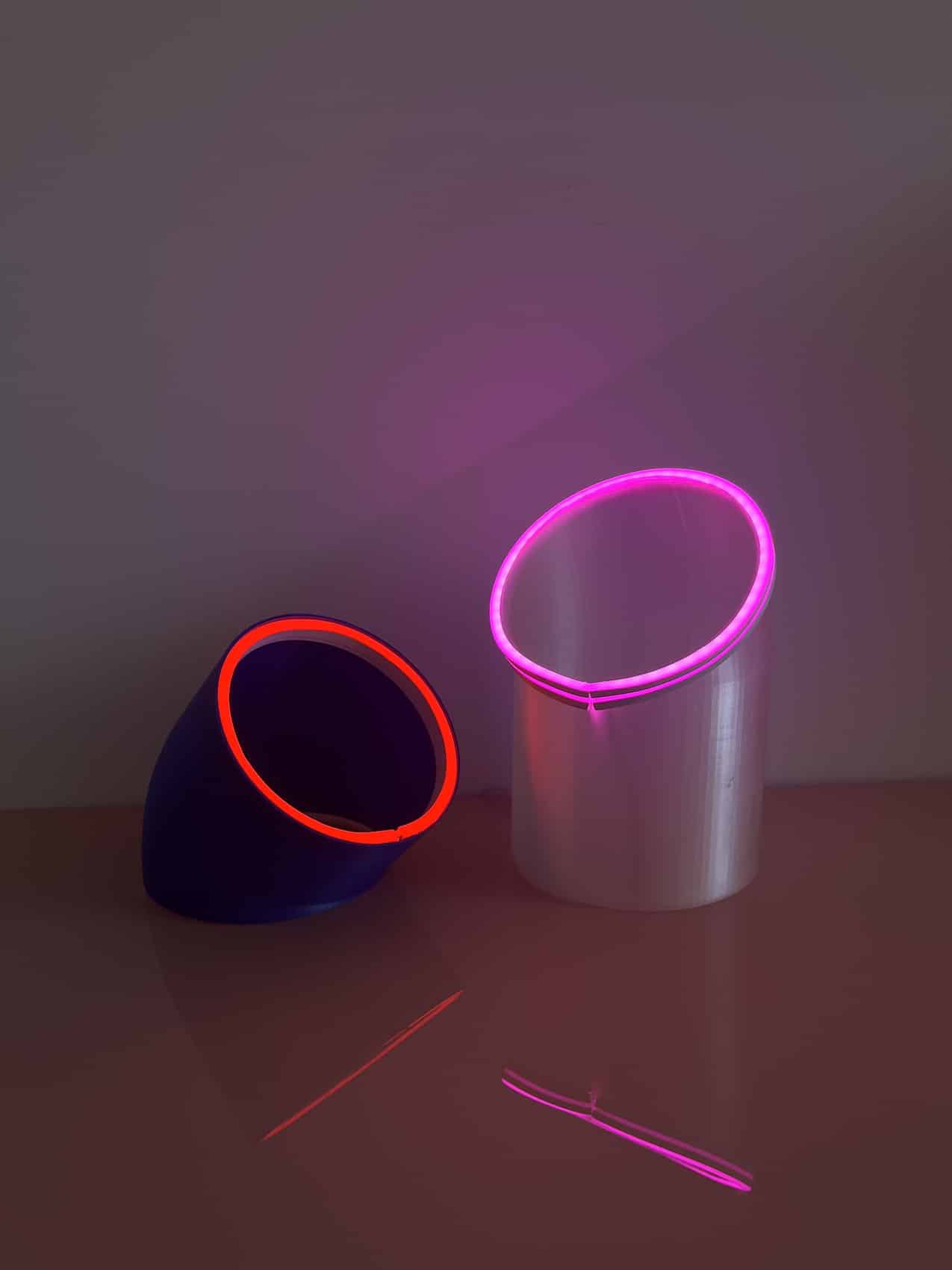
What projects are you currently involved in?
I’m currently working on several projects that reflect the different lines of inquiry within my professional practice. In the product realm, I’m developing a series of trays made using 3D printing, exploring the possibilities offered by new manufacturing technologies and their interaction with contemporary materials and processes. I’m also working on a bench that’s part of the Blocks Textiles family, a line of research I’m continuing to develop and that keeps evolving through new applications and formats. In addition, I continue designing small collections of bags, pieces that I release sporadically and that allow me to keep experimenting with materials, techniques, and production processes in social reintegration workshops.
At the same time, I’m continuing to delve deeper into the line of research and action linked to social design, which currently occupies a very important part of my work. Our goal is to continue expanding these projects and generating new collaborations with institutions, social entities, and organizations that share an interest in using design as a tool for learning, participation, and creating opportunities.
I also continue to collaborate with the Beverage Can Association on various initiatives related to material reuse and education. I’m particularly interested in exploring how certain waste materials can be transformed into educational resources capable of introducing concepts related to sustainability, creativity, and design in educational contexts.
On the other hand, I remain deeply involved in the activities of TetuánCrea, a space that continues to generate opportunities for meeting and collaboration among creative professionals, institutions, businesses, and residents of the district. In the coming years, I would like to continue promoting collective projects that strengthen these networks and broaden community participation, fostering an increasingly close and active presence of design in the area.
If you could imagine the perfect project to develop in ten years, what would it be?
I envision myself quite clearly leading a job placement company in the form of a foundation or social organization, where the core activity would be precisely what I’m most interested in researching and developing: the capacity of design to generate real opportunities for people.
I would like to create a structure capable of integrating design, training, production, and social impact within a single ecosystem. A place where co-design processes are a natural part of project development and where the pieces are not only the final result but also a tool for learning, training, and job creation.
The idea would be to develop and produce my own collections within this context, but also to collaborate with other firms, designers, and brands interested in incorporating a social dimension into their design and production processes. In this way, the value generated by the projects could directly benefit the people involved, creating opportunities for training, professional experience, and access to employment.
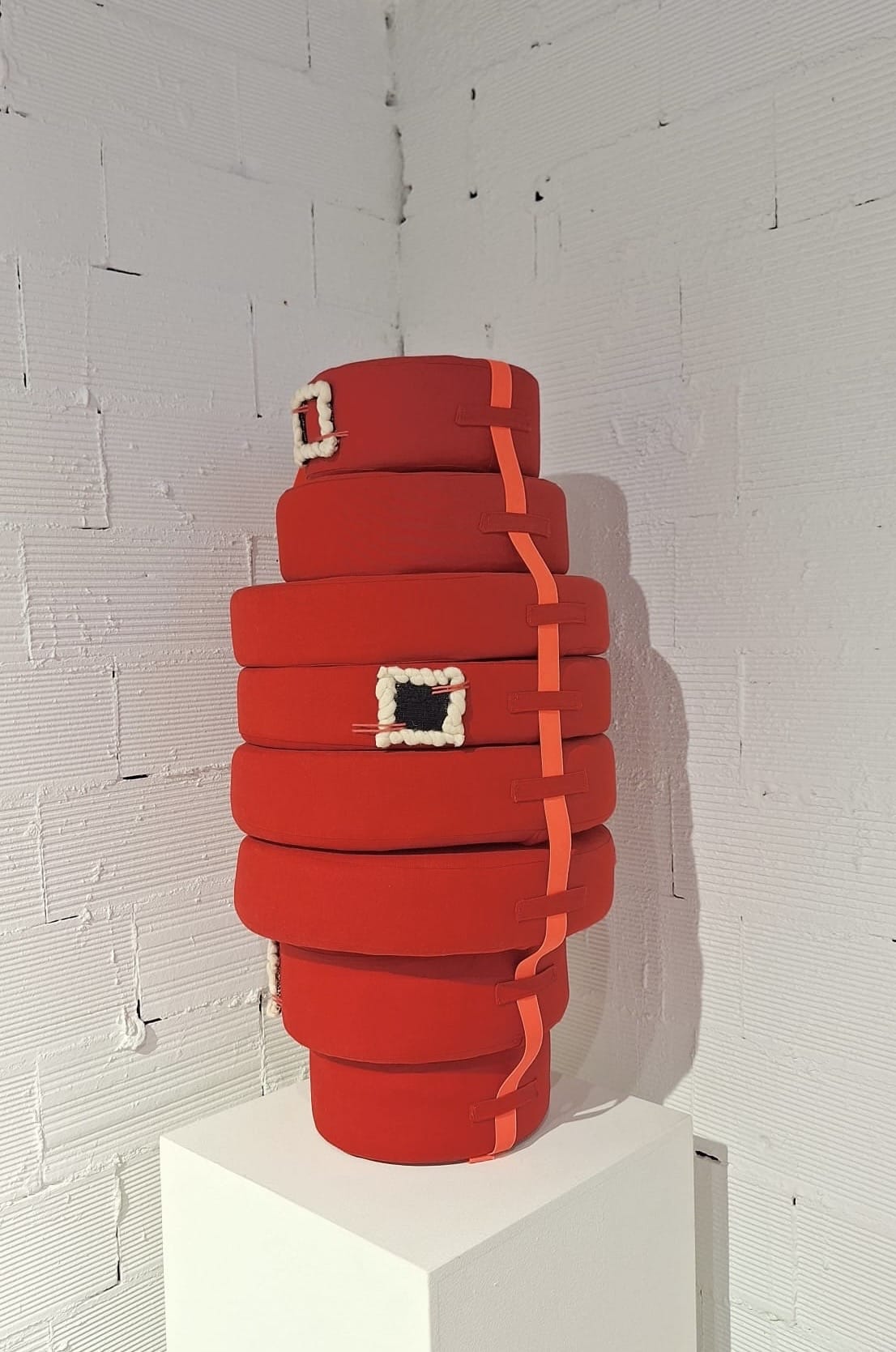
Vasijabla. Exposición para Caotics y Gandia Blasco @u-ak
What professional dream do you still have?
More than working for a specific firm, what truly attracts me is the possibility of collaborating with brands whose vision I admire. I’ve always felt a strong affinity for certain brands, both for the quality of their work and for their approach to design, materials, and processes. The idea of developing a piece for one of them is especially stimulating, not so much for the recognition it might bring, but for the opportunity to participate in a vision different from my own and contribute to it from my own experience.
Perhaps that’s why collaborations have always interested me so much. For most of my career, I’ve been the editor of my own pieces, which has allowed me to develop a very personal identity and a great deal of creative freedom. However, when I’ve had the opportunity to collaborate with other designers, institutions, or brands on specific projects, I’ve discovered that these processes are often particularly enriching.
I like to think of design as an open conversation, where each collaboration incorporates new perspectives and questions. Ultimately, beyond specific brands or names, what truly motivates me is participating in projects that allow me to continue learning, researching, and growing. Projects that force me to see things from a different perspective and that, in some way, transform me as well during the process.
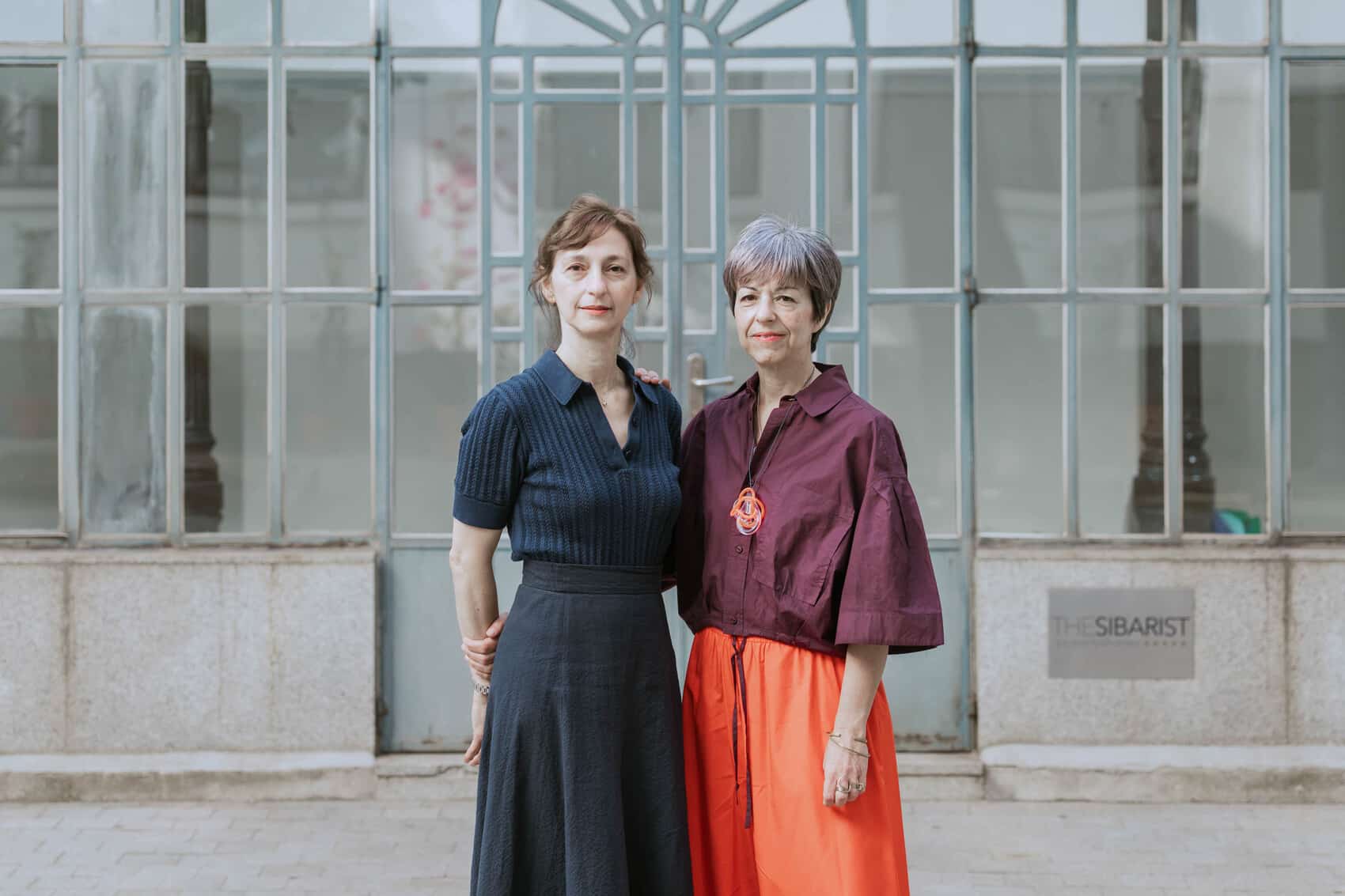
Beatriz Fabián y Marta
Redacción: Beatriz Fabián
Beatriz es periodista especializada en contenidos editoriales offline y online sobre diseño, arquitectura, interiorismo, arte, gastronomía y estilo de vida.