Júlia Esqué: “Designing means answering questions”
We speak with designer Júlia Esqué, whose work ranges from lighting and seating to objects in different forms and materials, all reflecting a formal balance and an aesthetic shaped by a thorough process of experimentation.
By Beatriz Fabián
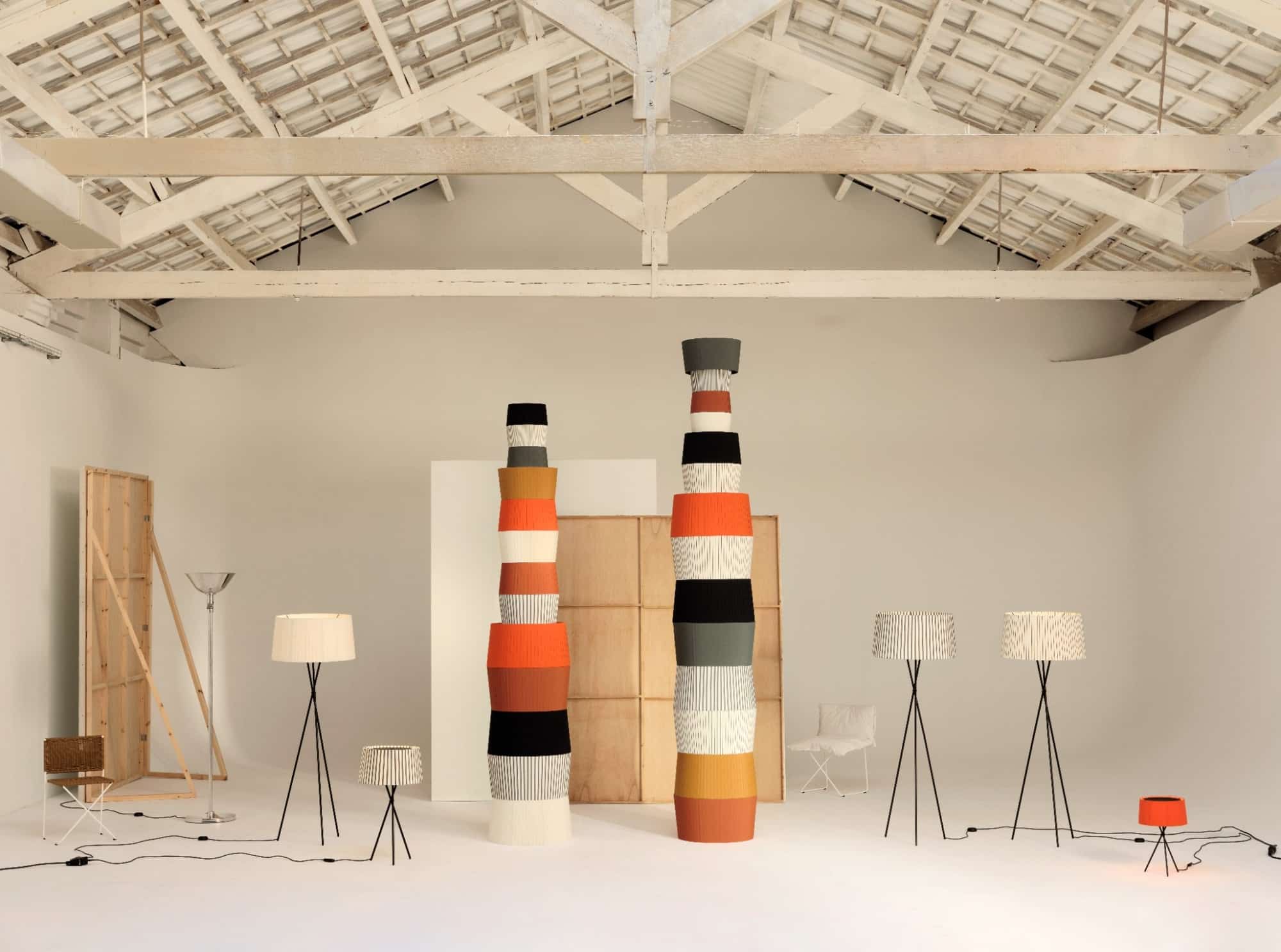
Lampshades for a special edition of Santa & Cole’s Trípode lamp, marking its 25th anniversary. Photograph: Jara Varela.

We first came to know the work of Júlia Esqué (Barcelona, 1986) through pink fabric petals: 20,000 of them, covering the soft contours of the Hortensia armchair by Andrés Reisinger. Together they created an icon, initially made by hand and later produced by Dutch brand Moooi, founded by Marcel Wanders. It remains available through the brand’s website and showrooms. It was her first design to reach an international audience, an experience that would shape her career.
In this conversation, Júlia suggests that her interest in product design may have roots in her family history. Her grandmother worked with ceramics and her grandfather was a blacksmith. Her own practice grew from an early interest in fashion into an exploration of a wide range of materials and types of object.

She studied at Elisava, the Barcelona School of Design and Engineering, and ECAL, the Cantonal School of Art and Design in Lausanne, Switzerland, where she is now a guest lecturer on the Master in Product Design. Inspiration always finds her working, to borrow Picasso’s famous phrase. She continued her training in the studios of Curro Claret, Martí Guixé, Jaume Ramírez and Stephen Burks. She has worked between Barcelona and New York and exhibited projects at Collectible Fair in Brussels, the Design Museum Gent and HKDI Gallery. She says she has no preference for any particular object or material: what matters is responding to a need and to the project at hand. Her designs include a minimalist knife, the FAD 2021 cava glass now in the permanent collection of Disseny Hub Barcelona, the self-produced Macarron bracelet, aluminium safes and Superleggera, a versatile piece developed with Jaume Ramírez and Marc Morro, shown in Tachy Mora’s exhibition Scenes from a Near Future.
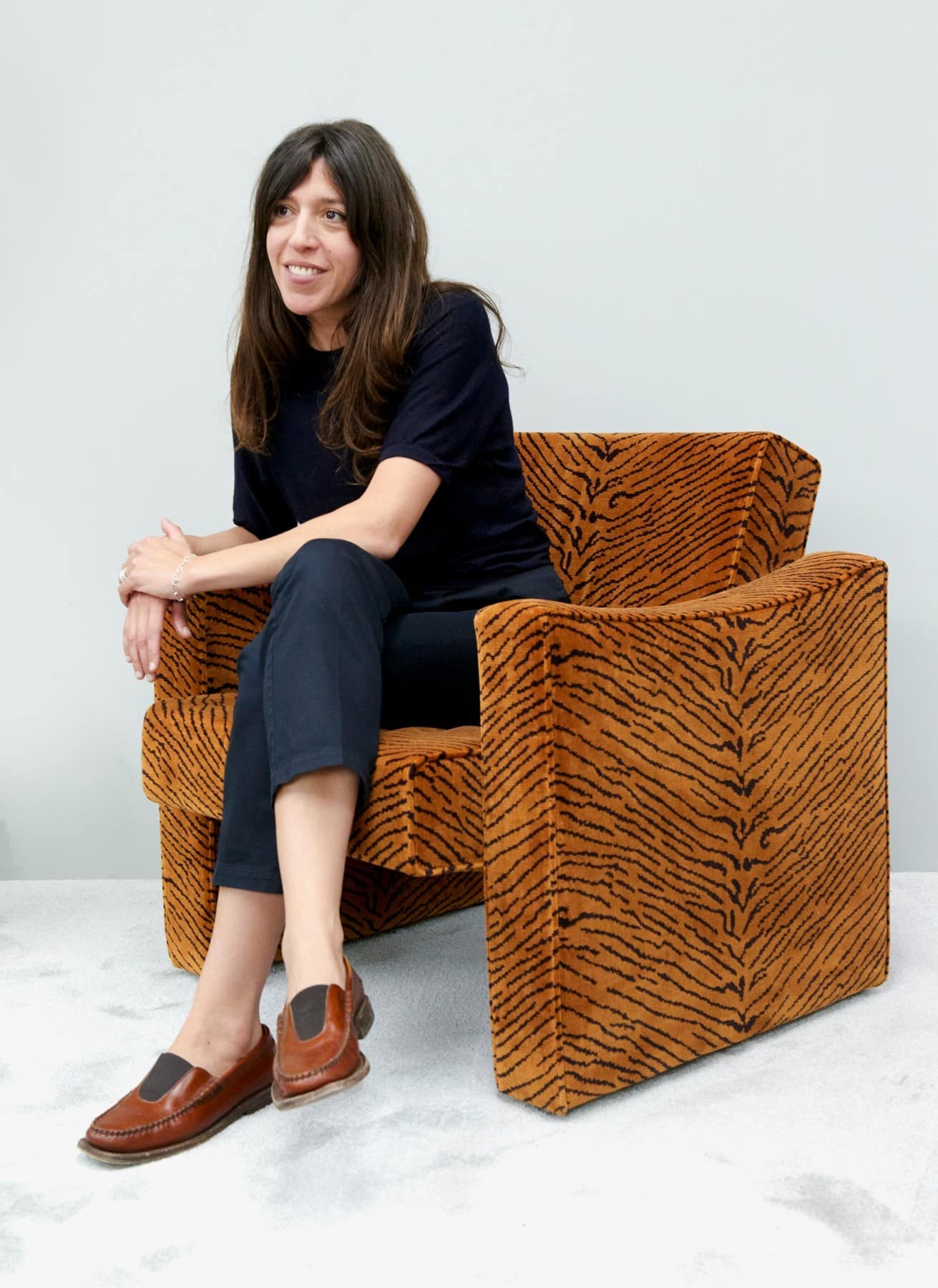
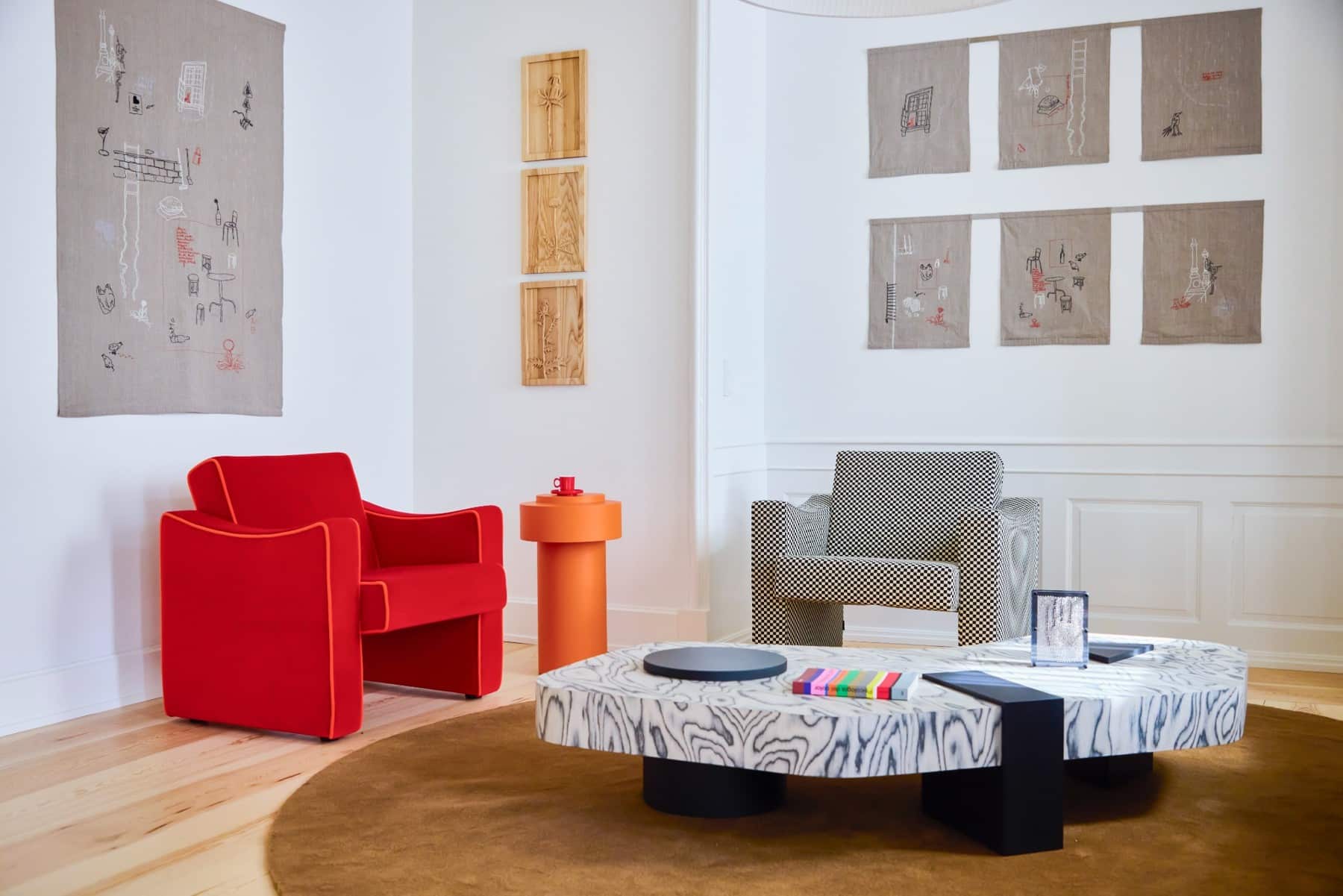
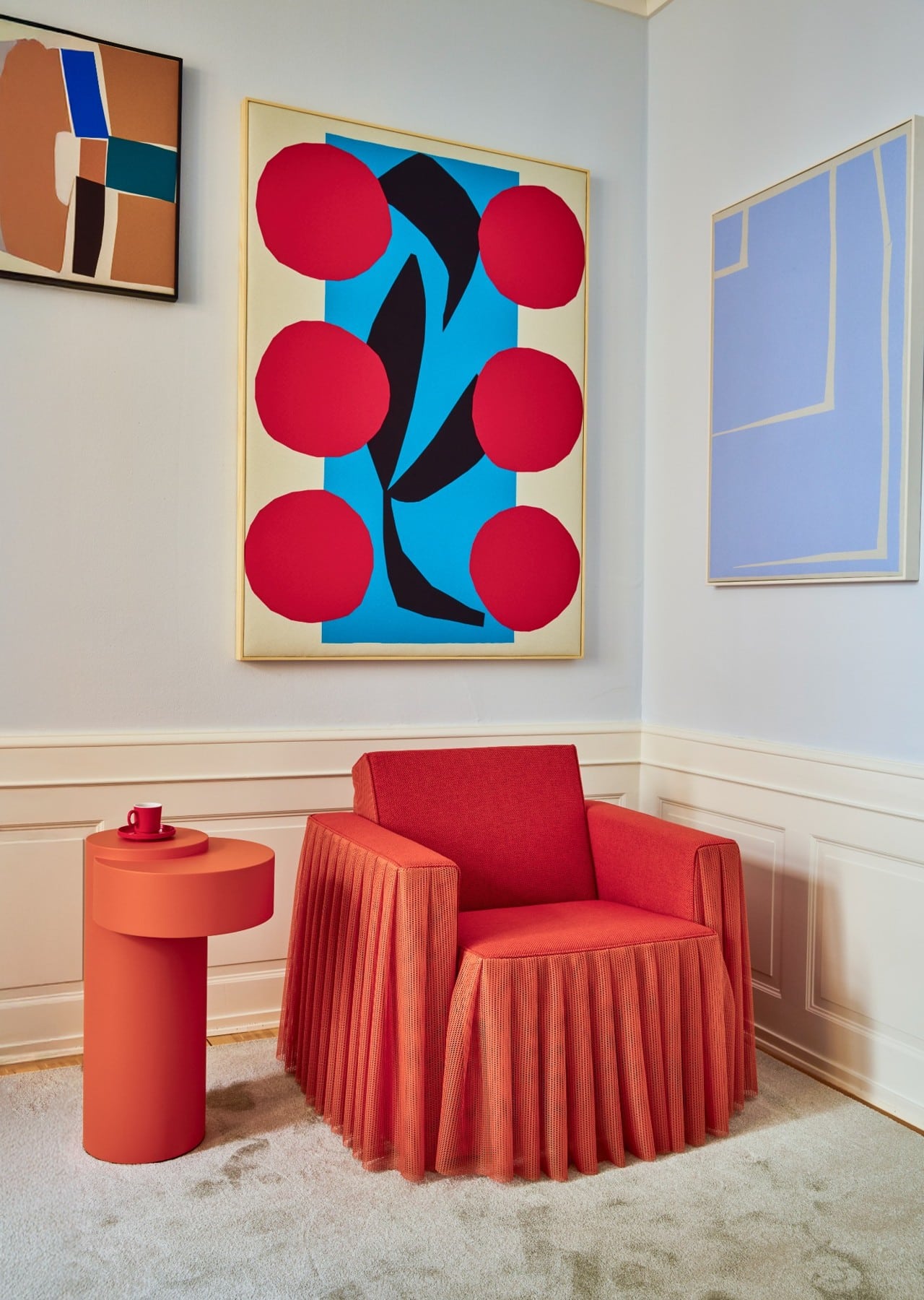
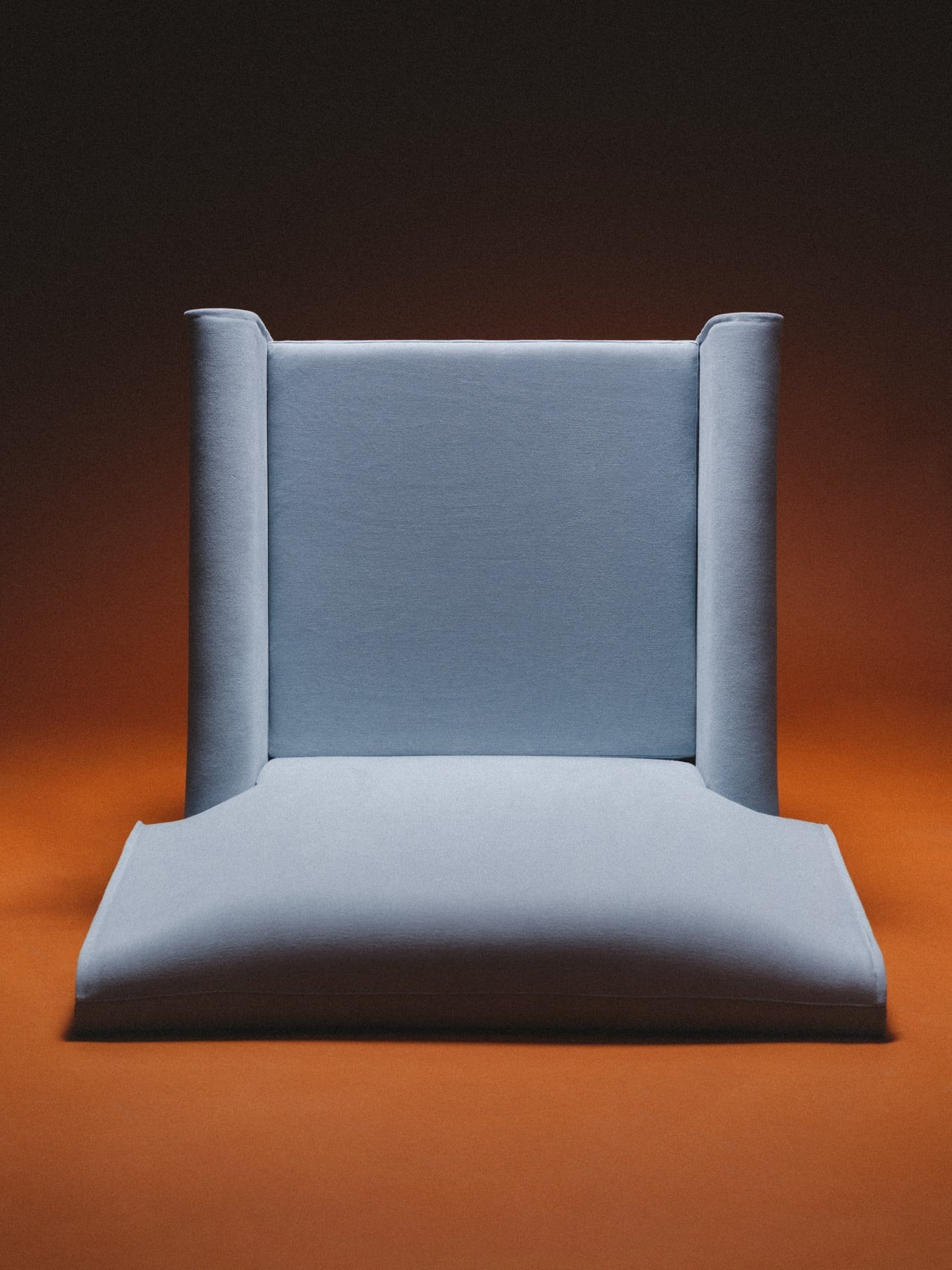
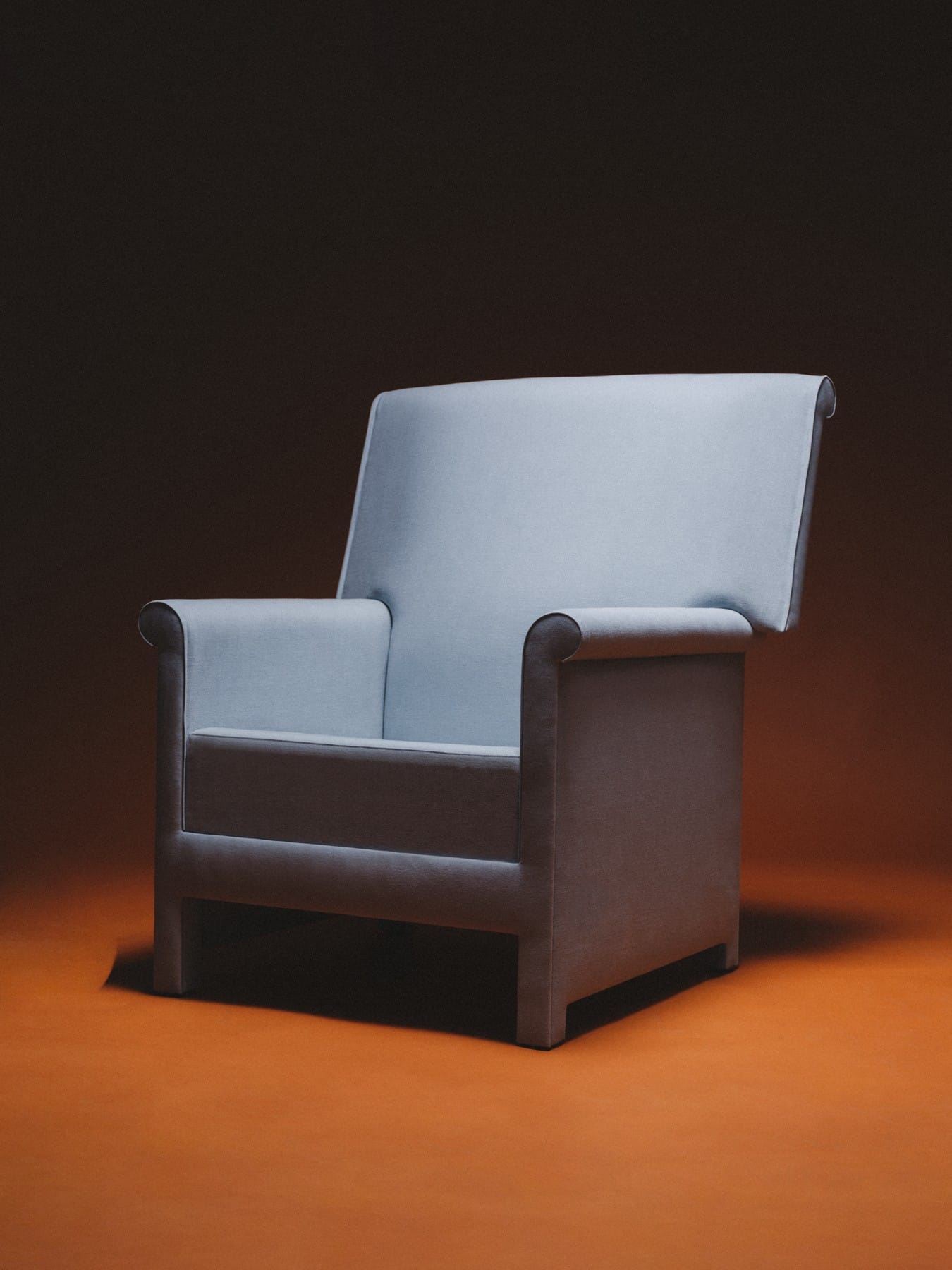
Her most recent work, presented at events including 3daysofdesign in Copenhagen and Feria Hábitat València, includes the Twins armchairs. Produced by Spanish brand Sancal, winner of the 2024 National Design Award, they embody two personalities: Formal Twin and Drama Twin. In this interview, we learn more about her creative and experimental practice.

How did you take your first steps in design? When did you realise you wanted to pursue it?
I wasn’t entirely sure I wanted to do product design, but I was interested in design in general. As a teenager I had an interest in fashion, and my family suggested it might be a good idea to study something broader first. If I wanted to go into fashion later, I could. It wasn’t an obligation, just a suggestion.
When I visited Elisava, at around seventeen, I liked it and felt I fitted in, so I started studying there. My grandmother worked with ceramics and my grandfather was a blacksmith. He loved making things, repairing them and inventing. I think there’s something in that: an interest sparked by my grandfather, whom I was very close to, which also drew me towards product design.

What did you choose to study, and how has it shaped the way you understand and practise design?
I studied at Elisava, then spent a year as an intern with Curro Claret, before continuing my education at ECAL in Switzerland, where I now teach.
ECAL is a very good school, with projects that go beyond the academic: professional projects with a brand and a brief behind them. Admission is competitive, with a selection process, but it is a public school with fantastic teachers and an incredible workshop.
I think both schools helped me and gave me a foundation to keep working and moving forward.
What would you say have been the most important milestones in your career?
I’m not sure I would call them milestones, because I feel everything has happened very naturally, as though one thing has led to another. My career has developed gradually, with things happening one after another. There hasn’t been a single moment that changed everything.
At first I worked on smaller projects. Hortensia was certainly important, but it was a couple of years before Moooi began producing it, and other things were already happening in the meantime.
Perhaps, as a product designer, having a brand produce your first piece is significant. Hortensia was the first of my pieces to be produced by a brand. But I don’t see that alone as a milestone, because everything we achieved before that—from developing the piece to taking it from a render into reality—was important too.
I don’t think there has been one especially momentous occasion. Everything has happened little by little.

After your studies, you interned with Curro Claret. What did that experience give you, and which other designers, artists or disciplines have left a mark on your work?
I have been extremely lucky with the people I’ve worked with. I spent almost a year with Curro Claret, then worked with Martí Guixé, Jaume Ramírez and, finally, Stephen Burks.
I think those four people shaped my path. They taught me things I wanted to bring into my own practice, and others that perhaps interested me less, or that I felt could be approached differently.
They have been very important to me, and I particularly admire them.
I also think it was important not to rush into working on my own. That is something I would leave exactly as it was; I wouldn’t do it any differently.

You have worked in lighting, furniture and accessories. Do you feel closer to any one of these, or are you interested in exploring different types of object?
Being able to work across different types of object is one of the things I like most about this job. I can be thinking about a lamp and, at the same time, a piece of furniture, a small object or an accessory.
Sometimes projects come closer to fashion, prints or clothing itself, and that is something I really enjoy. I like the diversity, not knowing about something and being able to learn more about different subjects through work and research.
I don’t have a particular preference for any one type of object.

Textile experimentation recurs in your projects. What attracts you to this material, and what possibilities do you find in it?
Textile experimentation began very intuitively. For my thirtieth birthday, almost ten years ago now, I asked for a sewing machine. I had never owned one. I was interested and felt drawn to that world, without knowing anything about it or having done any sewing before.
What interested me wasn’t necessarily making clothes, which I have never done, but thinking about objects that could be soft and that I could prototype quite quickly without leaving the studio.
I think sewing offers precisely that possibility: it gives you independence to move forward, test things and iterate.
As for what attracts me to the material, it offers possibilities just as any other material does. I don’t have a fixation on a particular thing or type of object. What matters is that each project responds to its own needs, which take precedence over any personal interest or fixation. I’m not interested in hunches.

What is your creative process like? Do you start with an idea, or by experimenting directly with materials?
I always need an idea, a concept or a direction that gives me a foundation from which to answer all the questions that arise during the process. In the end, designing means answering questions.
If I have a solid concept—an idea strong enough to be universal, transferable and understandable—it guides me through the process. When questions of form, production or design come up, I can always return to that idea, or to what I had imagined, to find an answer.
Otherwise, I think I would find myself in a sea of possibilities without knowing which way to go.

What inspires you, and which materials do you usually work with?
I actively look for inspiration. I really like being surrounded by beautiful things. Beauty makes me happy. But when it comes to finding inspiration for work, I think it comes through working.
It’s not as though I’m spending a weekend in the mountains or at the beach and think, “This sea has inspired me to make something.” No: inspiration comes when I am immersed in work, in a project. Then I start looking at things differently.
I don’t have those moments of observation that I then connect to a project of my own. Inspiration comes through looking for it.

What projects are you working on at the moment?
I’m in a really lovely moment, with some very exciting projects. Some have been in development for quite a while and are about to launch; others are more recent.
There are projects for design brands and manufacturers, and alongside them I am always developing my own projects and pieces. At the moment there is a good balance between commissions for brands and personal projects.
There is also teaching at ECAL, which, as I mentioned, brings me a lot of joy and makes me very happy.
I don’t have one particular line of research I want to develop. I think the best thing that could happen is to have the chance to work with brands I feel aligned with, whose values I share, and to move forward on projects with those people or organisations.

What dream would you like to make a reality?
I’ve wanted to make a rug for a very long time. It’s something I’ve had on my mind and have been very keen to do for ages.
At some point I would also like to change scale and make something a little larger, perhaps a sideboard or another object. Not necessarily temporary, but on a larger scale than I am used to.