Nueva España in Chamartín: residential living at its finest
Discreet, residential and still removed from the spotlight of other prime neighbourhoods, Nueva España has become one of Chamartín’s most sought-after enclaves. Its large apartments, houses and small historic residential communities now sit alongside a new generation of luxury developments, with the area around Paseo de La Habana emerging as a key focus.
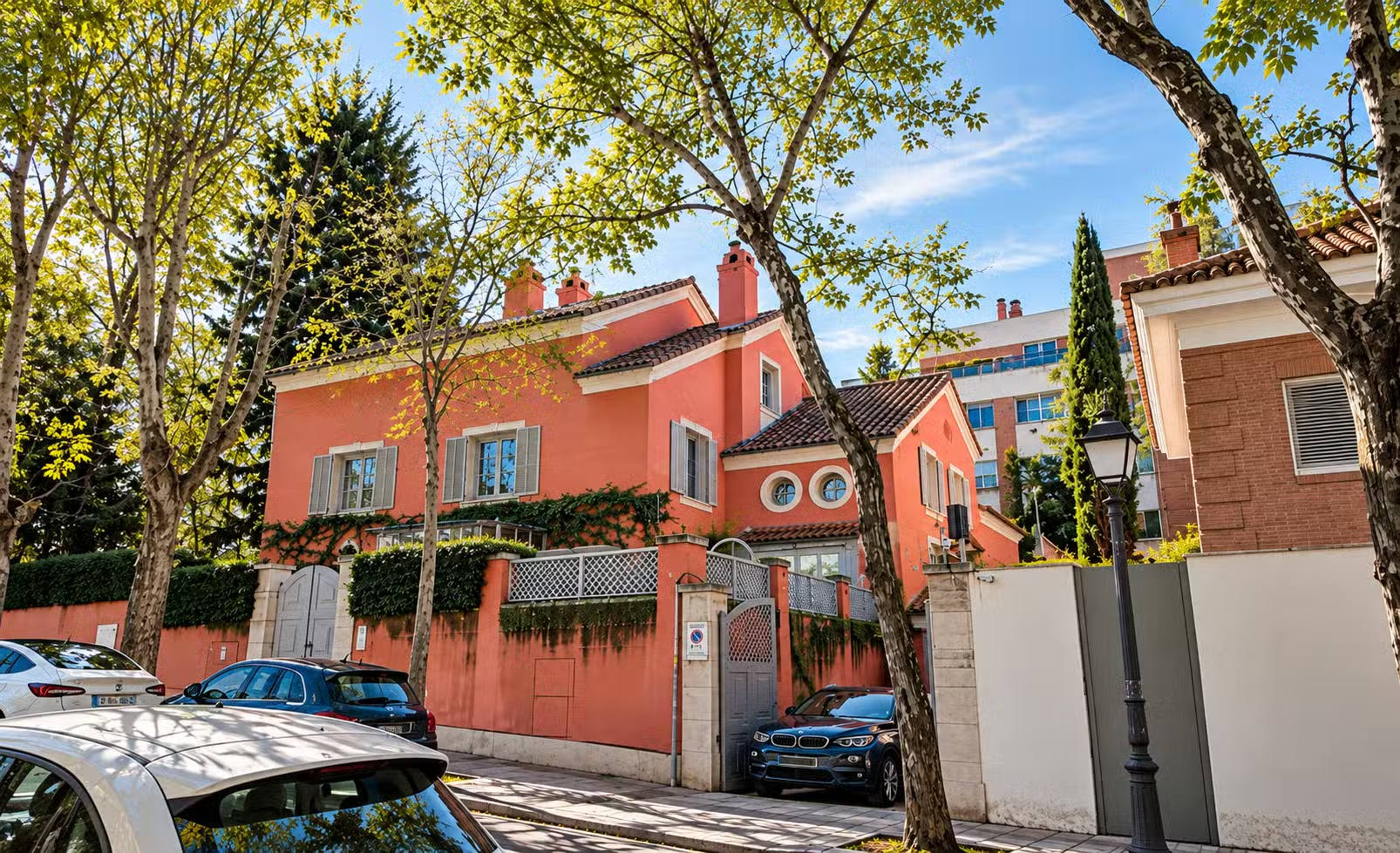
House in the Colonia de la Prensa in Chamartín; in the background, a low-rise apartment building, typical of the area. Photography: www.comunidad.madrid/urbanismo.
In a Madrid whose appeal continues to grow, becoming ever more dynamic, active and multicultural, local identity is gaining value, including in residential life. The district that best embodies Madrid’s residential way of life is no longer Centro, nor even, at times, Chamberí. We could say that Chamartín now comes closest to representing ideal residential living in a European capital: its neighbourhoods in the northern part of the city within the M-30 are close to, and exceptionally well connected with, everything that matters, yet retain the feel of a long-established local area. The clearest expression of this distinctive mix of exclusivity and everyday life is the concentration of embassies and schools, the latter a telling sign that it remains the neighbourhood of choice for many Spanish buyers.
Here we also find something absent from other premium Madrid neighbourhoods: a variety of property types. From older apartments whose strength lies in their generous floor areas, to new developments distinguished by the quality of their amenities and communal spaces, and the most sought-after and hardest-to-find option within the M-30: houses with gardens, many in historic residential enclaves, a defining feature of this district.
Of Madrid’s 21 districts, Chamartín is the seventh largest. It encompasses several neighbourhoods that, while sharing this coveted location, have distinct characteristics: Prosperidad, Ciudad Jardín, Hispanoamérica, Nueva España and Castilla.
One of the most interesting, thanks to its many houses and excellent location, is Nueva España. Its western boundary is Paseo de la Castellana, separating it from Tetuán; to the east lies the M-30 motorway, Avenida de la Paz; to the south, Avenida de Alberto Alcocer and Calle Costa Rica mark the boundary with Hispanoamérica; and to the north, Calle Mateo Inurria and Calle Caídos de la División Azul separate it from Castilla. Within Nueva España itself, there are also smaller residential areas, each with an identity of its own.
The historic residential enclaves
These colonias emerged in the early twentieth century, often linked to cooperatives of particular trades and professions. Their residents were mostly middle-class professionals whose intellectual interests led them towards what was then Madrid’s outskirts in search of a quieter lifestyle. Nueva España offers several examples:
Colonia Albéniz, or Colonia de los Músicos: developed in the mid-twentieth century as a group of single-family homes, it retains a peaceful atmosphere, almost removed from the city’s pace, with houses, gardens and streets with little traffic. Its location, close to Príncipe de Vergara and the Alberto Alcocer corridor, combines the sense of a tucked-away neighbourhood with access to every amenity. The scarcity of available homes has made it a particularly distinctive and sought-after address.
Colonia Los Pinares: founded in 1926 as a residential enclave for journalists, it preserves houses from different periods, many with their own gardens, on quiet, tree-lined streets that offer an unusual sense of privacy within Madrid. It lies between Calle Madreselva, Calle Madre de Dios, Calle Comandante Franco and Pío XII. Its low density and the small number of homes coming onto the market make its properties particularly coveted, mainly by affluent Spanish buyers.
These are not Chamartín’s only colonias: the district also includes El Viso and Cruz del Rayo, which are not strictly within Nueva España and would each warrant an article of their own. The latter are better known among businesspeople and international buyers, whereas in Nueva España, both in the colonias and in gated developments, buyers remain predominantly Spanish.
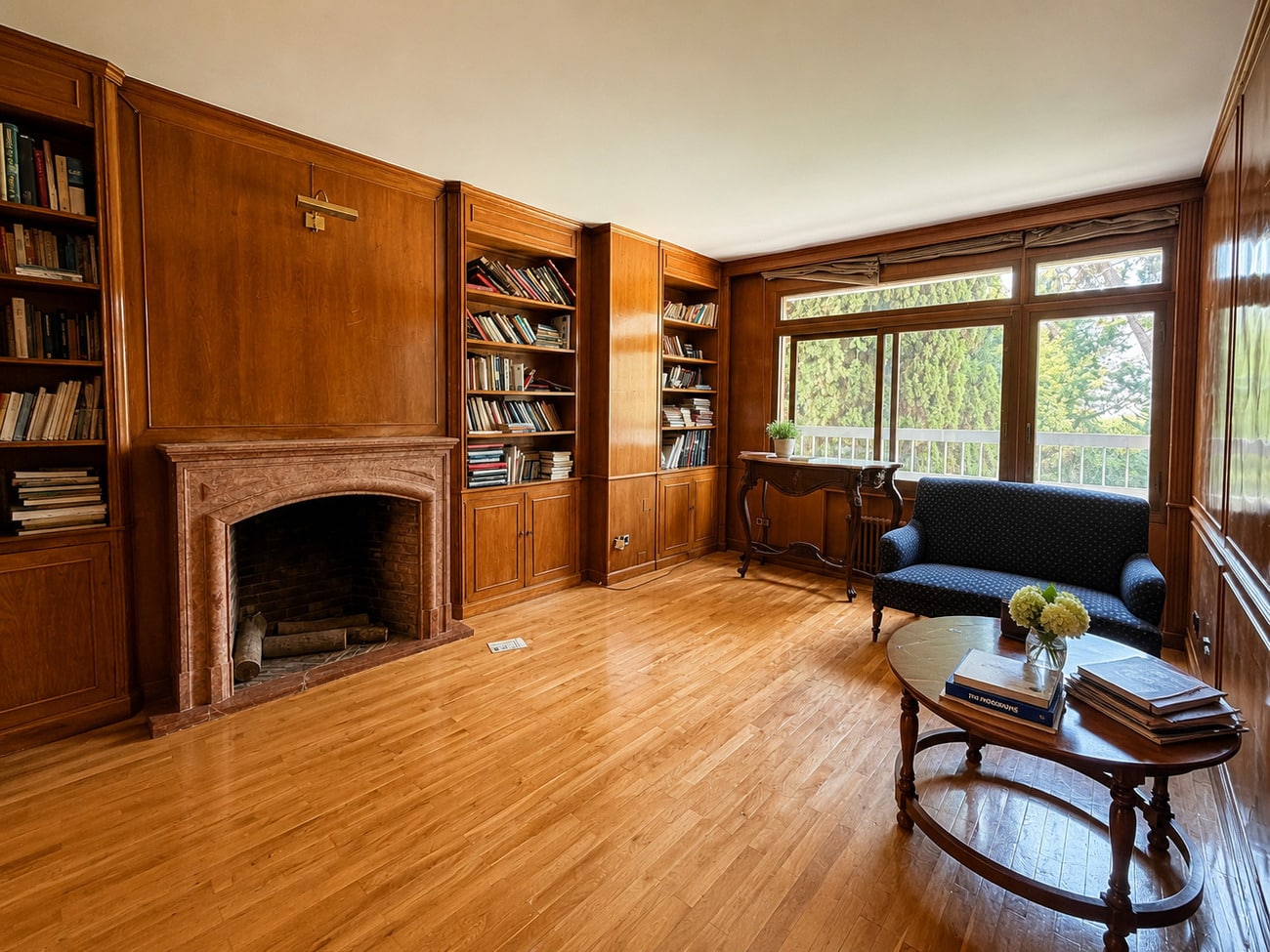
Small apartment buildings are also scattered among the houses of these colonias. One example is this four-storey building designed in the 1970s by Estudio Martín Artajo, at one of El Viso’s most sought-after addresses, between Paseo de La Habana and Calle Serrano. This exceptional 356 m² property, renovated with fine materials, is offered for sale by The Sibarist under reference THSSESMAD1159.
Chamartín: the luxury of discretion
This district has neither Salamanca’s visibility nor the social scene of Justicia or Centro. Many of its homes attract little attention from the street because their real value lies behind their façades: gardens, pools, garages and, above all, privacy. A case in point is this property currently in The Sibarist’s portfolio, an XL home remarkable for its scale, privacy and extraordinary sense of space: 1,220 m² of built area on a 1,200 m² plot.
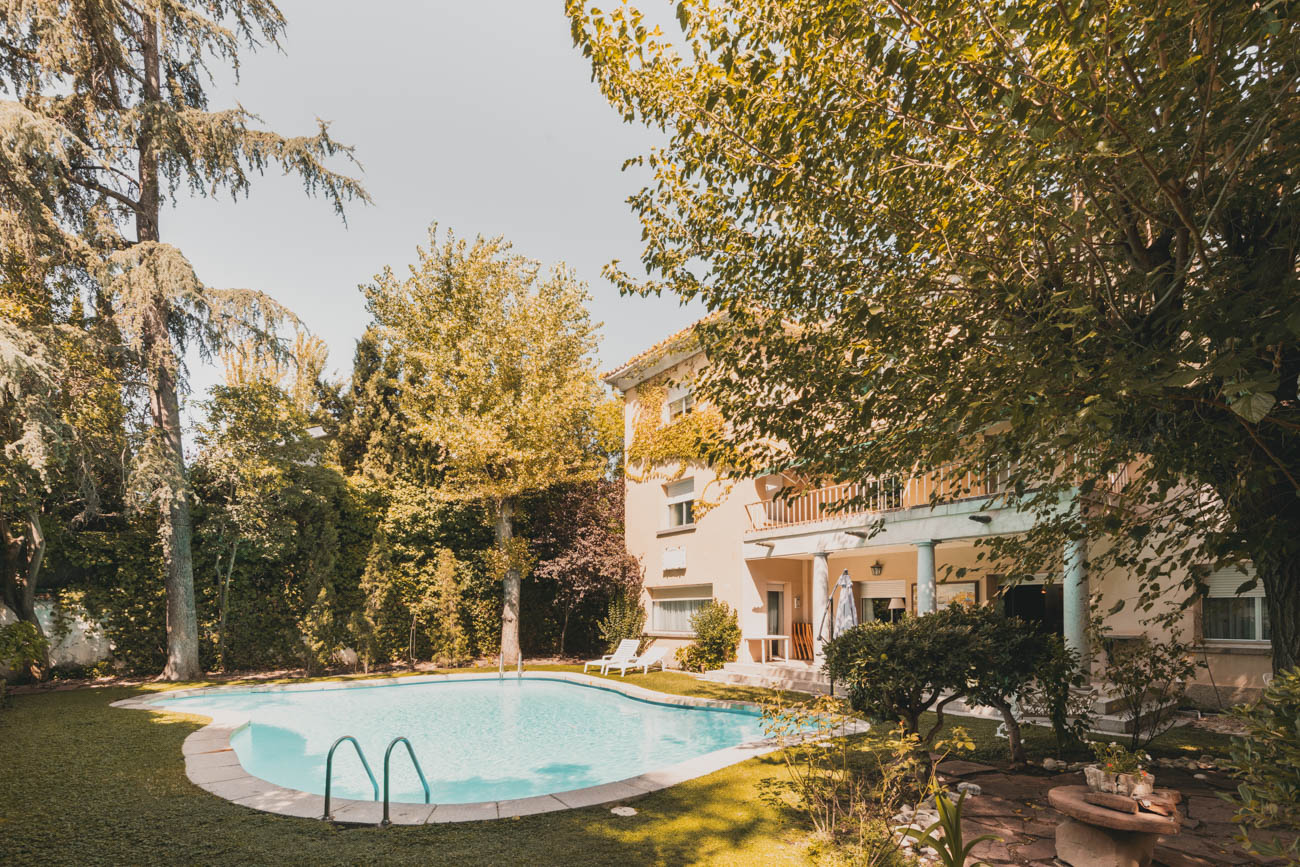
It also has an independent annexe, expanding the possibilities for how the property is used and arranged. A distinctive home with extensive scope for renovation and outdoor spaces including gardens, a terrace and a pool.
Detached, semi-detached and terraced houses
The homes in the colonias are not the area’s only single-family properties. From the 1970s to the present, several developments of terraced or semi-detached houses have been built along these streets. Some of the finest are on Calle Francisco Suárez, Calle San Telmo and Pío XII.
Here, we are no longer talking about historic houses, but contemporary homes and low-rise developments. Apartments offer generous floor areas, especially the older ones. After renovation, they combine the strengths of traditional construction, including service areas and ample space, with current design and comforts. An excellent example is this 198 m² property on the sixth floor in Hispanoamérica, very close to the Santiago Bernabéu stadium.
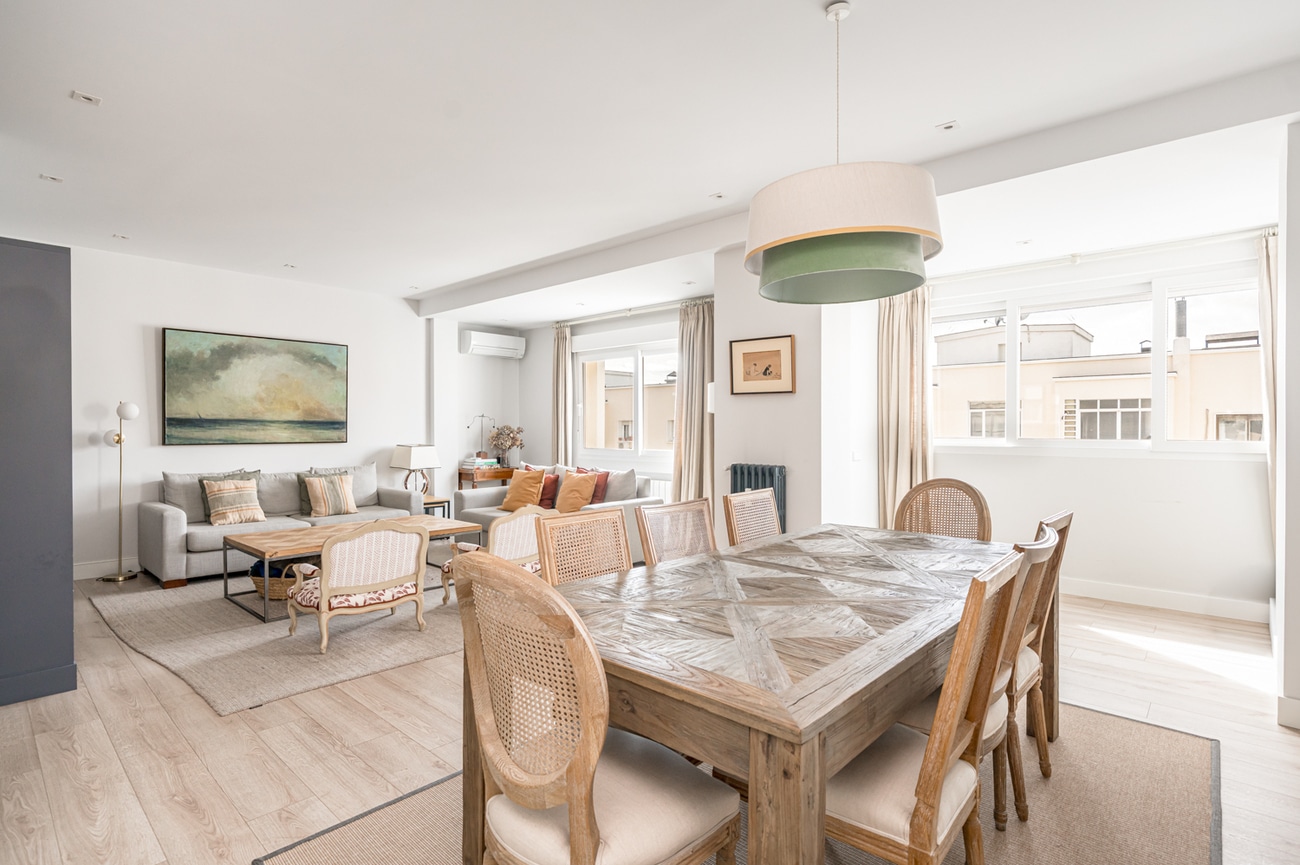
Alongside its generous floor area, the elevated position brings light and a sense of space. The large, bright living area and kitchen are separated by elegant glass doors, allowing the rooms to be closed off when desired while preserving visual continuity.
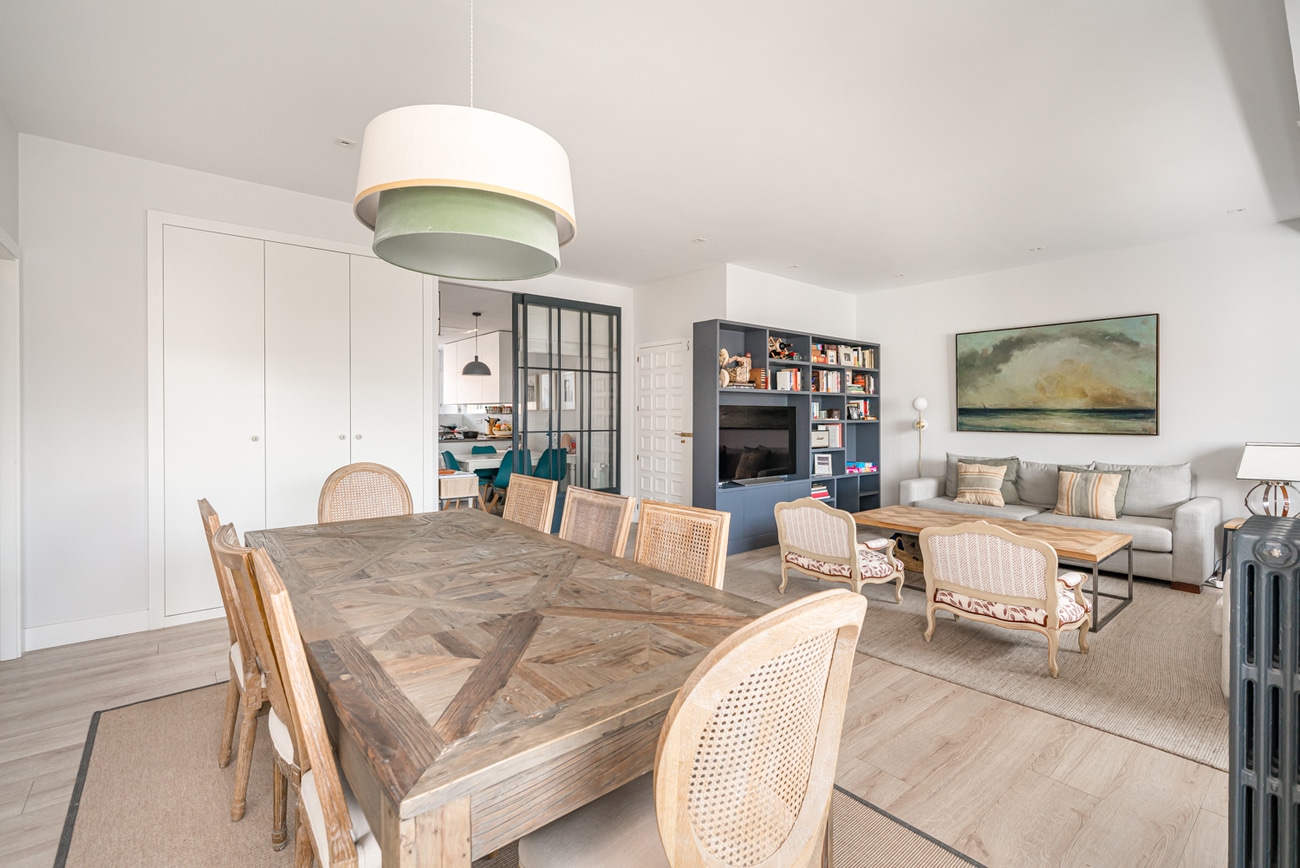
The service area has been carefully integrated into the home, bringing order, practicality and efficiency. A functional approach that makes daily organisation easier and reinforces the property’s comfortable, family-oriented character.
New developments
Another distinctive pocket is the northern stretch of Paseo de La Habana, where several notable new developments have emerged in recent decades. A succession of small, highly exclusive schemes has replaced older buildings and houses, helping explain why the neighbourhood has moved closer to the ultra-prime market without losing its residential character. These include developments such as Paseo de La Habana 147, completed in 2022 on the site known as Finca de la Hortalaya, previously occupied by five houses. As an indication of prices at the time, the penthouses sold for around €4 million. That same year, Rosa Jardón 16 was marketed with an even more exclusive concept: just four homes, ranging from approximately 336 to 458 m², each with a terrace and private pool, gardens, three parking spaces and a storage room.
One of the most iconic new developments is Paseo de La Habana 75, on land previously owned by RTVE. This highly exclusive project of just 11 large homes was completed around 2020. Bueso-Inchausti & Rein designed the architecture, and Habana 75 won the 2021 ASPRIMA-SIMA Award for the best residential property development. The homes ranged from approximately 265 m² to more than 300 m² and were launched at asking prices between €1.75 million and €4 million.
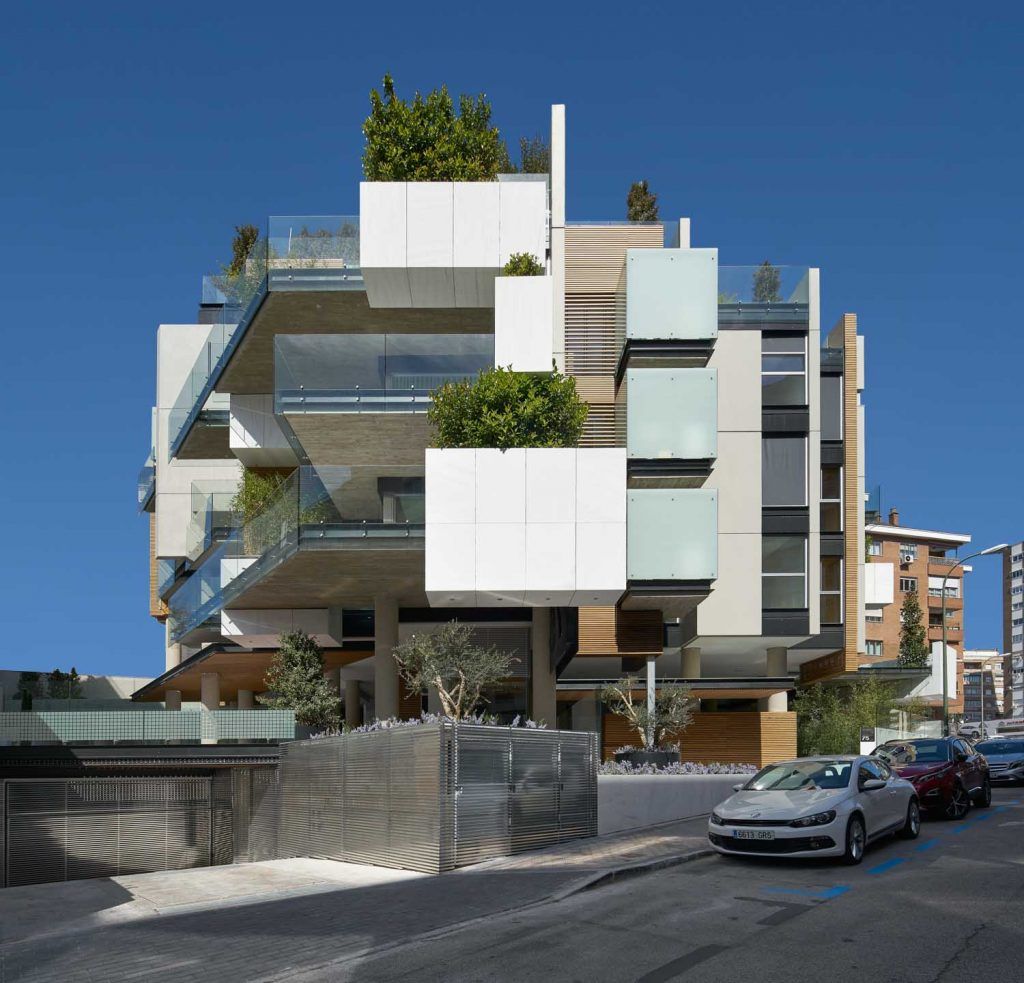
The shortage of available land has made new developments here as rare as they are sought after. Particular attention will be paid to what happens on the ONCE-owned land surrounding the Palacete de la Quinta de San Enrique, commonly known as the Palacete de la ONCE. Around a hundred market-rate homes are planned around it, and the land readjustment project moved forward in 2026.
The most discreet and scarce prime segment
Prices confirm Nueva España’s emergence within Madrid’s prime residential market. In August 2026, asking prices on mainstream property portals stood at €8,625/m², up 7.9% year on year and above Chamartín’s average of €8,222/m². These figures already place Nueva España clearly above Madrid’s average and among the capital’s most sought-after residential areas. Yet they do not fully reflect the market values achieved by exclusive properties such as those in The Sibarist’s portfolio or in the developments discussed in this article.
Properties as interesting as this one rarely come onto the market: 534 m² of existing built area on a plot of more than 500 m². It stands out for its high ceilings and excellent orientation, with abundant natural light indoors and in the garden, creating warm, bright spaces throughout the day. It requires renovation, offering the opportunity to adapt it entirely to the buyer’s actual needs.
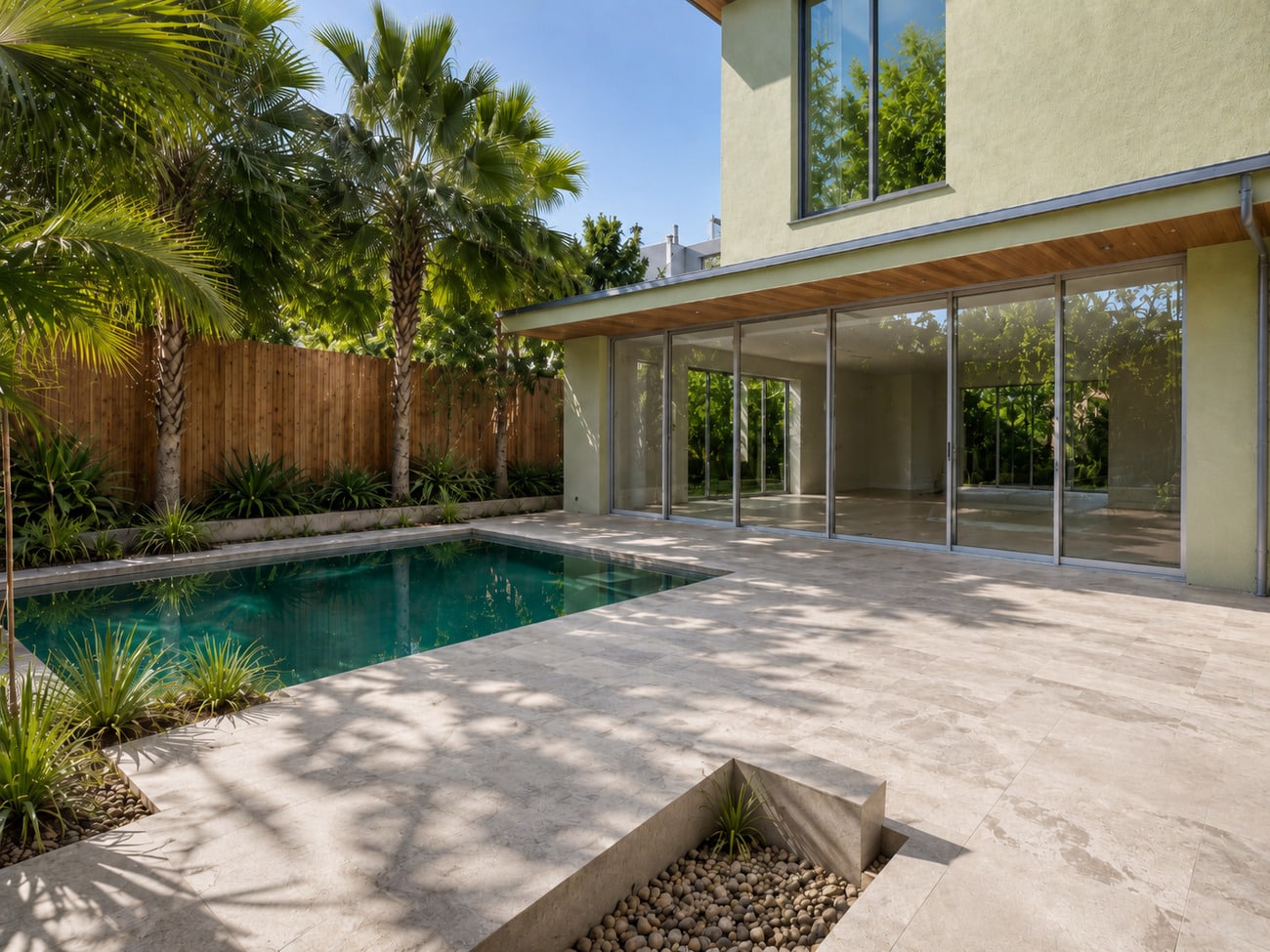
Talking about an average price can be misleading, especially in neighbourhoods with a housing stock as varied as Nueva España’s, where apartments from the 1960s and 1970s awaiting modernisation sit alongside large renovated homes, penthouses, detached houses and new-generation developments. Differences can be significant even between properties just metres apart. Exceptional homes—whether for their location, size, renovation, terrace, garden or amenities—command prices well above the neighbourhood average, sometimes reaching €10,000/m², and are often offered off market.
Scarcity also works in favour of the finest properties. Nueva España has very little land available for new developments, and the supply of houses, large renovated apartments and high-end new homes is limited. Projects along Paseo de La Habana and the future ONCE development have therefore raised the neighbourhood’s standards and gradually brought it closer to Madrid’s traditional prime segment, with one distinctive advantage: more space, greenery and privacy without leaving the city.