This year, Casa Decor's appointment with decoration takes us to visit a 20th century mansion with a fantastic garden on Francisco Silvela street in Madrid. Until 26 May.
9 spaces at Casa Decor 2026
In the heart of the Barrio de las Letras neighborhood, Casa Decor is celebrating its 61st edition in a mansion that this year features 47 spaces showcasing the latest trends in interior design. Through May 24 at 11 San Agustín Street.
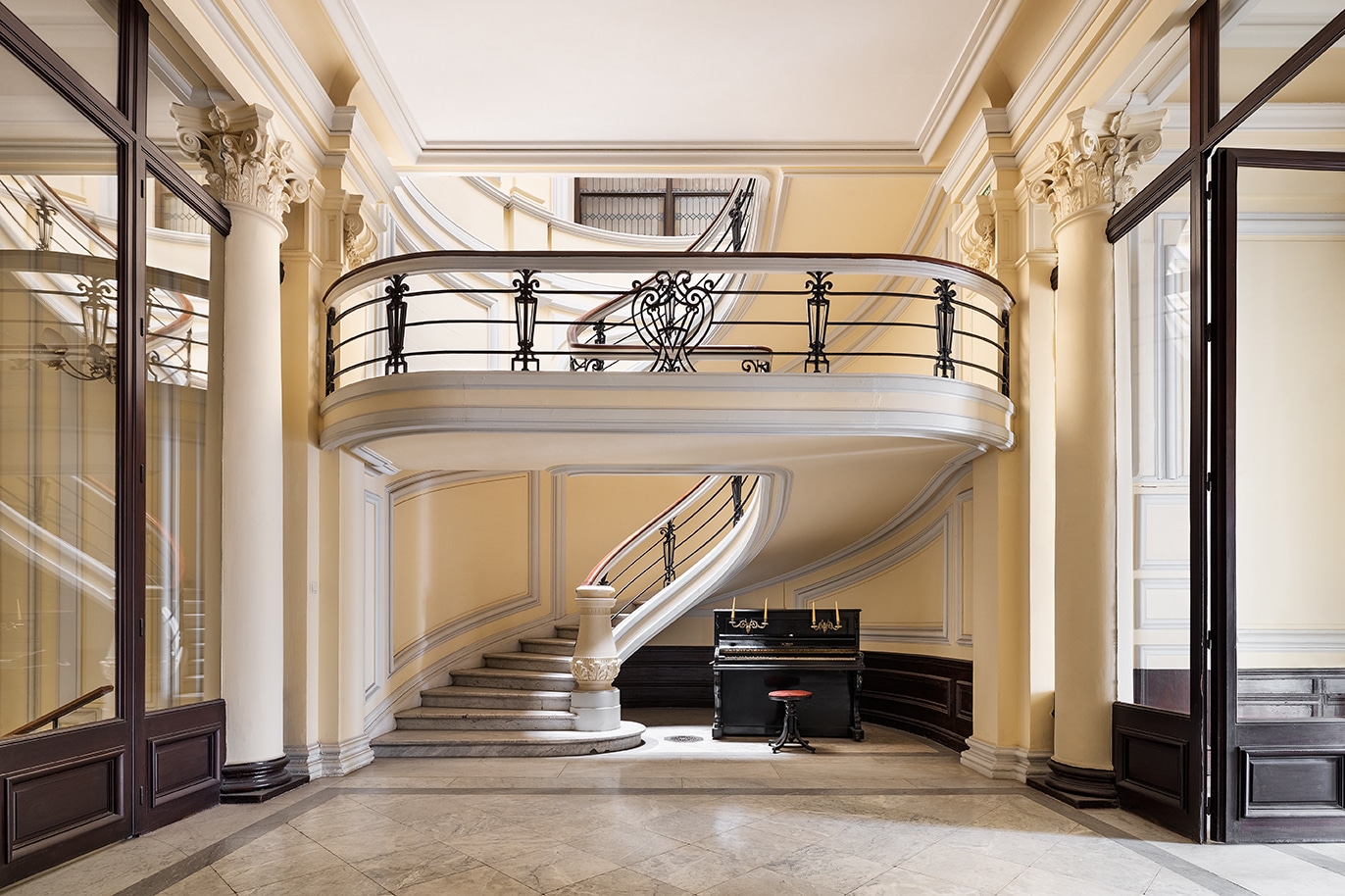
El vestíbulo antes de la intervención. Foto: Nacho Uribesalazar.
The location in the Barrio de las Letras, where many of the great figures of Spanish Golden Age literature and art once lived, inspired the name of this edition of Casa Decor: A Golden Edition. This platform for interior design, design, trends, and lifestyle brings together a total of 47 spaces across 3,500 m² featuring the work of 240 participants, including interior designers, artisans, artists, and brands. The goal: to transform the spaces of this palace-home of the Marquis of Los Vélez and Count of Niebla into a temporary showcase of trends.
In terms of color, the palette of sandy tones stands out, featuring shades of brown and copper in many of the designs. A recurring element seen in several spaces is the latticework, used to divide spaces, cover vertical surfaces, and even form part of the structure of the building’s only terrace.
Built between 1892 and 1895 by architect Enrique Sánchez y Rodríguez, it is one of the few buildings in the area that retains its aristocratic architecture—it was built for Alonso Álvarez de Toledo y Caro, Marquis of Los Vélez and Count of Niebla. The building, which once served as a convent and school, is owned by Sircle Collection, a boutique hotel group, and Take Point, a company specializing in unique real estate assets. Together, they will undertake the renovation of the property to transform it into the luxury hotel Sir Agustin. The new property is expected to feature 33 rooms, a restaurant, and The Cover, a private club by Sircle Collection.
From this must-see event for lovers of interior design and architecture, we have selected these spaces that reflect the spirit of Intentional Living since this boutique real estate firm specializing in unique properties was founded: art, architecture, and design.
Nuet Ceramics Space, by Mayice
Architects and designers Imanol Calderón and Marta Alonso of Mayice Studio have transformed the building’s only terrace with a concept called “Al desnudo”. The design places ceramics at the center and functions as “architecture in and of itself.” Materials from Nuet Ceramics, a firm based in Teruel, cover the surfaces of this long, narrow courtyard, inviting visitors to take “a journey of pauses where extruded pieces form walls, floors, and atmosphere. Light and shadow transform the space along the way, culminating in a framed view of the Madrid skyline.” All the pieces can be dismantled or will be moved to an orange grove at the factory to be reused.
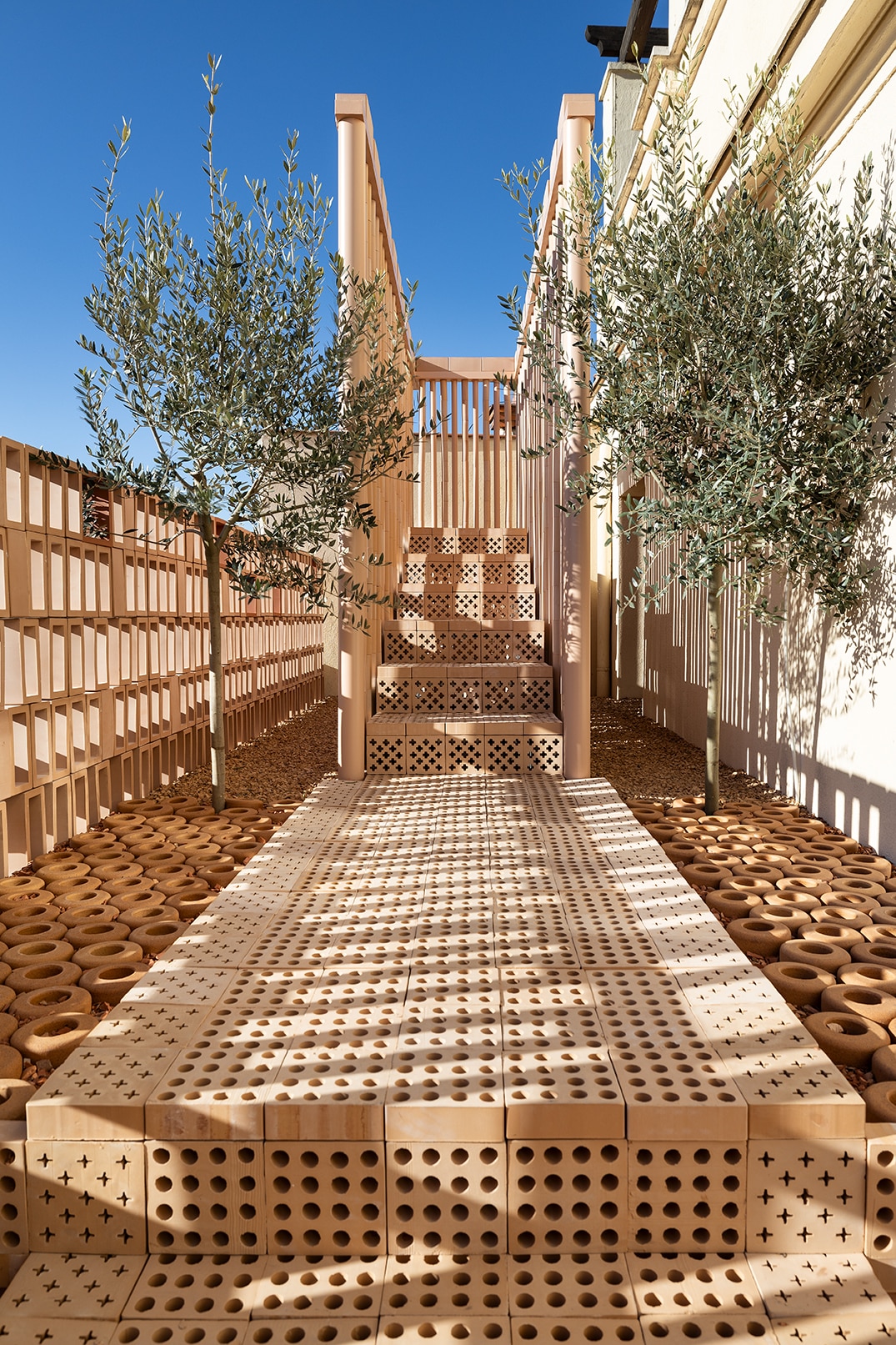
Casa Decor 2026. Terraza de Mayice Studio para Nuet Ceramics. Foto: Nacho Uribesalazar
Kaldewei Space, by ILV* Isabel López Vilalta
A sense of envelopment envelops visitors in this circular space, named “Fuerza Suave” by the interior designers from Isabel López Vilalta’s studio—Nathiara Nunes and Silvia Cabestany of ILV. A sculptural form created from overlapping volumes clad in Alicante red marble makes up this idealized bathroom, which stands out for its mix of different finishes. The shine of the steel, ceramic, and natural stone contrasts with the matte texture of the sanitary fixtures from the German firm Kaldewei, which specializes in bathtubs, showers, and sinks made of vitrified steel. A curtain system enhances the immersive experience, accentuating the space’s theatricality. “The sculptural volumetry of the ensemble reinterprets the bathroom’s layout; its precision engages with the warmth of the materials, creating an intimate, unhurried, and deeply sensory experience,” they explain. Panoramic views over the neighborhood’s rooftops complete the magic. The designers recommend visiting it alone.
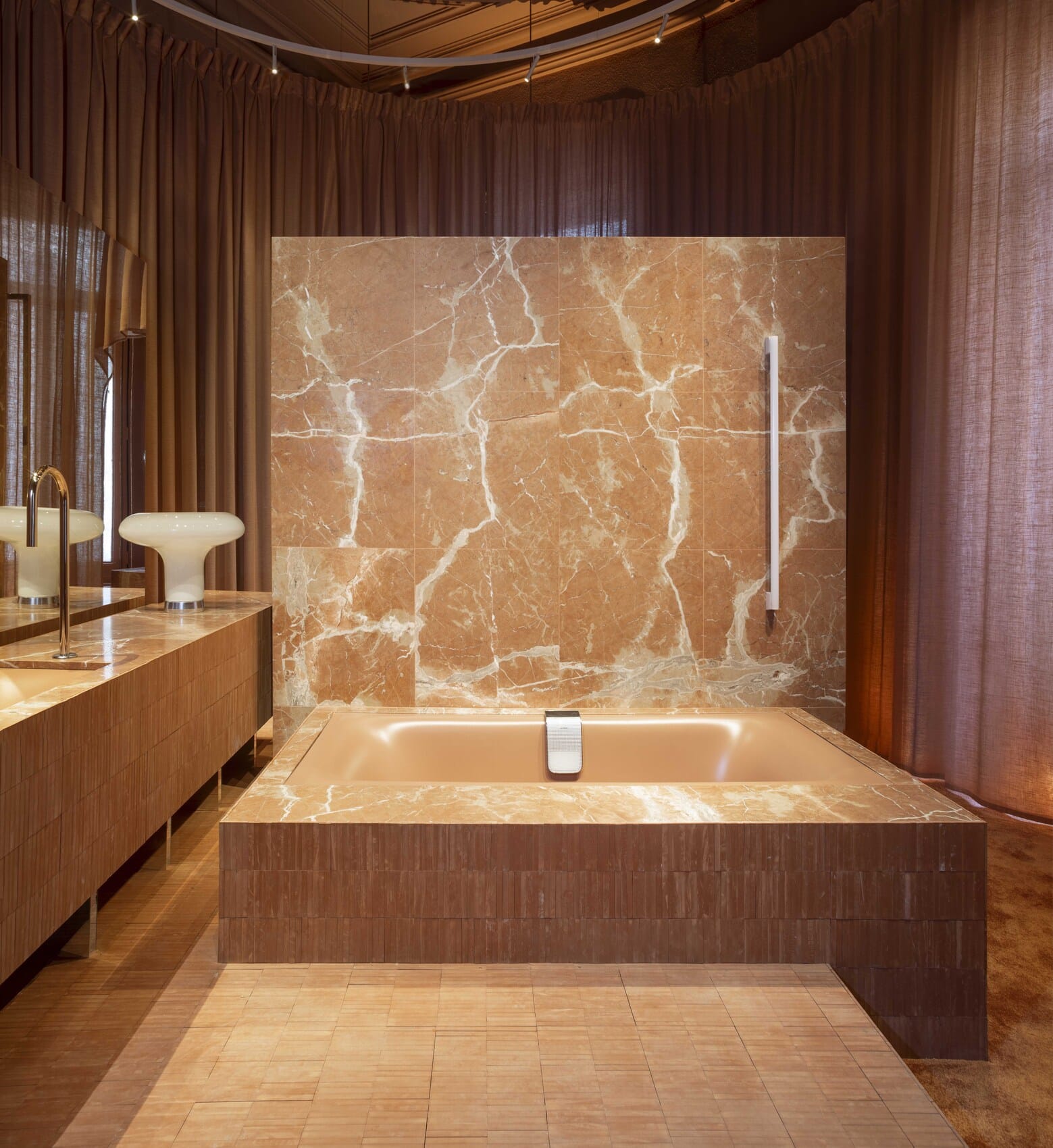
Casa Decor 2026. Kaldewei por Isabel López Vilalta. Foto: Jordi Canosa
Laufen Space, by DIIR
Calm, precision, and sensory perception are what the combination of light, materials, and water—conceived by the DIIR studio to create the Sensory Balance space for Laufen—seeks to evoke, where you can almost smell the volcanic stone. The rough texture of the Valpaint wall finish and the subdued lighting create an immersive experience that conveys the authenticity of the materials: Cupa Stone granite, wood from the Proma pivot and sliding doors, and pressed brick from La Paloma. These elements combine with minimalist forms that evoke an architectural language in a design where light—implemented using technical systems by Arkoslight—becomes another element of the architecture, elevating it.
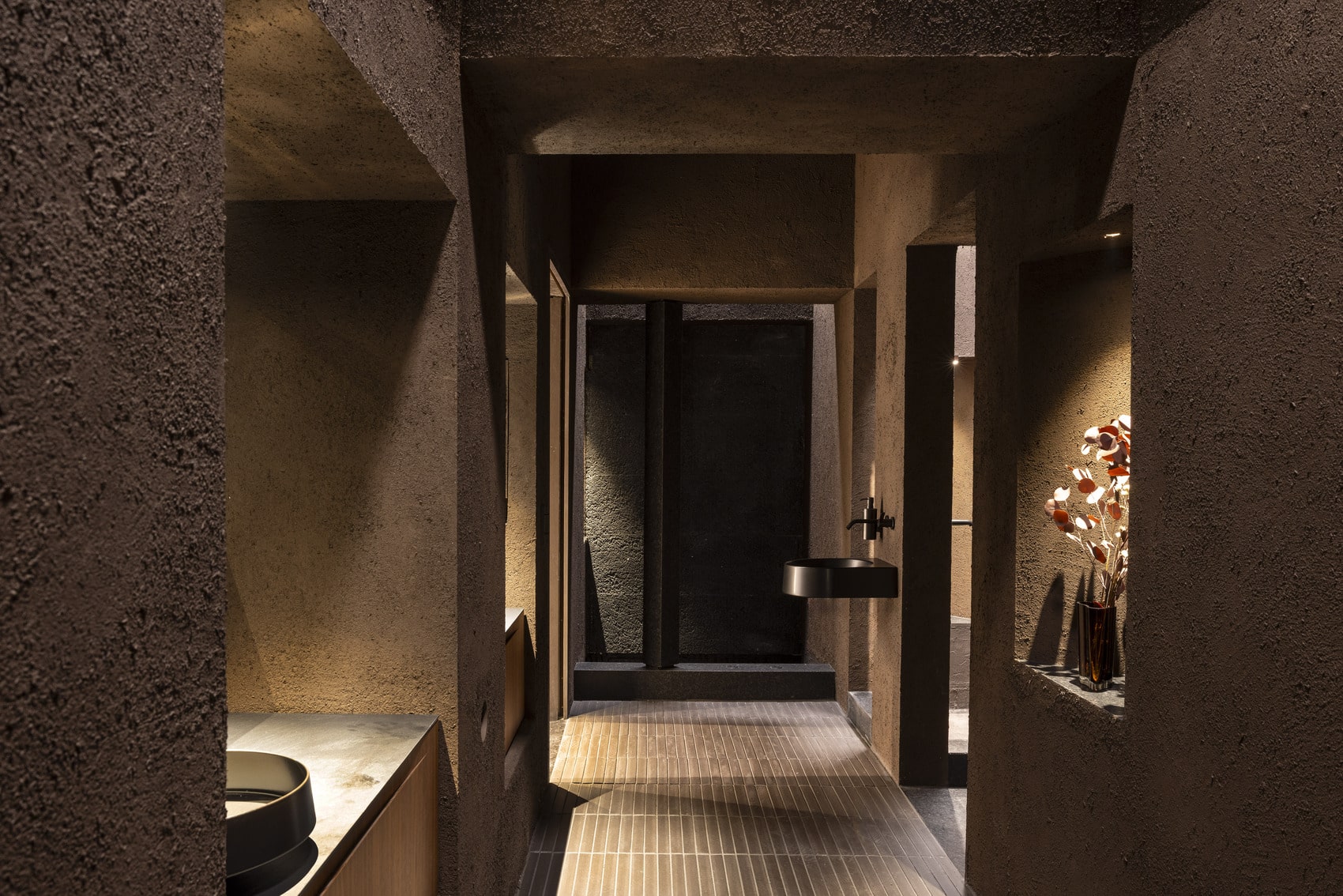
Casa Decor 2026. Espacio Laufen por DIIR. Foto: Amador Toril
Espacio Cosentino, by Summumstudio
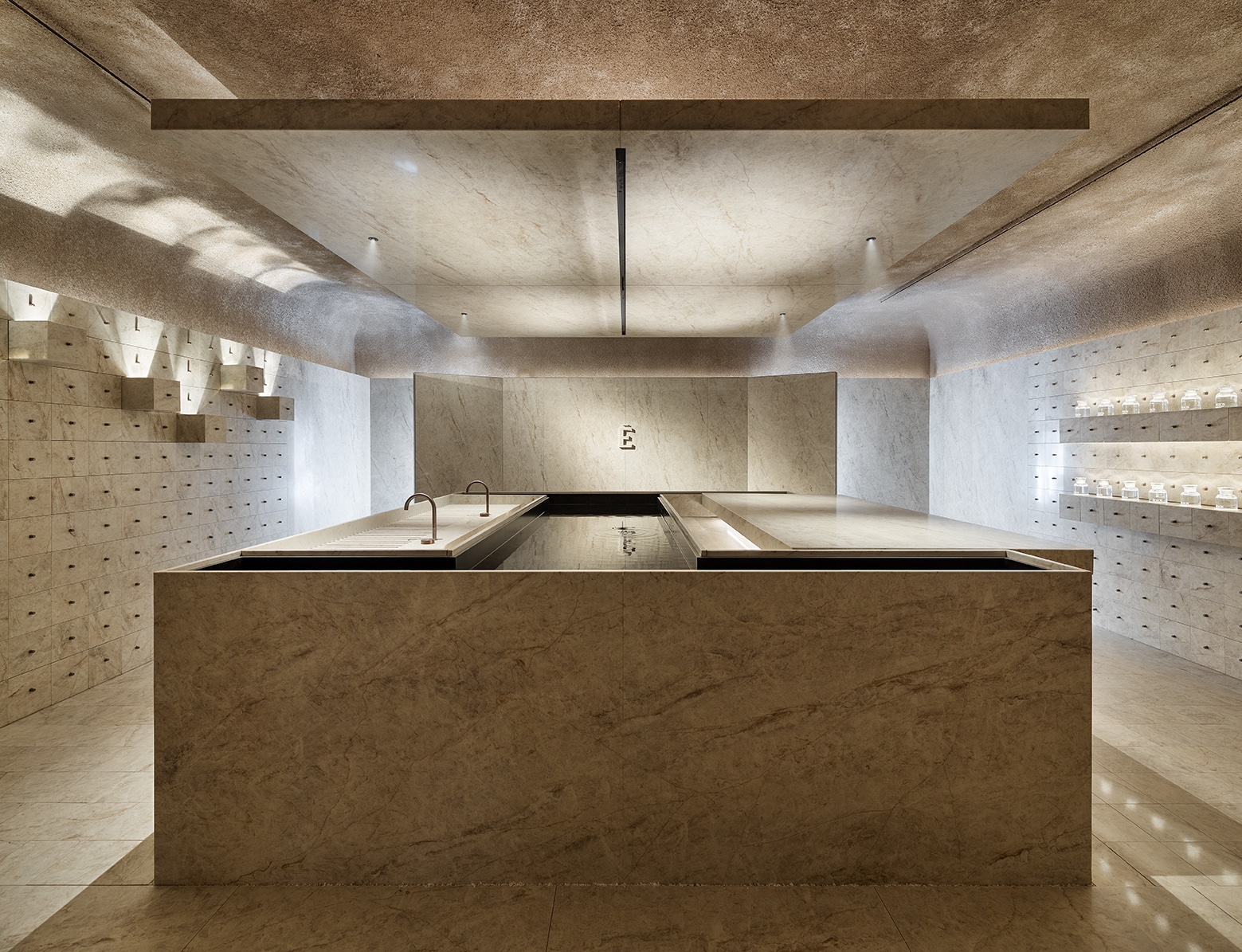
A wave of mist fills the space named Manantial by José María Gimeno and Andrés Navarro of Summumstudio, who sought to recreate “an atmosphere inspired by the essence of Éclos, where the material comes alive and takes shape through a sensory and architectural experience. Here, the material takes on life and purpose through applications that balance functionality and symbolism.” Éclos, by Cosentino, is a material made from up to 80% recycled glass, with a composition free of crystalline silica. The presence of water and the shape of the central volume, resembling an altar, evokes the image of an almost liturgical and spiritual space and also recalls the aesthetic of a modern Arab hammam.
Casa Decor 2026. Espacio Cosentino, por Summumstudio Foto: Nacho Uribesalazar
Geberit Space, by ZOOCO
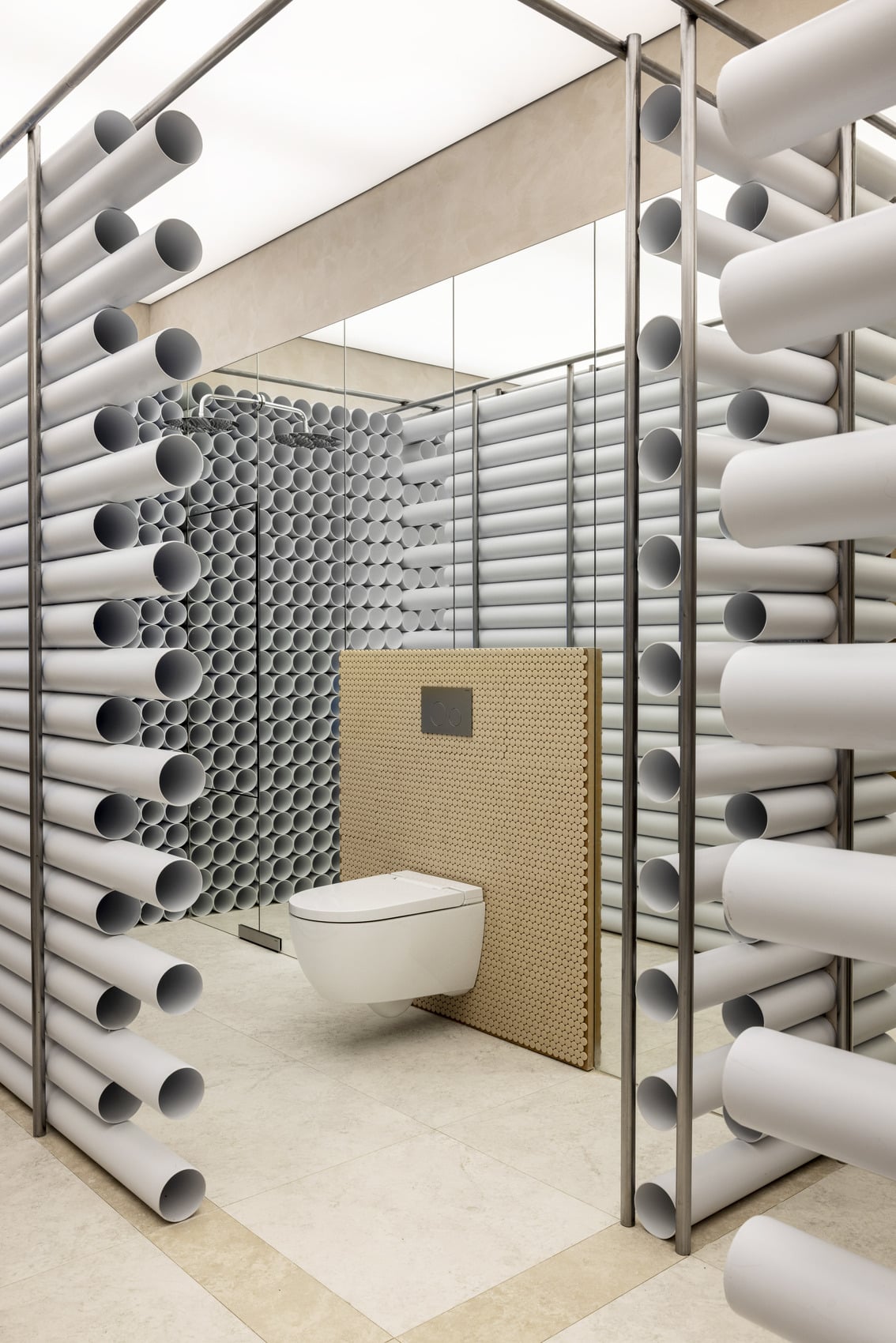
“We reveal the architecture that lies behind the walls: how the building systems function. The space replaces traditional partition walls with a lightweight tubular structure that exposes the building’s circulatory system.” With these words, Sixto Martín, Miguel Crespo, and Javier Guzmán explain their project “Lo invisible” for Geberit. This project reveals the other side of the built space—what remains hidden from view but is essential to sustaining the final result. With this solution for a temporary installation, composed of industrial polymer tubes, they create a sort of latticework through which light and air pass. The installation uses no adhesives and produces no debris during dismantling, thus fully embodying the concept of sustainability that Casa Decor set out to achieve in its installations years ago. The resulting effect is original and highly striking due to the aesthetic value of repetition in the arrangement of the tubes, which creates a distinctly architectural perspective.
Casa Decor 2026. Apartamento de Geberit por Zooco. Foto: Amador Toril.
AITEX Space, by Paccieri Studio
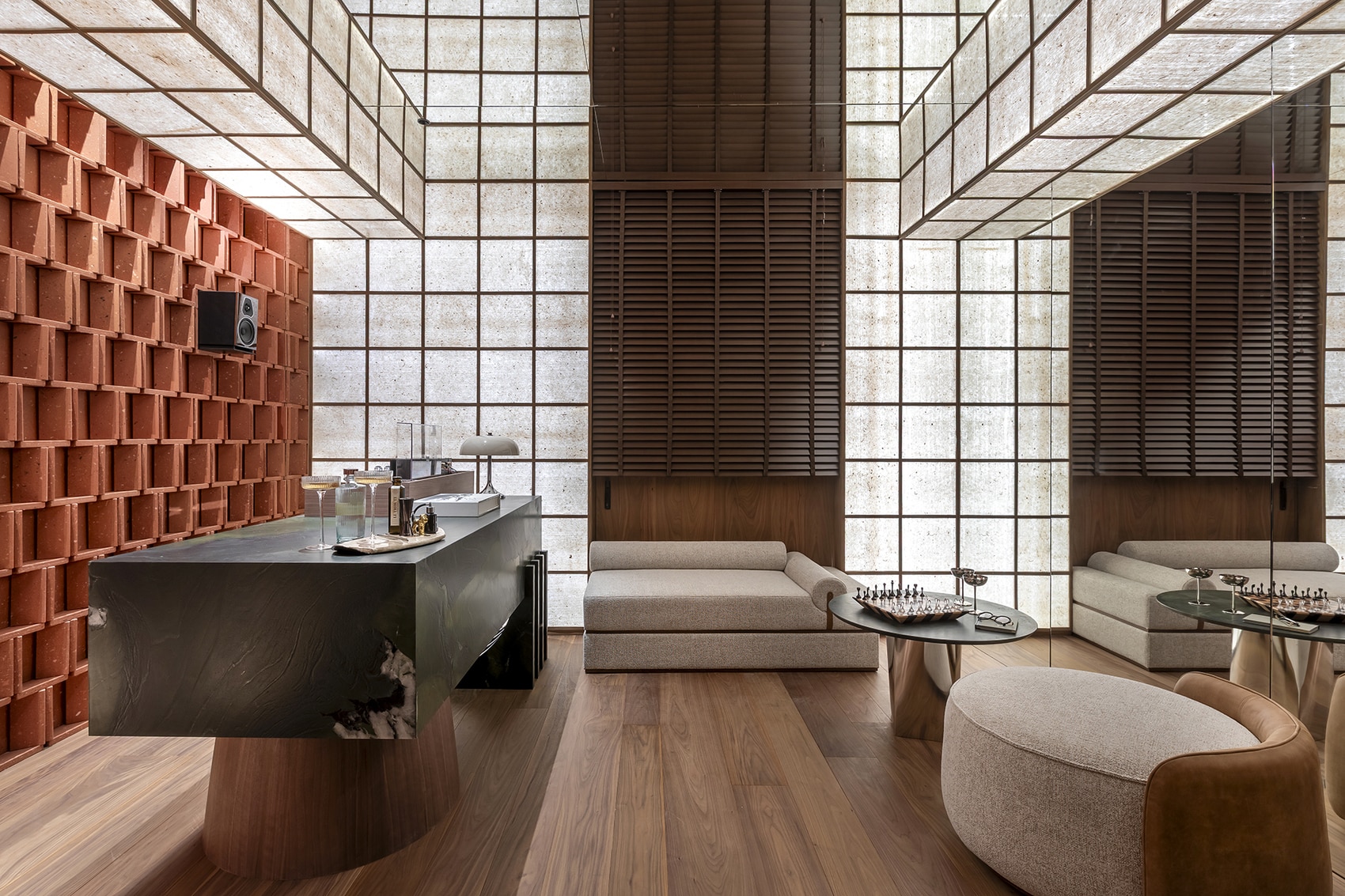
The recent proliferation of listening bars is reflected this year at Casa Decor by the Alicante-based brand Aitex. Architect Mariana Paccieri has created one in collaboration with the Alicante Research and Innovation Center as an “architectural manifesto of the auditory experience, where innovation, design, and sustainability converge.” The space incorporates a ton of recycled textile waste, which improves acoustics and comfort. Additionally, thanks to advanced textiles, it is possible to charge a cell phone via antennas woven into the surface of the sofa. Once again, a lattice design appears on one of the walls of the lounge-bar, and in one corner, 3D-printed light fixtures by Nagami stand out.
Casa Decor 2026. Salón-bar de Aitex, por Mariana Paccieri. Foto: Lupe
Clemente
Homapal Space, by Clap Studio
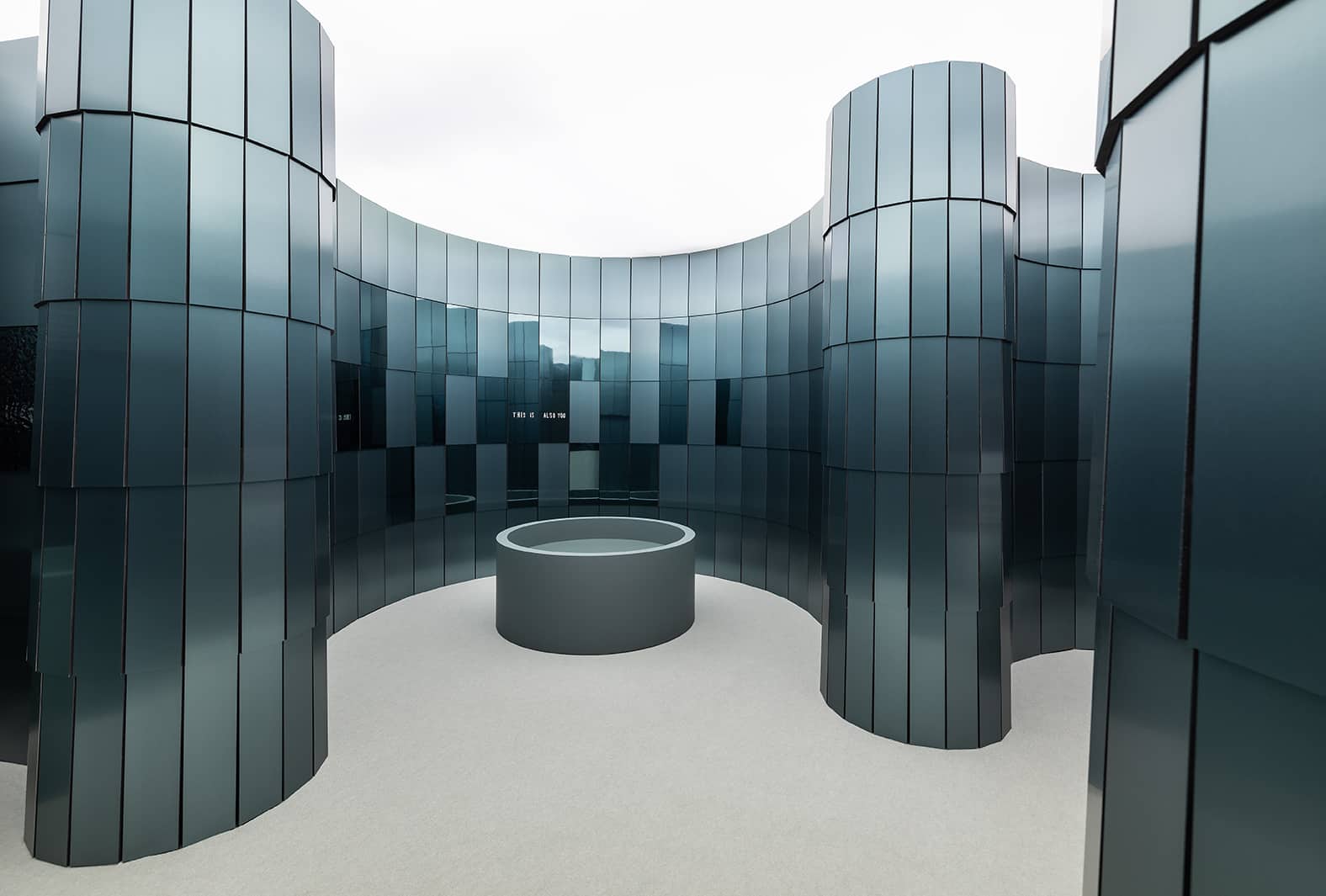
This conceptual space designed by Jordi Iranzo and Àngela Montagud of Clap Studio, titled The Sanctuary of the Self, invites reflection on the overexposure to social media that society is immersed in. The curved surfaces, the presence of water, the stretched fabric ceiling, and the reflections of the Homapal material create a very special universe. The walls are formed using a system of rectangular panels inspired by Nordic facades. “We don’t ask ourselves who we are, but how we are seen. Like Narcissus, we lose ourselves in an image without depth. The project reveals that everyday sanctuary where the self ceases to be and becomes appearance and validation.”
Casa Decor 2026. Espacio Homapal, por Clap Studio. Foto: Nacho Uribesalazar
Arcos, by Lucas and Hernández-Gil
In the lobby of the mansion, the architects have designed Umbral, a dreamlike installation based on light, color, the materiality of Arcos, and form. The symbolism of the Albacete-based knife brand, founded in 1734, is represented by two enormous vertical totems, illuminated by a ceiling fixture that simulates a waterfall. “The pieces, designed exclusively for the space, transform Arcos’s core values—precision, technique, and material—into an artistic experience that integrates wood and metal as key materials in the narrative.” The result, theatrical and visually striking, evokes the style of the Memphis Group’s designs.
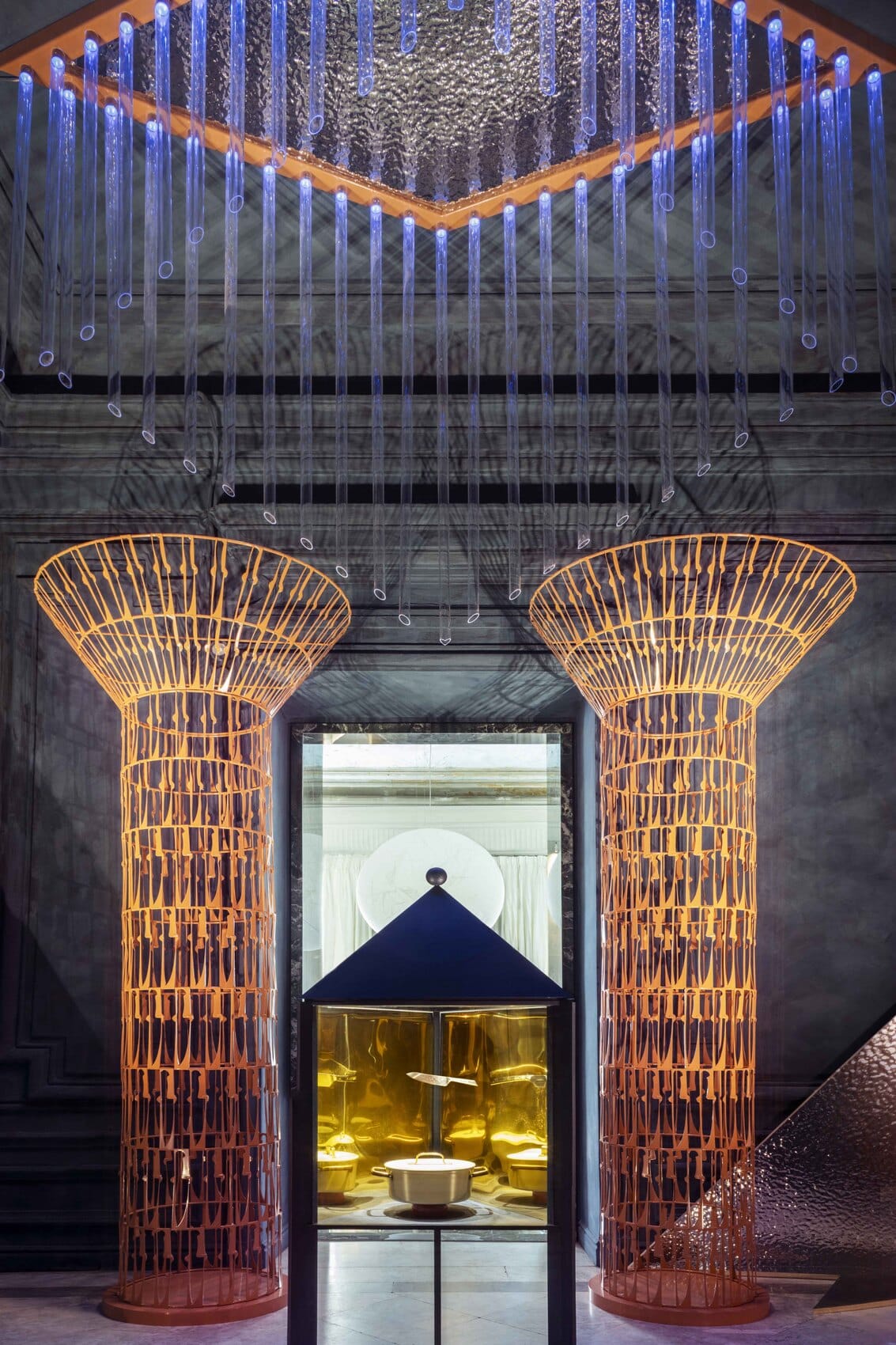
Casa Decor 2026. Arcos, por Lucas y Hernández Gil. Foto: Jordi Canosa
Schmidt Kitchen, by Lemon Studio
Marta Miñarro of Lemon Studio presents a truly unique kitchen. Her design is a box within a box, “inspired by Le Corbusier’s housing unit. It all stems from a module that repeats and transforms itself to form a large habitable structure. A simple gesture that gives rise to a complete home where Schmidt’s furniture becomes architecture.” The glass mosaic floor by Hisbalit stands out. This installation delves into another recurring trend in this edition of Casa Decor: curved forms.
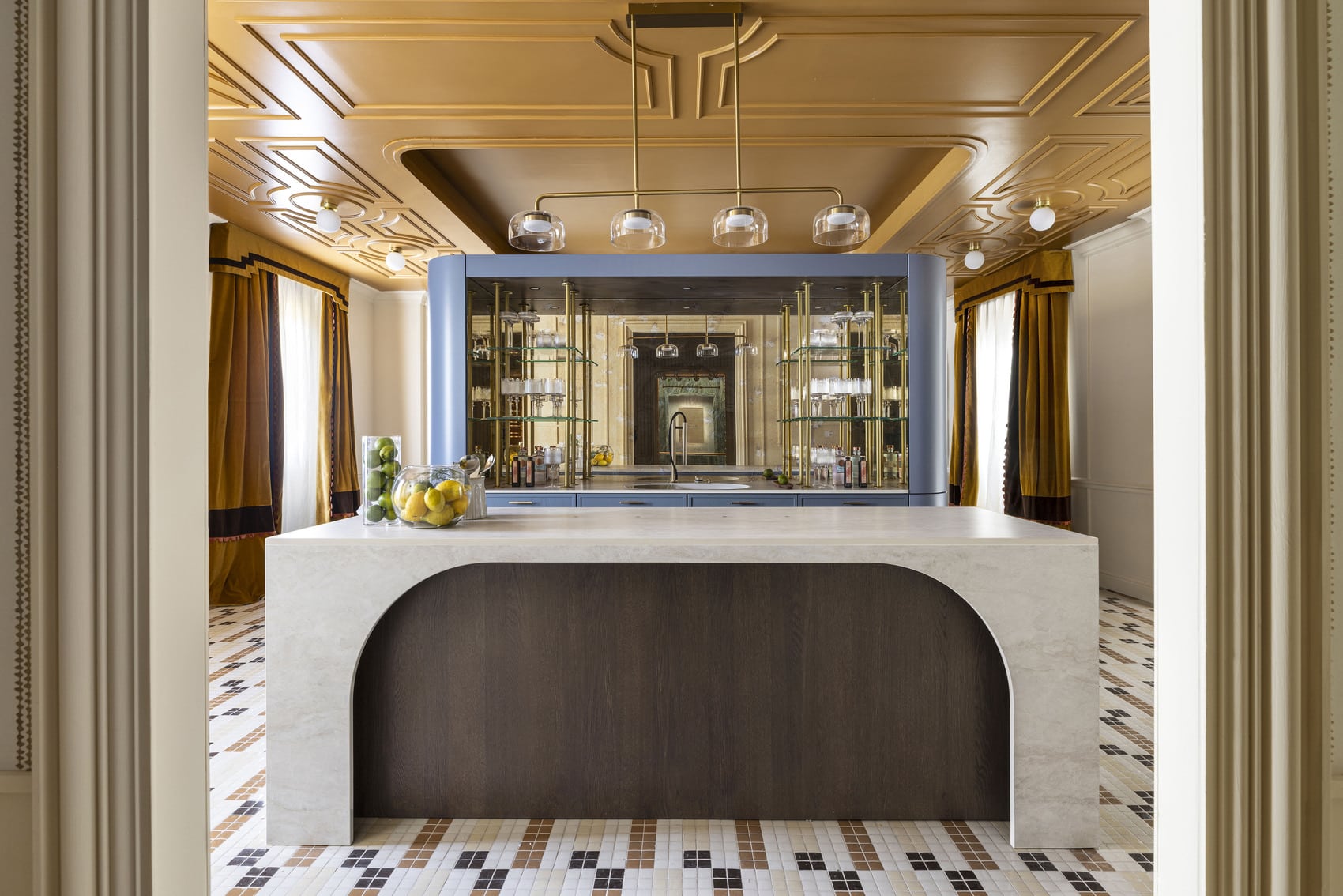
Casa Decor 2026. Salón-bar de Aitex, por Mariana Paccieri. Foto: Lupe
Clemente
TICKETS AVAILABLE ONLINE ONLY at casadecor.es/entradas/
General admission price: starting at €30
Address: 11 San Agustín Street
Dates: April 9–May 24
Hours: Daily, 11 a.m.–9 p.m. (including Sundays and holidays)
Written by: Beatriz Fabián
Beatriz is a journalist specializing in offline and online editorial content on design, architecture, interior design, art, gastronomy, and lifestyle.