An interview with Eduardo Tazón, to talk about Studio Noju, an intuitive and sensitive architecture studio that understands design as a broad creative field, applicable to multiple scales and disciplines.
We spoke with Solar.xyz
In just four years, they have already earned recognition within the profession. They have embraced what they call “repair architecture,” a practice defined by experimentation, collaboration, and research.
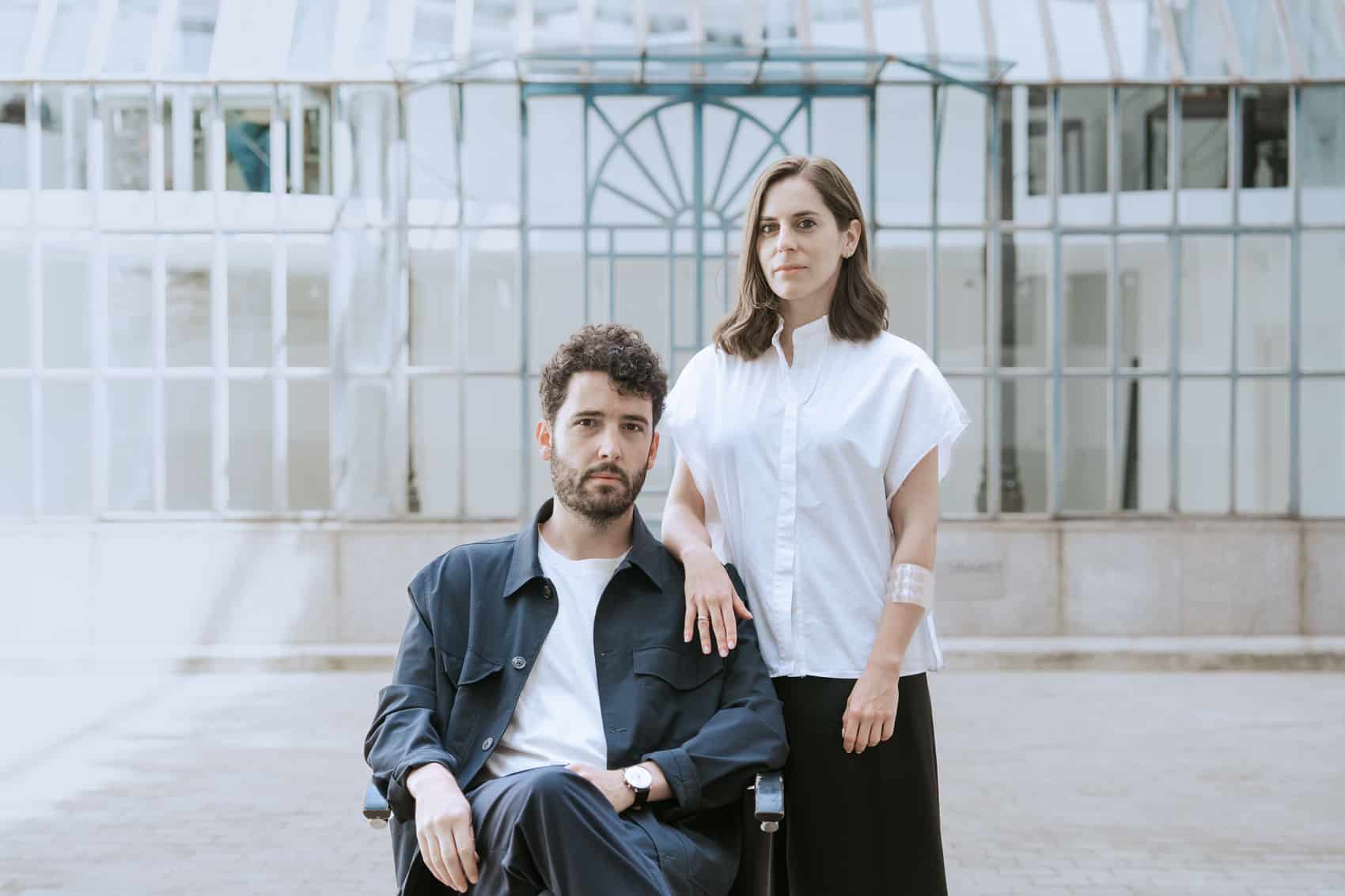
Ana Herreros y Pablo Canga en El Invernadero
While the houses in the Madrid Moderno neighborhood, with their Neo-Mudejar facades and wooden balconies, were already a magnet for onlookers and architecture enthusiasts, their appeal has grown exponentially since Solar.xyz renovated one of them—Casa Castelar. This project by Ana Herreros (Madrid, 1990) and Pablo Canga (Madrid, 1988), members of this Rotterdam-based studio—whose name alludes to coordinate axes—has earned them the 2024 COAM Emerging Architect Award (ex aequo) and the 2025 DIN Award in the residential category. In this project, as in almost all of theirs, their research was a priority, and they carried out a true archaeological investigation that combines traditional crafts and technology.
This approach relates to their vision of the profession’s future, which they believe should focus on intervening in the existing built environment. They practice what they call “architecture of repair,” where experimentation, collaborative work, and research are key to their creative process. They lead a team of four architects and work on projects of diverse scales and types: from a social housing project in Carabanchel—where they explore ways to introduce common spaces in one of the city’s most densely populated districts—to the transformation of an industrial warehouse in Pueblo Nuevo into a creative coworking space that recovers the building’s original spatial logic.
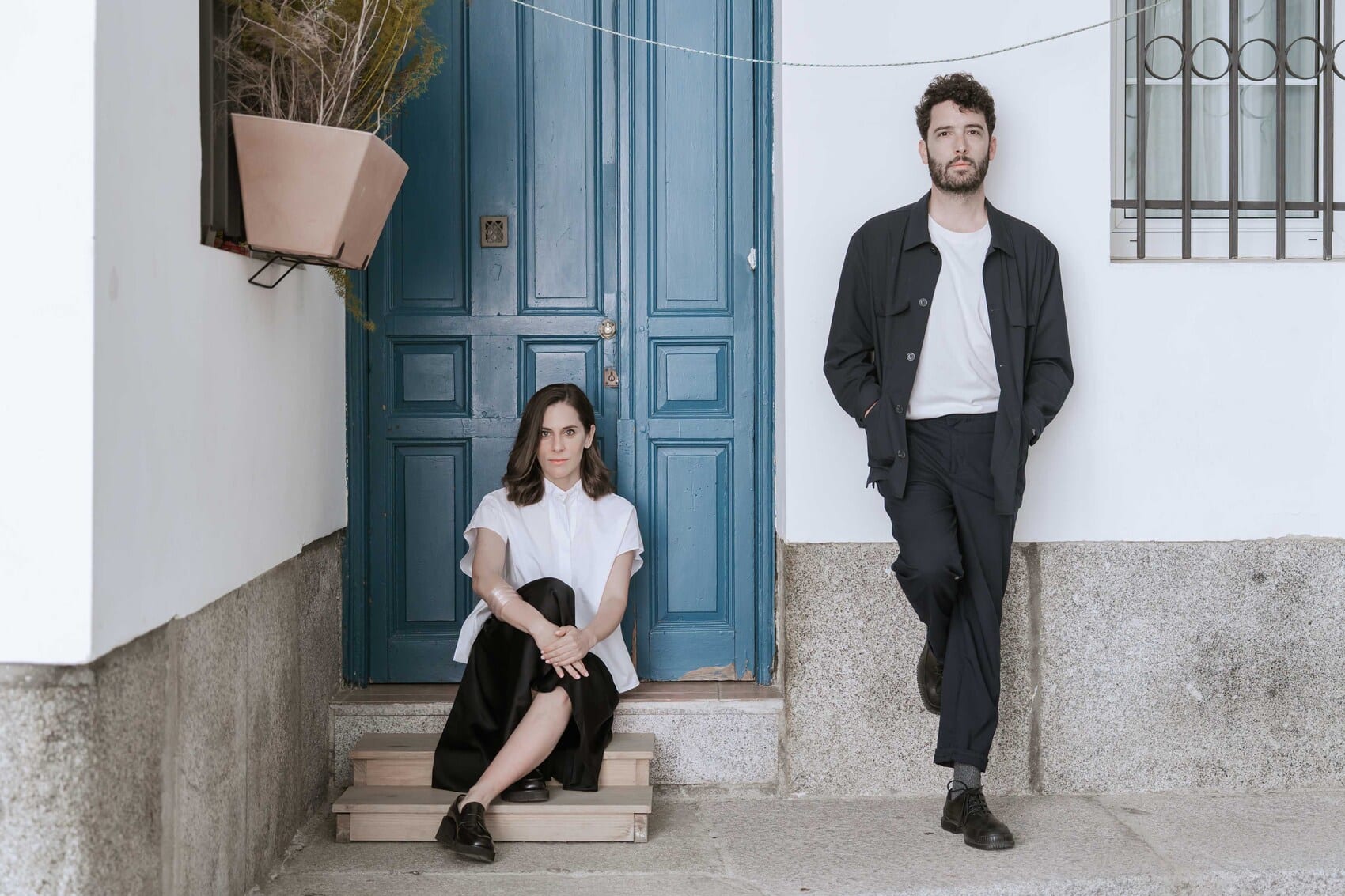
They seek to address different typologies and scales—though they haven’t yet tackled XL and XXL projects—but all their projects share a common focus on interventions based on processes of restoration and historical interpretation of spaces. Alongside their professional practice, they combine their work with teaching at Delft, CEU San Pablo University, and the European University. They also curate Prompts, a series featuring women architects at the COAM. This emerging studio is undergoing a second phase of expansion and belongs to a generation that views architecture as a field of applied research, attentive to both the urban context and new ways of living and working.
Where does the studio’s name come from?
We understand ‘solar’ as a space of opportunity, without a defined order or function. These are places—physical or conceptual—from which we can question the established order and offer a critical perspective.
I read that the studio was founded in Rotterdam. What is your background, and what is the origin of the studio?
We both studied at ETSAM, and after years of working in international firms, magazines, and various other projects, we moved to Rotterdam following the pandemic. There, we began collaborating with the Berlage Institute (TU Delft) and, at the same time, started our first projects in Spain, which we managed remotely. This led to a delocalized way of working that has shaped our understanding of the practice.
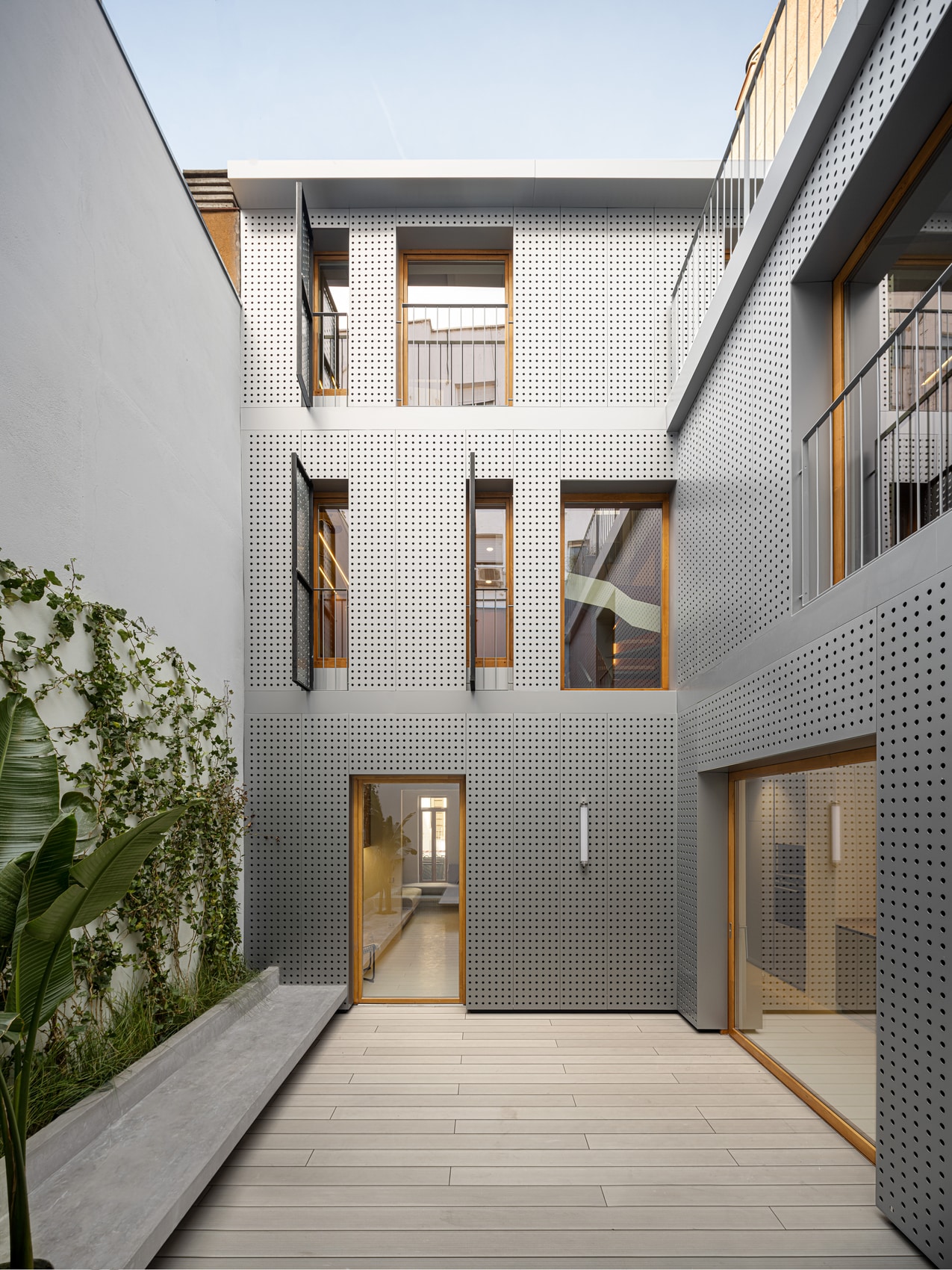
La rehabilitación de Casa Castelar ha recuperado su planta en L y el patio preexistente de la edificación original del siglo XIX. Foto: Adrià Goula
What were your early days like? What kind of work did you do?
Like many firms of our generation, we started out in a post-crisis context, with modest, small-scale projects that focused on intervening in existing structures. The type of commission hasn’t changed much; perhaps the scale has (though we do have some new-build projects).
This work on the existing, which arose from circumstances beyond our control, has become our way of understanding the profession and has given rise to a research project we call “architectures of repair.”
Who are your main influences within and outside the profession?
Rather than fixed references, we identify with a set of principles such as working with the memory of the existing, material experimentation, collaborative work, and research as a fundamental part of our creative process. We work with a constantly evolving matrix of references.
The studio has only been in operation for four years, yet you’ve already received notable accolades and completed a significant number of projects. What moment marked a turning point in the way you work?
Perhaps the project that best encapsulates the combination of design and research is Casa Castelar, due to the months of ‘archaeological’ archival work we conducted on typological restoration and our approach to intervening in the existing structure from a perspective that moves away from dogmatic conservation.
What has been the biggest challenge you’ve faced as a young firm?
Convincing the administration that, in some cases, regulations do not work in favor of improving our built landscape.
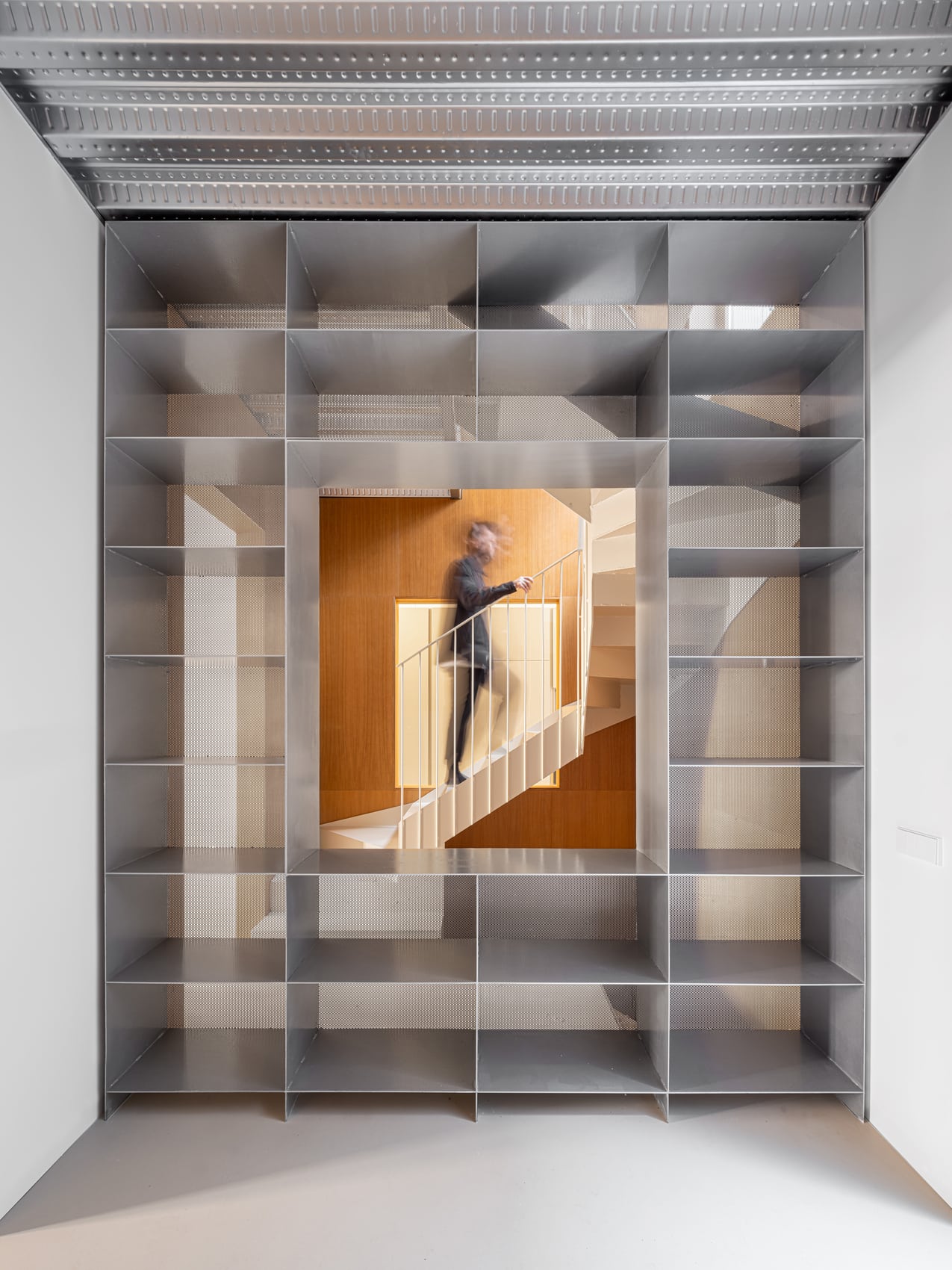
La librería enmarca la escalera en Casa Castelar. Foto: Adrià Goula.
What significance has the renovation of Casa Castelar in the Madrid Moderno neighborhood held, both conceptually and in terms of your professional development?
It is not easy to intervene in places with such a heavy historical burden. The project is an exercise in reflection on how to incorporate the memory and entropy of the existing structure into a contemporary design.
It has been an important step in the way we interpret the profession. We believe that the discussion of how we intervene in the existing built environment will be a central issue in the profession over the coming decades.
How do you balance studio work with academic, research, and editorial work, and what do these entail?
These activities feed into one another. We explore the same themes both in the studio and in the classroom.
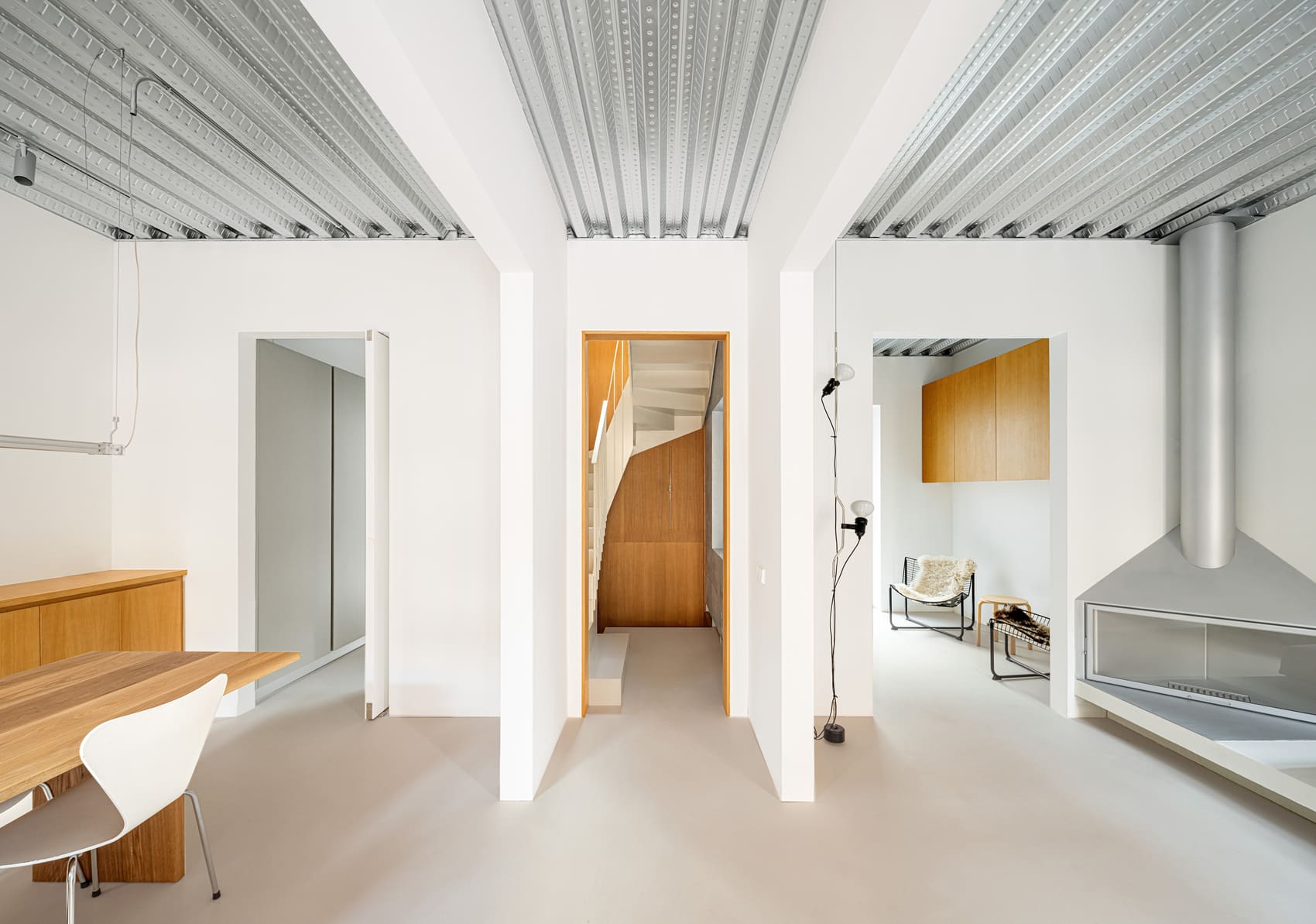
Casa Castelar, en la colonia del Madrid Moderno. Foto: Adrià Goula.
How do concepts such as memory and entropy translate into specific design decisions?
Memory refers to historical research on the original dwelling.
This archival work allowed us to identify the key elements that needed to be preserved or repaired. In this case, beyond restoring the Neo-Mudejar façade and the bay window, we restored the original L-shaped layout of the neighborhood, demolishing all the additions and reclaiming the courtyard.
On the other hand, entropy interprets existing buildings as reservoirs of materials, energy, and human effort. In addition to the conservation and repair of existing elements, bioclimatic strategies and systems have been implemented that have reduced energy consumption by more than 70%.
To what extent does your theoretical work influence your built architecture (and vice versa)?
Obviously, reality and theoretical work have different limitations and languages, but we approach both from the same mental framework and with the same critical ambition. In our case, they are interconnected parts of the same creative system or process. One could not exist without the other.
Are there any materials or construction systems with which you feel a particular affinity?
We believe in material honesty and that every material decision should respond to a need beyond the purely aesthetic.
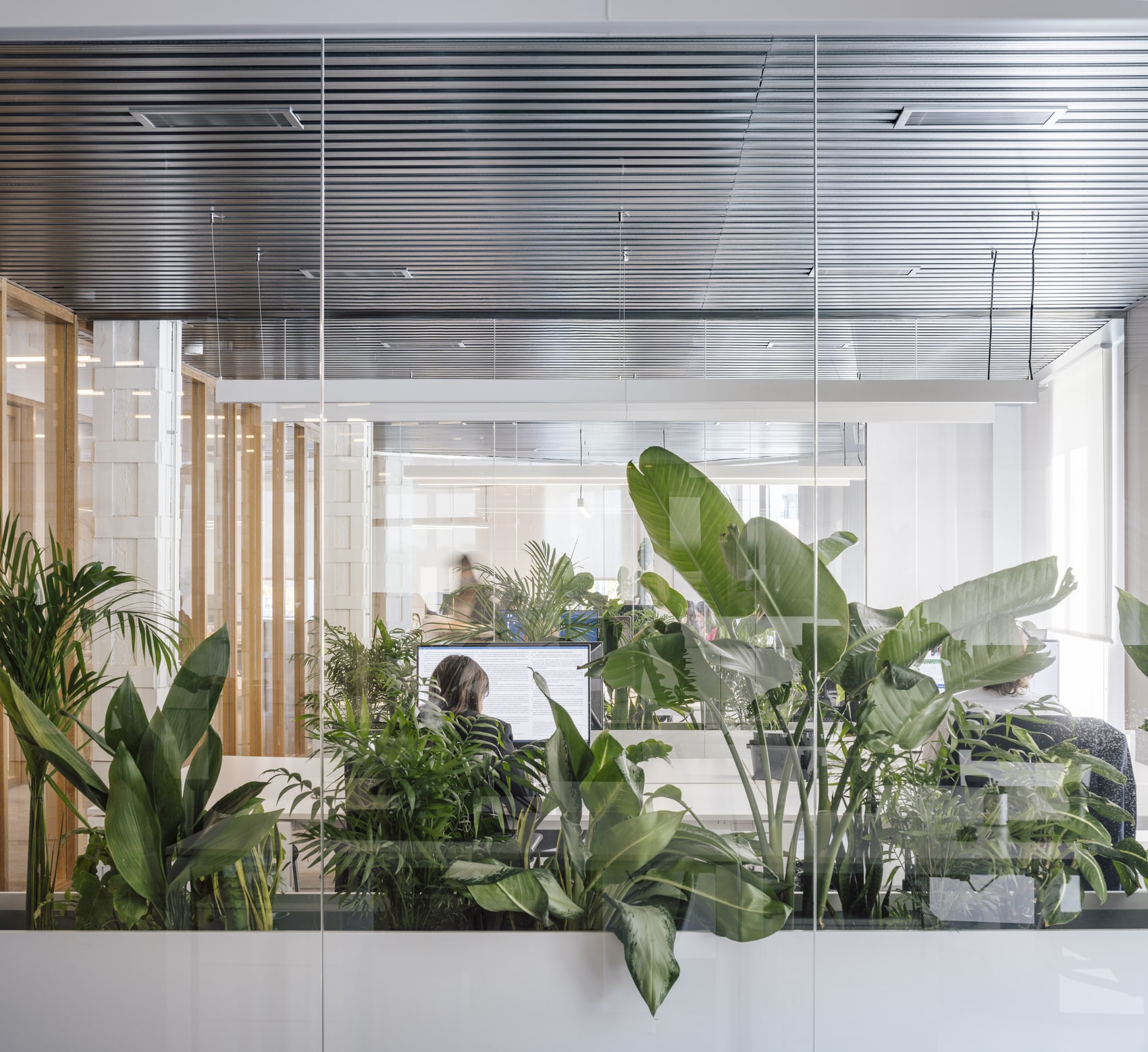
Oficinas para Accuracy, en Madrid. Foto: Imagen Subliminal.
With your Performing Pavilion project, you address the housing crisis and also incorporate the idea of flexible use of the spaces we inhabit. Please explain this to us.
The pavilion occupies the rooftop of an apartment building, harnessing the potential these spaces offer to tackle the urgent problems of our time: the climate emergency, land scarcity, the housing crisis, and limited resources.
As for flexibility, the nature of the artist’s work—who was to occupy the space—required a spacious and versatile interior, capable of adapting both to the different disciplines of her work and to the changing needs of her family. In response, the service areas—kitchen, bathroom, and storage—are moved to the perimeter, freeing up the central space to create a single room measuring 6.5 × 3.5 × 3.5 meters, opening onto a spacious terrace.
Furthermore, the perception of size and scale is altered by the mirrored cladding of the ‘equipped wall,’ which reflects the structure and the city skyline.
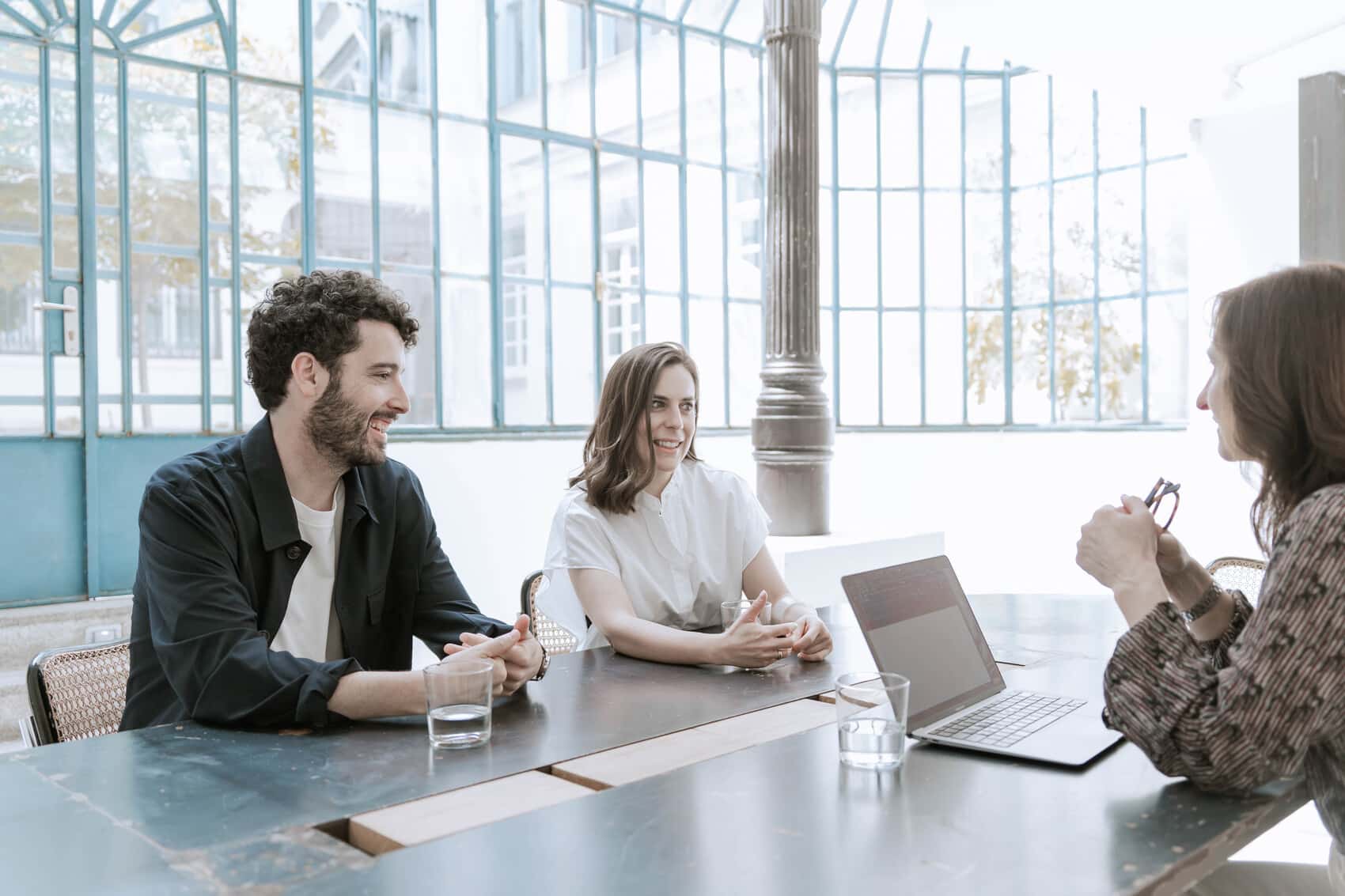
Pablo Canga y Ana Herreros durante un momento de la entrevista con Bea Fabián en El Invernadero
Written by: Beatriz Fabián
Beatriz is a journalist specializing in offline and online editorial content on design, architecture, interior design, art, gastronomy, and lifestyle.
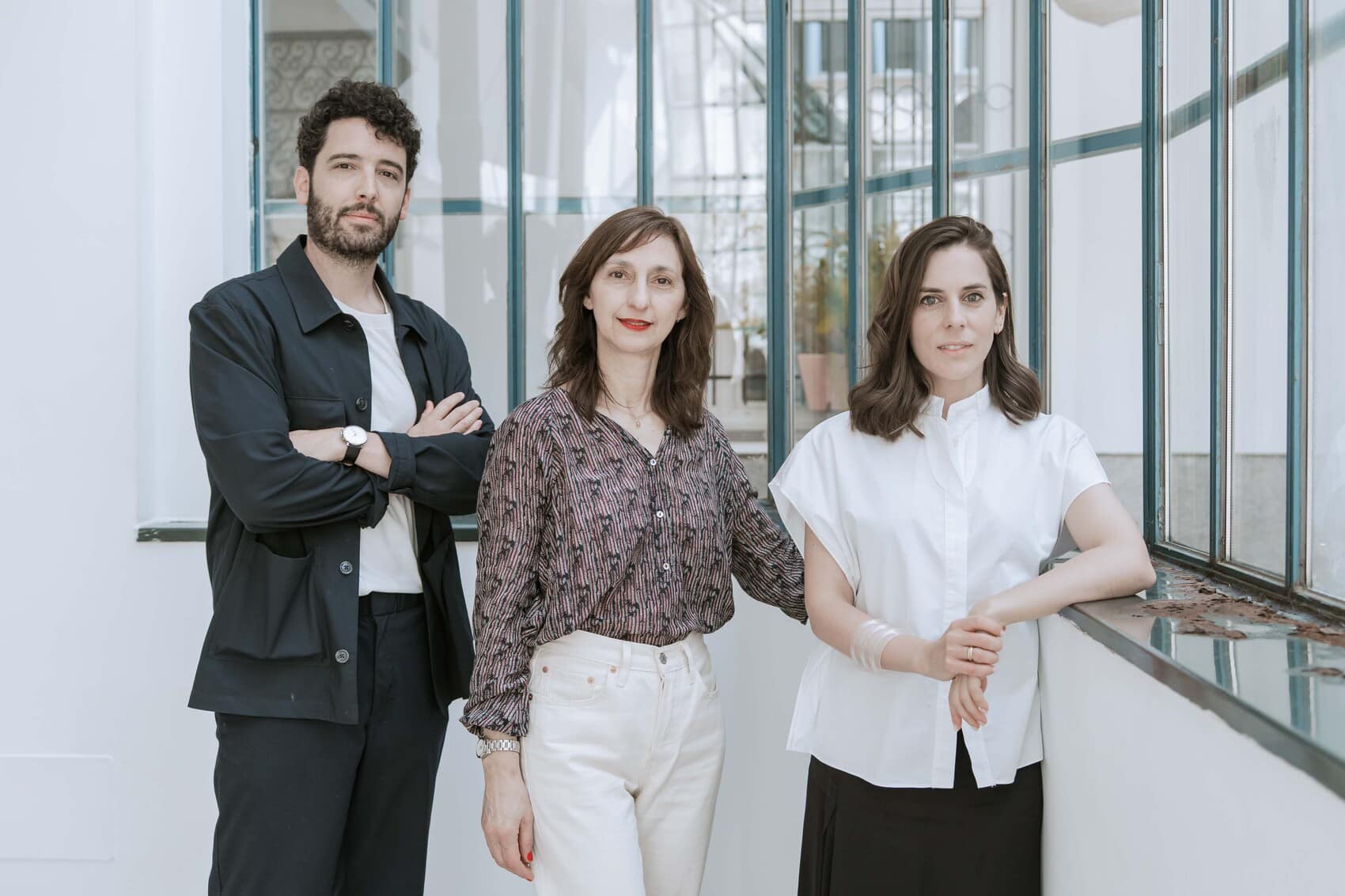
Pablo Canga, Beatriz Fabián y Ana Herreros en El Invernadero